la palette’s strawberry tart

I joined TWD right at the beginning of strawberry season – when the first flavorless strawberries started showing up in stores, and I bought them just because I was excited about warmer weather and everything that goes along with it. I was eager to make one strawberry dessert after another during their short season, but the TWD recipe-choosers haven’t been on that same wavelength. (Of course, not all of TWD’s members are in the Northern Hemisphere anyway.) I still bought strawberries each week, and every week they’re more flavorful than the last. The strawberry tart that Marie chose for this week’s recipe was a perfect way to showcase delicious seasonal strawberries.

I make only a portion of most TWD recipes, since I’m only cooking for myself and Dave, and my capacity to bake outstrips our capacity to eat. But I didn’t want to take pictures of yet another mini-tart. I actually don’t have a fluted 9-inch tart pan, but I’ve successfully used my 9-inch springform pan for tarts in the past.

Dorie calls this dessert “rustic in the extreme”, so I decided to play that up. A rustic tart has no need for fluted, or even neat, edges, so I just quickly pressed the dough into the pan. A number of people had problems with the crust being too hard, so I was careful to only lightly press the dough. It did, however, end up ever so slightly more rustic than I had intended…

Although the recipe sounds extraordinarily simple – crust, jam, strawberries, whipped cream – it really does add up to more than its parts. I was surprised by how much the jam added to the flavor of the tart. My crust seemed more tender than most people described theirs, so maybe lightly pressing it into the pan worked? (Scratch that – I just cut the crust into slices, and it was a crumbly crackly mess.) I haven’t tried sprinkling the strawberries with Dorie’s suggested black pepper, but after reading a few positive reviews on that method, I’m going to try it with tonight’s serving. Although strawberry shortcake isn’t going anywhere as my favorite strawberry-showcasing dessert, I’m looking forward to finishing up this tart throughout the week.

Dorie has discussed this dessert and provided the recipe on Serious Eats. I made the recipe without any changes, but in the future, I’d like another 1/8 teaspoon salt in the crust.

french chocolate brownies (twd)

One of my favorite aspects of Dorie Greenspan’s Baking is that she gives twelve brownie recipes. There’s so much discussion about the best brownie recipe that it seems like sometimes the variety between brownies gets overlooked. Not only are there different add-ins – turtle brownies, espresso brownies, creme de menthe brownies – but there are different textures, and one isn’t necessarily better than another. Di’s TWD choice of French Chocolate Brownies was the first of Dorie’s brownies recipes that I tried.

Dorie tells a story of how these brownies were intended to be a rich chocolate cake, but her guests mistook them for brownies, and she didn’t correct them. I can see the confusion. The ingredient list is classic brownie, but the mixing method and resulting texture bridge the line between brownie and cake. Beating the eggs and sugar together until they’re thick creates a light, airy confection that is at the same time tender and moist and far less dense than most brownies.

Dorie calls for the unusual addition of flambéed raisins to the brownies, which most members of TWD weren’t excited about. I considered leaving that step out altogether, but didn’t want to miss out on the fun of flambéing. One of my favorite dessert combinations is raspberries and chocolate, so I used fresh raspberries. It was perfect. I think I’ll always add the raspberries to this recipe.

My only disappointment with these brownies was that they weren’t as chocolately as I would prefer, but I don’t blame Dorie for that. She says she prefers bittersweet chocolate over semisweet, but of course those words don’t have any official meaning in the US. I usually bake with Ghirardelli, whose bittersweet chocolate is 60% cacao, but this time I used Sharffenberger, whose semisweet is 60%, so I bought the semisweet. I probably should have used their bittersweet. On top of that, I read a Cooks Illustrated’s review of dark chocolates, and their comments for Sharffenberger included “lacked choco-oomph.” So perhaps it wasn’t the best choice of chocolate for this recipe.

But regardless, I’m nitpicking (again). I savored every single bite I took of these brownies, and I was sad when I finished each serving. I love that they’re chocolately and rich, but also unique for a brownie in their cakelike tenderness. And, an added bonus for a middle-brownie lover? There’s really no difference between the edges and middle. Every single serving is moist and light.

French Chocolate Brownies (from Dorie Greenspan’s Baking: From My Home to Yours)

16 brownies

Bridget note: I substituted about ½ cup fresh raspberries, halved, for the raisins. Instead of boiling them in water as in step 2, I gently heated them in a small skillet before adding the rum and continuing with step 2.

Update: I made these again, this time using a Pyrex dish instead of the metal pan I used for the original entry.  I don’t know if things bake faster in glass or what, but I must have overbaked them, because the brownies were too dry.   So check for doneness early!

½ cup all-purpose flour
⅛ teaspoon salt
⅛ teaspoon cinnamon (optional)
⅓ cup raisins, dark or golden
1½ tablespoons water
1½ tablespoons dark rum
6 ounces bittersweet chocolate, finely chopped
1½ sticks (12 tablespoons; 6 ounces) unsalted butter, at room temperature and cut into 12 pieces
3 large eggs, at room temperature
1 cup sugar

Getting ready: Center a rack in the oven and preheat the oven to 300°F. Line an 8-inch square baking pan with foil, butter the foil, place the pan on a baking sheet, and set aside.

1. Whisk together the flour, salt and cinnamon, if you’re using it.

2. Put the raisins in a small saucepan with the water, bring to a boil over medium heat and cook until the water almost evaporates. Add the rum, let it warm for about 30 seconds, turn off the heat, stand back and ignite the rum. Allow the flames to die down, and set the raisins aside until needed.

3. Put the chocolate in a heatproof bowl and set the bowl over a saucepan of simmering water. Slowly and gently melt the chocolate, stirring occasionally. Remove the bowl from the saucepan and add the butter, stirring so that it melts. It’s important that the chocolate and butter not get very hot. However, if the butter is not melting, you can put the bowl back over the still-hot water for a minute. If you’ve got a couple of little bits of unmelted butter, leave them-it’s better to have a few bits than to overheat the whole. Set the chocolate aside for the moment.

4. Working with a stand mixer with the whisk attachment, or with a hand mixer in a large bowl, beat the eggs and sugar until they are thick and pale, about 2 minutes. Lower the mixer speed and pour in the chocolate-butter, mixing only until it is incorporated-you’ll have a thick, creamy batter. Add the dry ingredients and mix at low speed for about 30 seconds-the dry ingredients won’t be completely incorporated and that’s fine. Finish folding in the dry ingredients by hand with a rubber spatula, then fold in the raisins along with any liquid remaining in the pan.

5. Scrape the batter into the pan and bake 50 to 60 minutes, or until the top is dry and crackled and a knife inserted into the center of the cake comes out clean. Transfer the pan to a rack and allow the brownies to cool to warm or room temperature.

6. Carefully lift the brownies out of the pan, using the foil edges as handles, and transfer to a cutting board. With a long-bladed knife, cut the brownies into 16 squares, each roughly 2 inches on a side, taking care not to cut through the foil.

Serving: The brownies are good just warm or at room temperature; they’re even fine cold. I like these with a little something on top or alongside-good go-alongs are whipped crème fraiche or whipped cream, ice cream or chocolate sauce or even all three!

Storing: Wrapped well, these can be kept at room temperature for up to 3 days or frozen for up to 2 months.

I’m out of town this week, building sand castles and burying nephews in the sand. I’ll be back next week to catch up on comments and other blogs!

orange vanilla opera cake (db may 2008)

Lately I’ve become fixated with Bo Friberg’s The Professional Pastry Chef. I don’t want and have never wanted to be a professional pastry chef. But I flipped through this book and I was hooked. (Actually, in my arrogance, I grabbed The Advanced Pastry Chef first.) Page after page of beautifully plated desserts; this was more than food, this was art. Suddenly the fuss necessary to produce eye-catching desserts seemed worthwhile.

So I was elated when Ivonne, Lis, Fran, and Shea announced their choice of an opera cake for this month’s Daring Baker challenge. Layers of almond-based cake brushed with syrup, interspersed with buttercream, topped with mousse and glaze – this is exactly what I had in mind to try. I haven’t bought The Professional Pastry Chef yet, but at least I have a reason to get some practice.

The rules for the recipe were somewhat flexible in that we could flavor our cake any way we wanted – as long as it was light-colored. I would have enjoyed trying a traditional dark chocolate opera cake, but this was fun too. I’ve been loving creamsicle-like flavors lately, so I made my pastry orange and vanilla-flavored.

I hit a snag or two along the road, but nothing that couldn’t be overcome. A shortage of parchment paper meant I couldn’t adequately line my pan and the cake didn’t come out cleanly, but I was able to piece it together better than I expected. My first batch of white chocolate seized when I tried melting it, even though I used high-quality (Callebaut) chocolate and a double boiler. My orange glaze, which I adapted from a recipe Tyler Florence developed to top scones, wasn’t stable at room temperature, even though I added more powdered sugar than I’d expected to need.

No matter, everything came together in the end. The cake was good, although not as flavorful as I would have liked. I was warned before I made mine that it might be too sweet, so I added a pinch of salt to the jaconde to add some balance. I was also hoping that the orange would help balance the sweetness, but there wasn’t nearly enough orange or vanilla flavor. I didn’t end up using the zest of the orange anywhere, which certainly would have helped. And I’ve never been able to get a strong vanilla flavor in something baked. Maybe I should try rubbing the vanilla seeds into the sugar, like Dorie recommends with citrus zest?

Even if the flavor didn’t knock my socks off, I’m really glad I made this. I learned so much and used so many techniques that were new to me. I also think it’s great that we were given the freedom to develop our own flavors, which encouraged me to be creative. I’m eager to try the traditional dark chocolate version now, and this time I’ll make sure it’s rich and flavorful!

Orange-Vanilla Opera Cake

This is exactly the recipe I used, including my adaptations for orange and vanilla flavors. This recipe is half of what was given to us by the Daring Baker hosts this month. Double this amount of buttercream would probably provide the right amount to create layers of equal thickness to the cake; mine are a little thin.

Joconde: (adapted from Dorie Greenspan’s Paris Sweets)

The joconde can be made up to 1 day in advance and kept wrapped at room temperate

You can buy almond meal in bulk food stores or health food stores, or you can make it at home by grinding almonds in the food processor with two tablespoons of the flour that you would use in the cake.

2 tablespoons unsalted butter, melted and cooled
3 large egg whites, at room temperature
1 tablespoon granulated sugar
1 cup (112 grams) ground blanched almonds
1 cup (3.5 ounces) icing sugar, sifted
3 large eggs
1 vanilla bean, split and scraped
½ teaspoon vanilla
Pinch salt
¼ cup (1.25 ounces) all-purpose flour

1. Adjust an oven rack to the middle position. Preheat the oven to 425 degrees. Line a 12½ x 15½-inch jelly-roll pan with parchment paper and brush with ½ tablespoon of the melted butter.

2. In the bowl of a stand mixer fitted with the whisk attachment (or using a handheld mixer), whip the whites on low speed until they become foamy, then whip on medium-high speed until the whites reach soft peaks. Add the granulated sugar, and whip on high speed until the whites are stiff and glossy.

3. In a separate mixer bowl (or the same bowl, cleaned and dried) fitted with the paddle attachment, beat almond flour, icing sugar, eggs, salt and vanillas on medium speed until light and voluminous, about 3 minutes. Add flour and beat at low speed until it disappears.

4. Use a rubber spatula to gently fold the meringue into the almond mixture, then fold in the remaining melted butter until just combined. Spread the batter evenly in the prepared pan.

5. Bake the cake until it is lightly browned and just springy to the touch, 5-9 minutes.

6. Put the pan on a cooling rack and run a sharp knife along the edges of the cake to loosen it from the pan. Cover the pan with a sheet of parchment or wax paper, turn the pan over, and unmold. Carefully peel away the parchment, then turn the parchment over and use it to cover the cake. Let the cake cool to room temperature.

Syrup: (adapted from Dorie Greenspan’s Paris Sweets)

The syrup can be made up to 1 week in advance and kept covered in the refrigerator.

¼ cup water
1.2 ounces granulated sugar
1 tablespoon Grand Marnier

In a small saucepan, combine water and sugar. Bring to a boil, while stirring to dissolve ingredients. Stir in liqueur. Remove from heat and allow syrup to cool.

Buttercream: (adapted from Dorie Greenspan’s Baking: From My Home to Yours)

The buttercream, packed in an airtight container, can be frozen for 1 month or refrigerated for 4 days. Bring it to room temperature and beat it briefly to restore its consistency.

¼ cup (1.75 ounces) granulated sugar
1 large egg white
pinch salt
6 tablespoons unsalted butter, at room temperature
1 tablespoon fresh orange juice
¼ teaspoon pure vanilla extract

Put the sugar and egg whites in a mixer bowl or another large heatproof bowl, fit the bowl over a plan of simmering water and whisk constantly, keeping the mixture over the heat, until it feels hot to the touch (160 degrees on an instant-read thermometer), about 3 minutes. The sugar should be dissolved, and the mixture will look like shiny marshmallow cream. Remove the bowl from the heat. Working with the whisk attachment or with a hand mixer, beat the meringue on medium speed until it is cooledto room temperature, about 5 minutes.

Switch to the paddle attachment if you have one, and add the butter 2 tablespoons at a time. Once all the butter is in, beat the buttercream on medium-high speed until it is thick and very smooth, 6-10 minutes. During this time the buttercream may curdle or separate – just keep beating and it will come together again.

On medium speed, gradually beat in the orange juice, waiting until each addition is absorbed before adding more, and then the vanilla. You should have a shiny smooth, velvety, pristine white buttercream. Press a piece of plastic against the surface of the buttercream and set aside briefly.

White chocolate mousse: (from Tish Boyle and Timothy Moriarity’s Chocolate Passion)

The mousse can be made ahead and refrigerated until you’re ready to use it.

3.5 ounces white chocolate
½ cup plus 1½ tablespoons heavy cream
½ tablespoon Grand Marnier

1. Melt the chopped white chocolate and the 3 tablespoons of heavy cream. Whisk gently and let cool to room temperature.

2. Place the remaining heavy cream into a 4 1/2-quart bowl of a heavy-duty electric mixer fitted with the wire whisk attachment. Add the liqueur. Beat on high speed until soft peaks form.

3. Using a wire whisk, gently stir in about 1 cup of the whipped cream to the cooled white chocolate mixture. Using a rubber spatula, fold in the remaining cream. Do not over-mix or the mousse will become grainy. Cover and refrigerate until ready to use.

Orange glaze: (adapted from Tyler Florence)

2 tablespoons unsalted butter
2 cups (8 ounces) powdered sugar, sifted
2 oranges, juiced and zested

Combine butter, 2 cups (7 ounces) sugar, orange zest, and juice over a double boiler. Cook until butter and sugar are melted and mixture has thickened. Pour through fine mesh strainer, then beat until smooth and slightly cool, adding more sugar if necessary to reach desired consistency.

Assembly:

Line a baking sheet with parchment or wax paper. Cut and trim cake into three 10 x 5-inch rectangles. Place one section of cake on the baking sheet and moisten it gently with the 1/3 of the syrup. Spread half of the buttercream over this layer. Top with another piece of cake and moisten with 1/3 of the syrup. Spread the remaining buttercream on the cake and then top with the third section of cake. Use the remaining syrup to wet the cake and then refrigerate until very firm, at least half an hour.

Spread the mousse on the top of the last layer of cake. Refrigerate for 2-3 hours to give the mousse the opportunity to firm up.

Pour the cooled glaze over the top of the chilled cake, spreading to evenly coat the cake if necessary. Refrigerate the cake to set the glaze.

Serve the cake slightly chilled. This recipe will yield approximately 10 servings.

traditional madeleines (twd)

I hemmed and hawed about whether to try Tara’s choice of madeleines for this week’s TWD recipe. I don’t have a madeleine pan, and I’m feeling stubborn about buying a pan that has such a specific use. I found out that a mini-muffin pan can be substituted, but I don’t have one of those either. Some people tried baking their madeleines in spoons, but my spoons aren’t very rounded and I wasn’t keen on putting them in the oven. It was suggested that those of us without the proper equipment blog about a previous TWD recipe that we missed instead, and I was all ready with a Snickery Squares entry.

But once the Snickery Squares were eaten, I decided to try out the madeleines anyway, in a regular muffin pan. The recipe says that it makes 12 madeleines, so I planned to divide the batter evenly between the 12 muffin cups. (Actually, I halved the recipe and made six.) I lined the bottom of the muffin cups with cookie press stamps to add some decoration to my tea cakes. I figured that I had nothing to lose if things didn’t work out – the recipe is neither work nor calorie intensive.

I have to admit that this is my first madeleine experience; not just making them, but eating them as well. That means that I have no basis for comparison for how this recipe compares to others and how the muffin madeleines compare to the traditional shell shapes. However, I can make some judgments about what I want from a tea cake.

The muffin pans seemed to work well enough, although I didn’t get the characteristic and elusive hump that’s so desired. But I didn’t feel that my madeleines were tender enough. Honestly, I think there’s too much butter in them, and the batter just couldn’t support and incorporate all of it. I’m also a little surprised by how coarse my crumb was; I must not have beat the eggs and sugar long enough.

Overall though, I’m pleased by the idea of a cookie-sized cake. While I doubt that there’s a madeleine pan in my near future, I might try out some other shapes to see if I can come up with the light and tender tea cake that I want.

Traditional Madeleines (from Dorie Greenspan’s Baking: From My Home to Yours)

⅔ cup all-purpose flour
¾ teaspoon baking powder
Pinch of salt
½ cup sugar
Grated zest of 1 lemon
2 large eggs, at room temperature
2 teaspoons pure vanilla extract
¾ stick (6 tablespoons) unsalted butter, melted and cooled
Confectioners’ sugar, for dusting

Whisk together the flour, baking powder and salt.

Working in a mixer bowl, or in a large bowl, rub the sugar and lemon zest together with your fingertips until the sugar is moist and fragrant. Add the eggs to the bowl. Working with the whisk attachment, or with a hand mixer, beat the eggs and sugar together on medium-high speed until pale, thick and light, 2 to 3 minutes. Beat in the vanilla. With a rubber spatula, very gently fold in the dry ingredients, followed by the melted butter. Press a piece of plastic wrap against the surface of the batter and refrigerate it for at least 3 hours, or for up to 2 days. This long chill period will help the batter form the hump that is characteristic of madeleines. (For convenience, you can spoon the batter into the madeleine molds, cover and refrigerate, then bake the cookies directly from the fridge; see below for instructions on prepping the pans.)

GETTING READY TO BAKE: Center a rack in the oven and preheat the oven to 400 degrees F. Butter 12 full-size madeleine molds, or up to 36 mini madeleine molds, dust the insides with flour and tap out the excess. Or, if you have a nonstick pan (or pans), give it a light coating of vegetable cooking spray. If you have a silicone pan, no prep is needed. Place the pan(s) on a baking sheet.

Spoon the batter into the molds, filling each one almost to the top. Don’t worry about spreading the batter evenly, the oven’s heat will take care of that. Bake large madeleines for 11 to 13 minutes, and minis for 8 to 10 minutes, or until they are golden and the tops spring back when touched. Remove the pan(s) from the oven and release the madeleines from the molds by rapping the edge of the pan against the counter. Gently pry any recalcitrant madeleines from the pan using your fingers or a butter knife. Transfer the cookies to a rack to cool to just warm or to room temperature.

If you are making minis and have more batter, bake the next batch(es), making certain that you cool, then properly prepare the pan(s) before baking.

Just before serving, dust the madeleines with confectioners’ sugar.

snickery squares

Sometimes when I cook, I want to make absolutely the best version of that dish possible. I want to coax the maximum potential from every single ingredient, and I’m willing to do whatever it takes to make it happen.

Other times, I just want to use up the container of dulce de leche in the fridge.

I only made a quarter of the Florida Pie recipe, which left me with leftover sweetened condensed milk. I made it into dulce de leche, thinking it would preserve better that way and that I’d have more options on how to use it. Half a Snickery Squares recipe called for almost exactly the amount of dulce de leche I needed to use up. (Um, I think. There was no measuring.)

I didn’t want to get out and then wash all of my food processor parts for half a recipe of shortbread crust, so I mixed that by hand. I didn’t want to bother with half an egg yolk, so I used heavy cream. I made the caramel peanuts as instructed, and that was fun. Caramel always fascinates me, and the peanuts sounded like plastic pieces once they cooled. Due to laziness and ingredient availability, I tweaked the chocolate topping ingredients just a bit. Everything seemed to come together nicely, even with the shortcuts.

I didn’t expect to love this dessert. I don’t dislike Snickers bars, but neither am I a fan. And I’ve heard a few reviews saying that these bars are really rich, so I was expecting another over-the-top Dorie creation.

Holy smokes, this is the best treat I’ve made in months. It’s certainly my favorite of the recipes I’ve made from Dorie’s Baking book. The shortbread crust is sturdy but tender, the dulce de leche adds complexity, the peanuts provide crunch, and the bittersweet chocolate ties everything together and keeps it from being too sweet.

There are a few tiny changes I would make to the recipe next time. I’d reduce the sugar in the crust. I was surprised by how sweet it was when I tasted it plain, and I think it would make a better contrast to the filling if it weren’t so sweet. I’ll probably use heavy cream in the crust in the future, like I did this time, because it seemed to work fine and it’s easier than dealing with an egg yolk. And I’d reduce the peanuts from 1½ cups to 1 cup, because I really couldn’t fit them all in the pan. I’d correspondingly reduce the sugar in the filling to ¼ cup (for a full recipe).

But really, this is nitpicking. The squares are amazing how they are, and after two days of them beckoning me from the kitchen, begging for nibbles to be taken and already-clean edges to be shaved off, I’m relieved but sad to have just sent the last square off to work with Dave.

Snickery Squares (from Dorie Greenspan’s Baking: From My Home to Yours)

Bridget notes: Next time I’ll reduce the granulated sugar in the crust to 3 tablespoons and the powdered sugar to 1 tablespoon. I’ll reduce the peanuts to 1 cup, the sugar in the filling to ¼ cup, and the water in the filling to 2½ tablespoons. However, these changes aren’t to say that the bars aren’t amazing how they are.

For the Crust:
1 cup (5 ounces) all-purpose flour
¼ (1.75 ounces) cup sugar
2 tablespoons (0.5 ounce) powdered sugar
¼ teaspoon salt
8 tablespoons (1 stick) unsalted butter, cut into small pieces and chilled
1 large egg yolk, lightly beaten

For the Filling:
⅓ cup (2.33 ounces) sugar
3 tablespoons water
1½ cups salted peanuts
About 1½ cups store-bought dulce de leche

For the Topping:
7 ounces bittersweet chocolate, coarsely chopped
4 tablespoons (½ stick) unsalted butter, cut into 8 pieces, at room temperature

Getting Ready: Preheat oven to 350F. Butter an 8-inch square pan and put it on a baking sheet.

To Make the Crust: Toss the flour, sugar, powdered sugar and salt into a food processor and pulse a few times to combine. Toss in the pieces of cold butter and pulse about 12 times, until the mixture looks like coarse meal. Pour the yolk over the ingredients and pulse until the dough forms clumps and curds – stop before the dough comes together in a ball.

Turn the dough into the buttered pan and gently press it evenly across the bottom of the pan. Prick the dough with a fork and slide the sheet into the oven. Bake the crust for 15-20 minutes, or until it takes on just a little color around the edges. Transfer the pan to a rack and cool to room temperature before filling.

To Make the Filling: Have a parchment or silicone mat-lined baking sheet at the ready, as well as a long-handled wooden spoon and a medium heavy bottomed saucepan.

Put the sugar and water in the saucepan and cook over medium-high heat, stirring, until the sugar dissolves. Keeping the heat fairly high, continue to cook the sugar, without stirring, until it just starts to color. Toss the peanuts and immediately start stirring. Keep stirring, to coat the peanuts with sugar. Within a few minutes, they will be covered with sugar and turn white-keep stirring until the sugar turns back into caramel. When the peanuts are coated with a nice deep amber caramel, remove the pan from the heat and turn the nuts out onto the baking sheet, using the wooden spoon to spread them out as best you can. Cool the nuts to room temperature.

When they are cool enough to handle, separate the nuts or break them into small pieces. Divide the nuts in half. Keep half of the nuts whole or in biggish pieces for the filling, and finely chop the other half for the topping.

Spread the dulce de leche over the shortbread base and sprinkle over the whole candied nuts.
To Make the Topping: Melt the chocolate in a heatproof bowl set over a saucepan of barely simmering water. Remove chocolate from the heat and gently stir in the butter, stirring until it is fully blended into the chocolate.

Pour the chocolate over the dulce de leche, smoothing it with a long metal icing spatula, then sprinkle over the rest of the peanuts. Slide the pan into the fridge to set the topping, about 20 minutes; if you’d like to serve the squares cold, keep them refrigerated for at least 3 hours before cutting.

Cut into 16 bars.

Also – I just got a new camera. This is the first post I’ve used it on, and I guess I was little excited, huh?

florida pie (twd)

I’m guessing there are recipes in Dorie’s book that aren’t obscenely rich. In fact, there’s a whole section on muffins! But the TWD recipe choosers have thus far gravitated toward the decadent side of the book, at least since I joined. This week is no exception, as Dianne’s choice of Florida Pie has well over a cup of cream in addition to the can of sweetened condensed milk, the butter in the crust, and a fair amount of coconut.

Fortunately, it’s all worth it because I love citrus desserts, especially Key lime pie. I only recently realized that I liked coconut, so this was a fun way to incorporate it into a favorite dessert.

I didn’t follow the recipe quite as closely as I normally do. I did make the coconut cream the recommended way, by simply boiling heavy cream and sweetened shredded coconut together until they reduce and thicken. For the lime filling, however, I was surprised that Dorie didn’t call for zest, and since I like my citrus desserts on the puckery side, I added about 2 limes worth. Where I strayed from the recipe the most was in the freezing steps, of which Dorie has two – one after the filling is added, and one after the meringue is toasted. I’m not sure what the purpose of either of these freezing stages is – perhaps to keep the filling cold while the pie is broiled? I used a blow torch to brown the meringue, and I didn’t want my pie frozen, so I skipped both visits to the freezer.

Overall, the pie (or in my case, tartelettes) were good. I do love lime. I have to admit that I consider the coconut more of a distraction than an improvement, but I enjoyed the dessert regardless.

Florida Pie (from Dorie Greenspan’s Baking: From My Home to Yours)

1 9-inch graham cracker crust, fully baked and cooled, or a store-bought crust
1⅓ cups heavy cream
1½ cups shredded sweetened coconut
4 large eggs, separated
1 14-ounce can sweetened condensed milk
½ cup fresh Key (or regular) lime juice (from about 5 regular limes)
¼ cup of sugar

Getting Ready: Center a rack in the oven and preheat the oven to 350 degrees F. Put the pie plate on a baking sheet lined with parchment or a silicone mat.

Put the cream and 1 cup of the coconut in a small saucepan and bring it to a boil over medium-low heat, stirring almost constantly. Continue to cook and stir until the cream is reduced by half and the mixture is slightly thickened. Scrape the coconut cream into a bowl and set it aside while you prepare the lime filling.

Working with a stand mixer, preferably fitted with a paddle attachment, or with a hand mixer in a large bowl, beat the egg yolks at high speed until thick and pale. Reduce the mixer speed to low and beat in the condensed milk. Still on low, add half of the lime juice. When it is incorporated, add the remaining juice, again mixing until it is blended. Spread the coconut cream in the bottom of the graham cracker crust, and pour over the lime filling.

Bake the pie for 12 minutes. Transfer the pie to a cooling rack and cool for 15 minutes, then freeze the pie for at least 1 hour.

To Finish the Pie with Meringue: Put the 4 egg whites and the sugar in a medium heavy-bottomed saucepan and heat over medium-low heat, whisking all the while, until the whites are hot to the touch. Transfer the whites to a stand mixer, fitted with the whisk attachment, or use a hand mixer in a large bowl, and beat the whites at high speed until they reach room temperature and hold firm peaks. Using a rubber spatula, fold the remaining ½ cup coconut into the meringue.

Spread the meringue over the top of the pie, and run the pie under the broiler until the top of the meringue is golden brown. (Or, if you’ve got a blowtorch, you can use it to brown the meringue.) Return the pie to the freezer for another 30 minutes or for up to 3 hours before serving.

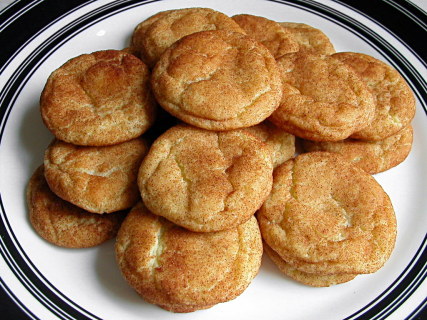
snickerdoodles

Snickerdoodles are so underrated. They’re Dave’s favorite cookie, and I think my dad’s as well. You probably won’t be surprised that Dave’s and my dad’s favorite ice cream flavors are strawberry and vanilla, respectively. Plain flavors, not too rich, but certainly still a delicious treat. As for me, I have to admit I usually make snickerdoodles when I’m out of chocolate chips.

But these are so good! We’re all missing out with our disdain of the humble snickerdoodle. Buttery, soft, coated in cinnamon sugar – these may not feel as rich as chocolate chip cookies, but they certainly have their place.

There are a lot of recipes for snickerdoodles, but they’re almost identical. I just take Betty Crocker’s basic recipe and tweak it to my liking. The most important change is replacing the shortening with more butter. Shortening in a cookie? Seriously? Blech. I also double the salt. The original recipe calls for a quarter of the salt most chocolate chip cookie recipes use. I find cookies with that little salt too bland. The next change I make is replacing one tablespoon of the granulated sugar with brown sugar. This is a trick I picked up from Cooks Illustrated’s sugar cookie recipe, which is designed to add a bit of complexity to the cookie with a hit of butterscotch flavor. The final tweak I make is to increase the cinnamon to sugar ratio in the coating. The original recipe has only 2 teaspoons cinnamon to a quarter cup sugar – a ratio of 1 part cinnamon to 6 parts sugar.  I like a ratio of 1 part cinnamon to 2 parts sugar. Sometimes, when I want to make Dave really happy, I also grate some nutmeg into the cinnamon sugar mixture.

Next time you’re in the mood to bake, don’t forget about snickerdoodles! And not just because they don’t require any ingredients besides staples, but because they’re delicious!

Snickerdoodles (adapted from Betty Crocker’s Big Red Cookbook)

Makes about 4 dozen 2-inch cookies

2¾ cups (13.75 ounces) unbleached flour
2 teaspoons cream of tartar
1 teaspoon baking soda
½ teaspoons salt
1½ cups granulated sugar minus 1 tablespoon (10.35 ounces total)
1 tablespoon light brown sugar
16 tablespoons (2 sticks) unsalted butter, softened
2 large eggs
¼ cup (1.75 ounces) granulated sugar (for rolling)
2 tablespoons cinnamon

1. Adjust oven rack to middle position and heat oven to 375 degrees. Whisk the flour, salt and baking soda in a medium bowl; set aside.

2. Beat butter and sugars (except the ¼ cup granulated sugar for rolling) until creamy; add eggs and beat until combined. Add flour mixture and mix until just combined.

3. Mix ¼ cup sugar and the cinnamon in a shallow bowl. Roll approximately a tablespoon of dough into a 1-inch ball; roll ball in cinnamon sugar mixture. Repeat with remaining dough, placing balls 2 inches apart on ungreased baking sheet.

4. Bake until cookies are just set and turning golden brown at edges, 8-9 minutes. Cool cookies on baking sheet for 2 minutes; then, using a wide metal spatula, transfer cookies to a wire rack and cool to room temperature.

peanut butter torte (twd)

I’m spending the first week of June on a beach. And since I spent February overeating and April underexercising, I can’t spend May eating super rich desserts. Unless…it’s peanut butter cream cheese mousse on an oreo cookie crust covered with a layer of ganache and sprinkled with peanuts, which is what Elizabeth chose for this week’s TWD recipe. Even if each slice, according to Dorie’s serving size recommendation, has 1250-1650 calories. I think it’s safe to say that Dorie’s serving sizes are wacko.

Because Dave and I can only eat so much crazy-rich peanut butter torte, I made a quarter of the recipe in a 4-inch pan. A springform pan is really necessary for neat slices, but I don’t have a tiny one that will fit a quarter of the recipe and wasn’t willing to buy one.

For the first week since I joined TWD, no one had any real problems with this recipe. The crust ended up being too thin and most people had to grind up a few more oreos. (Based on everyone’s reviews, it sounds like you’ll need 32-40 oreos for a full recipe, depending on how thick you like your crust.) The peanut butter mousse involves nothing more than beating softened cream cheese and peanut butter together, then folding in some flavorings and whipped cream. There were some complaints that the mousse was too salty, as Dorie calls for chopped salted peanuts to be mixed in. I used half salted and half unsalted and had no problems, although I prefer my mousses to be totally smooth, uninterrupted by bits of peanut and chocolate. The ganache is a classic mixture of chocolate and hot cream. It’s a relatively small amount of work for an impressive dessert, especially if the people you’re serving it to don’t realize that basically every ingredient in it is primarily fat.

Actually, Dave and I got eight servings just out of our mini torte – so 32 servings for a whole recipe. It was a nice, and necessary, compromise between treating ourselves and controlling ourselves.

Peanut Butter Torte (from Dorie Greenspan’s Baking: From My Home to Yours)

1¼ cup finely chopped salted peanuts (for the filling, crunch and topping)
2 teaspoons sugar
½ teaspoon instant espresso powder (or finely ground instant coffee)
¼ teaspoon ground cinnamon
Pinch of freshly grated nutmeg
½ cup mini chocolate chips (or finely chopped semi sweet chocolate)
24 Oreo cookies, finely crumbed or ground in a food processor or blender
½ stick (4 tablespoons) unsalted butter, melted and cooled
Small pinch of salt
2½ cup heavy cream
1¼ cup confectioners’ sugar, sifted
12 ounces cream cheese, at room temperature
1½ cup salted peanut butter – crunchy or smooth (not natural; I use Skippy)
2 tablespoons whole milk
4 ounces bittersweet chocolate, finely chopped
Getting ready: center a rack in the oven and preheat the oven to 350°F. Butter a 9-inch Springform pan and place it on a baking sheet lined with parchment or a silicone mat.

Toss ½ cup of the chopped peanuts, the sugar, espresso powder, cinnamon, nutmeg and chocolate chops together in a small bowl. Set aside.

Put the Oreo crumbs, melted butter and salt in another small bowl and stir with a fork just until crumbs are moistened. Press the crumbs evenly over the bottom and up the sides of the spring form pan (they should go up about 2 inches on the sides). Freeze the crust for 10 minutes.

Bake the crust for 10 minutes, then transfer it to a rack and let it cool completely before filling.

Working with a stand mixer fitted with the whisk attachment or with a hand mixer in a large bowl, whip 2 cups of the cream until it holds medium peaks. Beat in ¼ cup of the confectioners’ sugar and whip until the cream holds medium-firm peaks. Scrape the cream into a bowl and refrigerate until needed.

Wipe out (do not wash) the bowl, fit the stand mixer with the paddle attachment if you have one, or continue with the hand mixer, and beat the cream cheese with the remaining 1 cup confectioners’ sugar on medium speed until the cream cheese is satiny smooth. Beat in the peanut butter, ¼ cup of the chopped peanuts and the milk.

Using a large rubber spatula, gently stir in about one quarter of the whipped cream, just to lighten the mousse. Still working with the spatula, stir in the crunchy peanut mixture, then gingerly fold in the remaining whipped cream.

Scrape the mouse into the crust, mounding and smoothing the top. Refrigerate for at least 4 hours, or overnight; cover with plastic wrap as soon as the mousse firms.

To Finish The Torte: Put the chopped chocolate in a heatproof bowl and set the bowl over a saucepan of simmering water. Leave the bowl over the water just until the chocolate softens and starts to melt, about 3 minutes; remove the bowl from the saucepan.

Bring the remaining ½ cup cream to a full boil. Pour the cream over the chocolate and, working with a a rubber spatula, very gently stir together until the ganache is completely blended and glossy.

Pour the ganache over the torte, smoothing it with a metal icing spatula. Scatter the remaining ½ cup peanuts over the top and chill to set the topping, about 20 minutes.

When the ganache is firm, remove the sides of the springform pan; it’s easiest to warm the pan with a hairdryer, and then remove the sides, but you can also wrap a kitchen towel damped with hot water around the pan and leave it there for 10 seconds. Refrigerate until ready to serve.

double (or triple) chocolate cookies

I made these cookies quite a while ago, but I’ve been putting off posting the entry. Because I think they look like poop in the pictures. Poop!

Now that your appetite is whetted, let me assure you that they’re good. Really good, I swear! My absolute favorite cookie when I’m in the mood for something super chocolately.

They’re about as chocolately as you can get in a cookie. The addition of both cocoa and a whole pound of semisweet chocolate gives them a depth of flavor that using only one type of chocolate can’t provide. I’ve never added the optional chocolate chips, but I think next time I will, just to give them a little textural contrast.

They’re soft and fudgy throughout, and really not appropriate unless you love chocolate. And if you do love chocolate, they’re absolutely perfect.

Thick and Chewy Double Chocolate Cookies (from Cooks Illustrated September 1999)

Makes about 3½ dozen cookies

To melt the chocolate in a microwave, heat at 50 percent power for 2 minutes, stir, then continue heating at 50 percent power for 1 more minute. If not completely melted, heat an additional 30 to 45 seconds at 50 percent power. Semisweet chocolate chips (12 ounces) may be added for a bigger chocolate punch; if used, they will slightly increase the yield on the cookies. We recommend using a spring-loaded ice cream scoop to scoop the dough. Resist the urge to bake the cookies longer than indicated; they may appear underbaked at first but will firm up as they cool.

2 cups unbleached all-purpose flour
½ cup Dutch-processed cocoa powder
2 teaspoons baking powder
1 teaspoon table salt
16 ounces semisweet chocolate, chopped
4 large eggs
2 teaspoons vanilla extract
2 teaspoons instant coffee or espresso powder
10 tablespoons unsalted butter (1¼ sticks), softened but still firm
1½ cups light brown sugar
½ cup granulated sugar

1. Sift together flour, cocoa, baking powder, and salt in medium bowl; set aside. Melt chocolate in medium heatproof bowl set over pan of almost-simmering water, stirring once or twice, until smooth; remove from heat. Beat eggs and vanilla lightly with fork, sprinkle coffee powder over to dissolve, and set aside.

2. In bowl of standing mixer fitted with paddle attachment (or with hand mixer), beat butter at medium speed until smooth and creamy, about 5 seconds (15 seconds with hand mixer). Beat in sugars until combined, about 45 seconds (1½ minutes with hand mixer); mixture will look granular. Reduce speed to low and gradually beat in egg mixture until incorporated, about 45 seconds (1½ minutes with hand mixer). Add chocolate in steady stream and beat until combined, about 40 seconds (1 minute with hand mixer). Scrape bottom and sides of bowl with rubber spatula. With mixer at low speed, add flour mixture and mix until combined, about 40 seconds (1 minute with hand mixer). Do not overbeat. Cover with plastic wrap and let stand at room temperature until consistency is scoopable and fudgelike, about 30 minutes.

3. Meanwhile, adjust oven racks to upper- and lower-middle positions and heat oven to 350 degrees. Line 2 cookie sheets with parchment paper. Leaving about 1½-inches between each ball, scoop dough onto parchment-lined cookie sheets with 1 ¾-inch diameter ice cream scoop.

4. Bake cookies until edges have just begun to set but centers are still very soft, about 10 minutes, turning cookie sheets from front to back and switching from top to bottom racks halfway through baking.

5. Cool cookies on sheets about 10 minutes, slide parchment with cookies onto wire rack and cool to room temperature; remove with wide metal spatula.

fluted polenta and ricotta cake (twd)

When Caitlin announced her choice for this week’s TWD recipe, a few of the group members said they were put off by the unusual mix of ingredients, especially for a dessert. But I was excited – I think it’s recipes like this where Dorie’s book really shines. She has a lot of interesting and creative recipes that I’m excited to make. This cake in particular is worth making for no other reason than to find out what a ricotta polenta cake tastes like.

A few bakers who made their cake early in the week thought it was too sweet, so I reduced the sugar by 33%. There were also a lot of questions about the possibility of substituting a different fruit for the figs that the recipe called for. I was halving the recipe and baking it in tartlet pans, so I used a different fruit (figs, dates, dried cherries, and fresh strawberries) for each pan.

To me, ricotta polenta cake tastes like sweet cornbread. I wish I hadn’t reduced the sugar because I think the extra sugar would have made it seem more like a dessert. Dave and I both liked the strawberry cake the best, although it was a little too moist and delicate since strawberries are so much more wet than dried fruit. I also really enjoyed the dried cherries. The figs were okay too, but I didn’t think the dates contributed much flavor. I would have liked more fruit in the cakes as well.

I have to admit that this wasn’t my favorite dessert, but it was certainly an interesting recipe to try.

Fluted Polenta and Ricotta Cake (from Dorie Greenspan’s Baking: From my Home to Yours)

About 16 moist, plump dried Mission or Kadota figs, stemmed
1 cup medium-grain polenta or yellow cornmeal
½ cup all-purpose flour
1 teaspoon baking powder
1 cup ricotta
1/3 cup tepid water
¾ cup sugar
¾ cup honey (if you’re a real honey lover, use a full-flavored honey such as chestnut, pine, or buckwheat)
Grated zest of 1 lemon
2 large eggs
8 tablespoons butter, melted and cooled, plus 1 tablespoon, cut into bits and chilled

Getting Ready: Center a rack in the oven and preheat the oven to 325 degrees F. Butter a 10½-inch fluted tart pan with a removable bottom and put it on a baking sheet lined with parchment or a silicone mat.

Check that the figs are, indeed, moist and plump. If they are the least bit hard, toss them into a small pan of boiling water and steep for a minute, then drain and pat dry. If the figs are large (bigger than a bite), snip them in half.

Whisk the polenta, flour, baking powder, and salt together.

Working with a stand mixer fitted with the whisk attachment or with a hand mixer in a large bowl, beat the ricotta and water together on low speed until very smooth. With the mixer at medium speed, add the sugar, honey, and lemon zest and beat until light. Beat in the melted butter, then add the eggs one at a time, beating until the mixture is smooth. Reduce the mixer speed to low and add the dry ingredients, mixing only until they are fully incorporated. You’ll have a sleek, smooth, pourable batter.

Pour about one third of the batter into the pan and scatter over the figs. Pour in the rest of the batter, smooth the top with a rubber spatula, if necessary, and dot the batter evenly with the chilled bits of butter.

Bake for 35 to 40 minutes, or until a thin knife inserted into the center of the cake comes out clean. The cake should be honey brown and pulling away just a little from the sides of the pan, and the butter will have left light-colored circles in the top. Transfer the cake to a rack and remove the sides of the pan after about 5 minutes. Cool to warm, or cool completely.