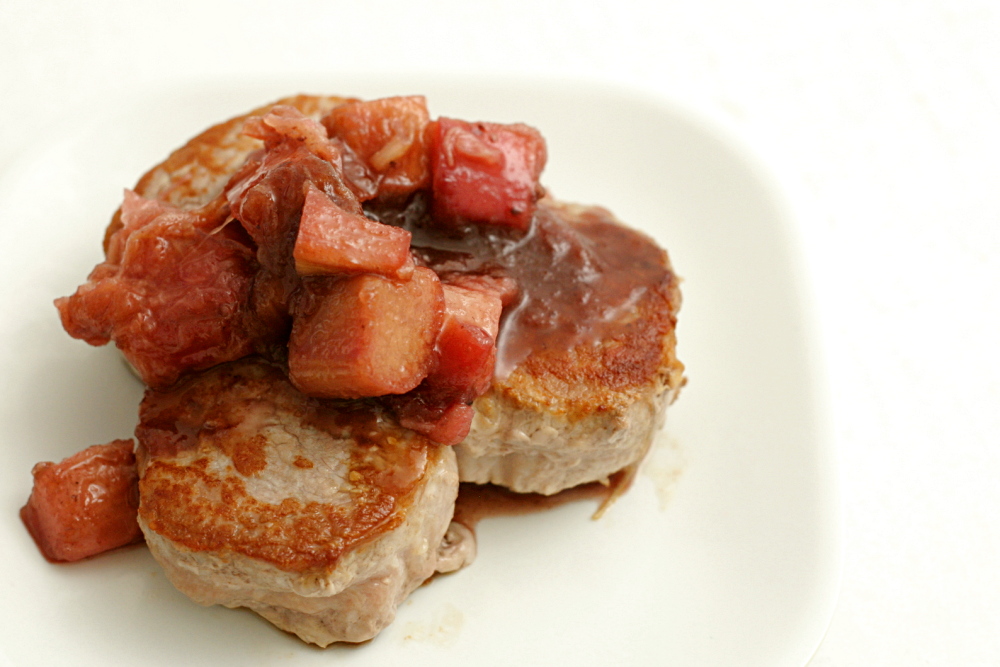
pork tenderloin with rhubarb sauce

copy-of-img_6083

For years, before I had a food blog, I primarily cooked Cooks Illustrated recipes. I did worry about whether I was relying on them too much and if I was creative enough, but because I was making great food and learning useful tricks, I didn’t think too much of it. The main problem I had was that CI’s schtick is to perfect common recipes, so while I was making very good versions of familiar foods, I rarely tried unfamiliar flavor combinations.
copy-of-img_6056

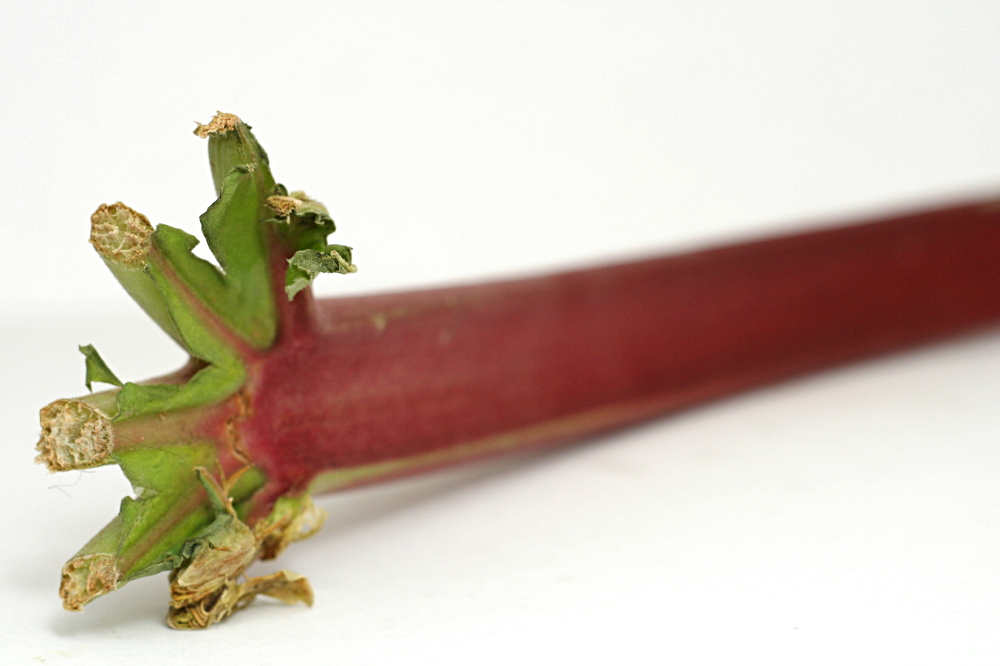
To solve this problem, I bought their Restaurant Favorites at Home cookbook. And then I started a food blog, found other fun recipes to try, and this cookbook mostly got ignored. Feeling uninspired recently, I did a quick flip through it and lucked into something perfect – an opportunity to use rhubarb while it’s in season, plus a type of meat that I underutilitize.
copy-of-img_6057

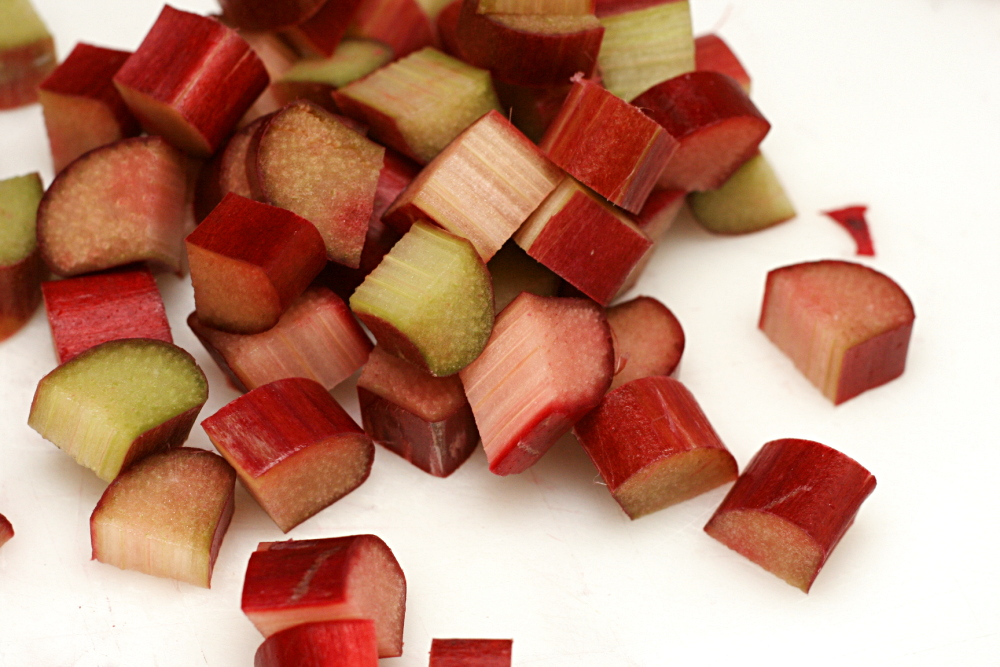
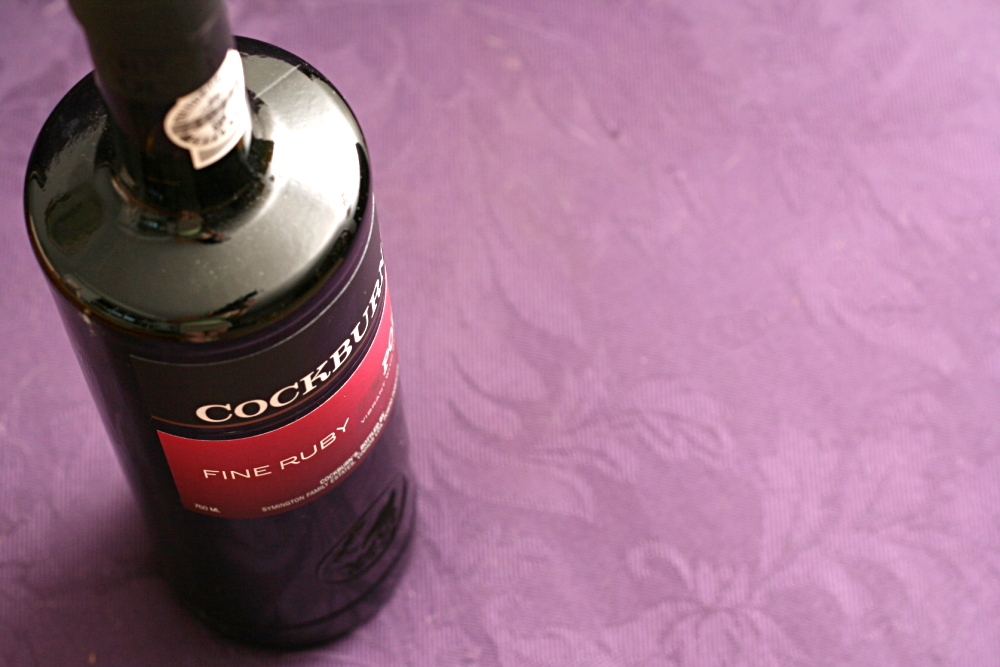
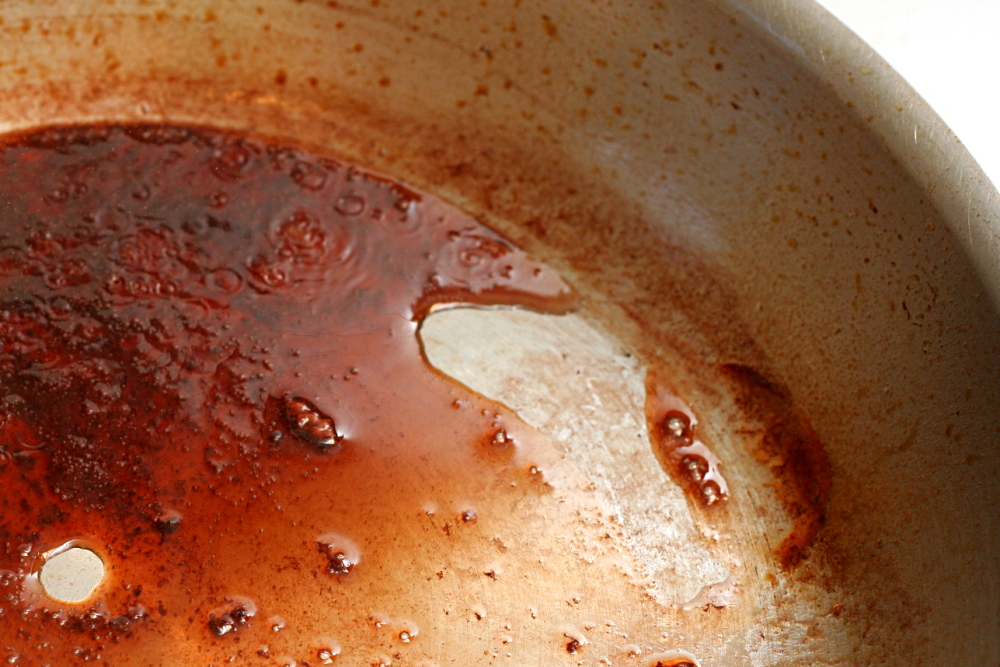
Pork tenderloin seems underappreciated, considering that it’s the pig version of filet mignon. Plus one tenderloin is such a perfect serving size for two people, and it’s easy to cook. Season, set in a hot pan, flip. Then maximize flavor by using the fond in a sauce – a sauce with reduced port and rhubarb.
copy-of-img_6070

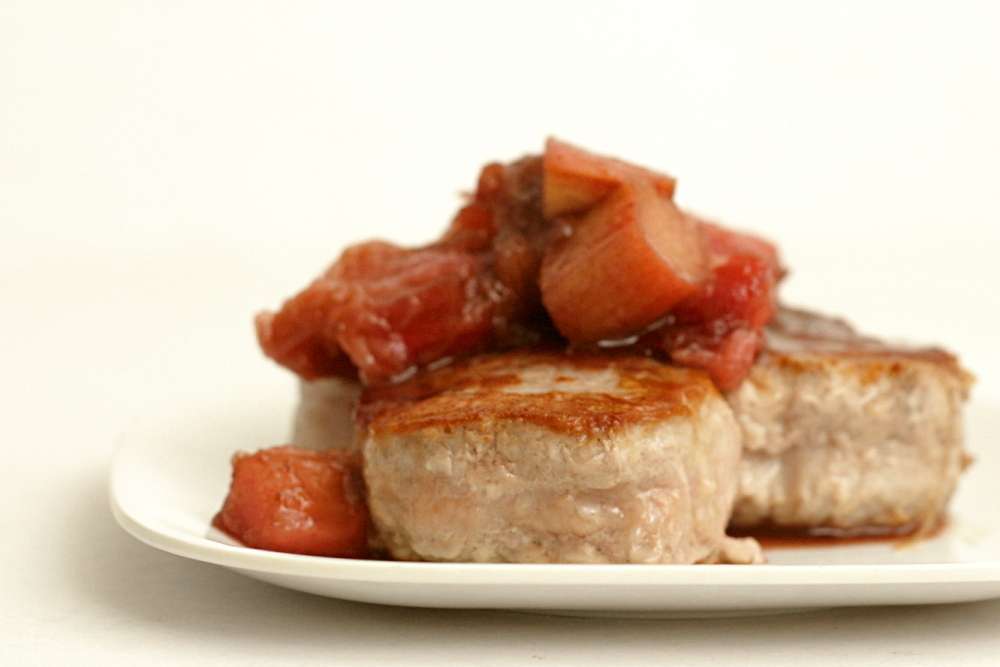
As much as I do like sweet sauces with pork, the ratio of rhubarb to meat was too much for me. I’d prefer about half of the amount of sauce because it overpowered the meat. The other, less important, change I needed to make was to cook the rhubarb for a lot less time, previous to adding it to the rest of the sauce ingredients. Reaching the recommended “softened but still retains its shape” texture took about half the time as the recipe implies.
copy-of-img_6081

With those very easy adjustments, this was a simple and elegant seasonal main dish. I love rhubarb, so I’m happy with any chance I get to eat it, and especially with one of my favorite cuts of meat.
copy-of-img_6087

One year ago: La Palette’s Strawberry Tart

Pork Tenderloin with Rhubarb Sauce (from Cooks Illustrated’s Restaurant Favorites at Home)

6 servings

This is the original recipe. Next time I make it, I’ll halve the rhubarb and the sugar (using 3 stalks of rhubarb and 6 tablespoons of sugar) and keep a close eye on the rhubarb while it cooks in Step 1, counting on it being tender after about 15 minutes of cooking. Also, I found it unnecessary to pound the meat – I just squashed it down a bit.

6 large rhubarb stalks, cut into ½ inch dice (about 4 cups)
¾ cup sugar
3 small pork tenderloins (12-16 ounces each, for a total of 2.5-3 pounds), trimmed of silver skin and excess fat
salt and ground black pepper
2 tablespoons vegetable oil
½ cup ruby port
1 cup low-sodium chicken broth

1. Cook the rhubarb and sugar together in a medium, heavy-bottomed saucepan over low heat until the rhubarb has softened but still retains its shape, 25-35 minutes.

2. Cut each pork tenderloin crosswise into six 2-inch-thick slices. With a cut side facing up, lightly pound each slice into a round ¾-inch-thick medallion. Season the medallions generously with salt and pepper.

3. Adjust an oven rack to the middle position and heat the oven to 200 degrees. Heat 1 tablespoon vegetable oil in a 12-inch skillet (not nonstick) over medium-high heat until just smoking. Lay 9 medallions in the pan and cook until lightly browned, 3 to 4 minutes. Flip the medallions and cook on the second side until lightly browned and nearly cooked through, 3 to 4 minutes longer. Transfer to a clean plate and keep warm in the oven. Add the remaining 1 tablespoon vegetable oil to the skillet and repeat with the remaining 9 medallions. Transfer to the plate in the oven.

4. Add the port and bring to a simmer. Simmer until the port is thick and syrupy, about 2 minutes. Stir in the broth and any accumulated rhubarb juices and return to a simmer. Simmer until the mixture is thick and has reduced to about ½ cup, about 12 minutes. Stir in the rhubarb mixture and any accumulated juices from the pork medallions and heat through, about 30 seconds. Season with salt and pepper to taste. Arrange 3 pork medallions on each of 6 individual plates and spoon about ¼ cup of the rhubarb sauce over the top. Serve immediately.
parisian strawberry tartlets

copy-of-img_6106

Once I started making an effort to eat seasonally, I realized that apples were my best bet for a large part of the year. By the end of winter, I’m impatient for strawberries to kick off the farmer’s market season. I try to avoid apples in the spring and summer, because it’s nice to take a break when I can, and then I get to look forward to them in the fall.

copy-of-img_6090

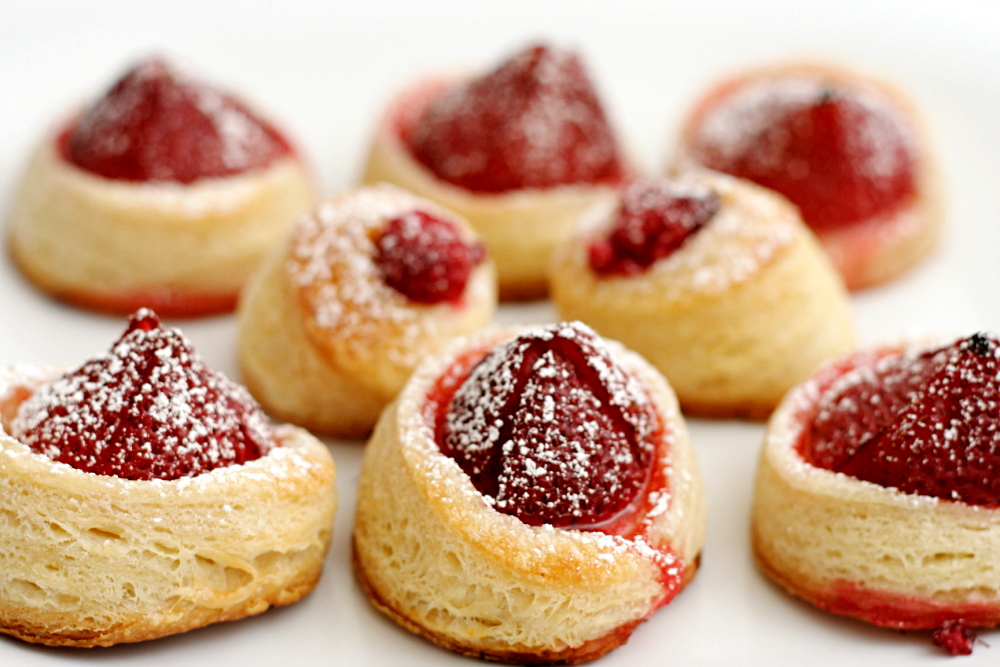
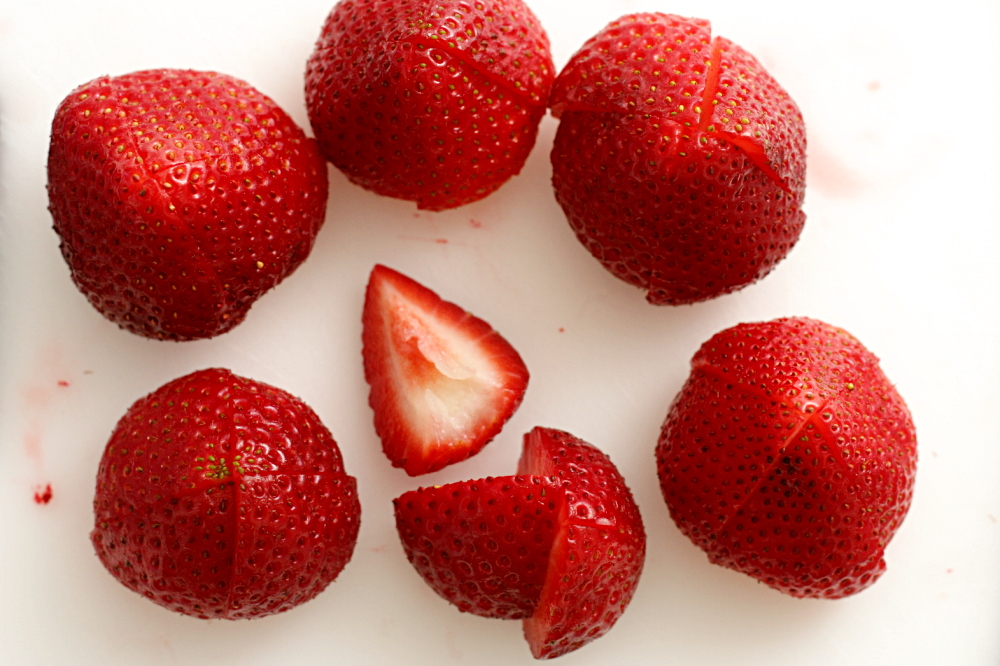
So I didn’t want to make the apple version of this dessert. Most of the other fruits that Dorie recommends are stone fruits that won’t be in season for a month or so. I thought that strawberry mini-tarts would work though.

copy-of-img_6092

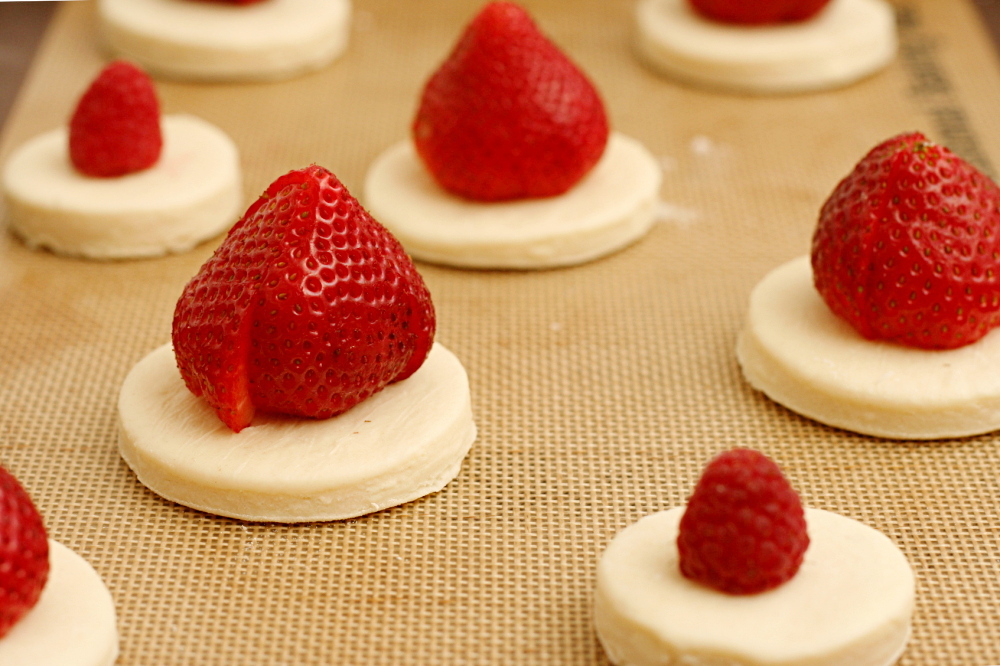
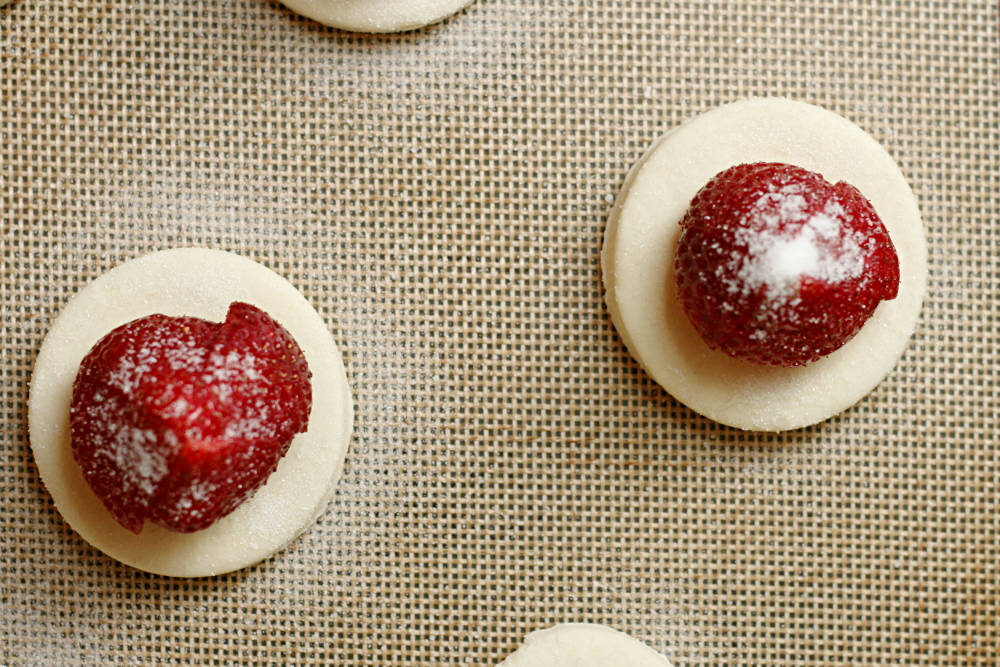
This recipe is very easy. Quartered fruit is positioned in the middle of a round of puff pastry, sprinkled with sugar, dotted with butter, and baked. I skipped the butter and added a pinch of salt.

copy-of-img_6095

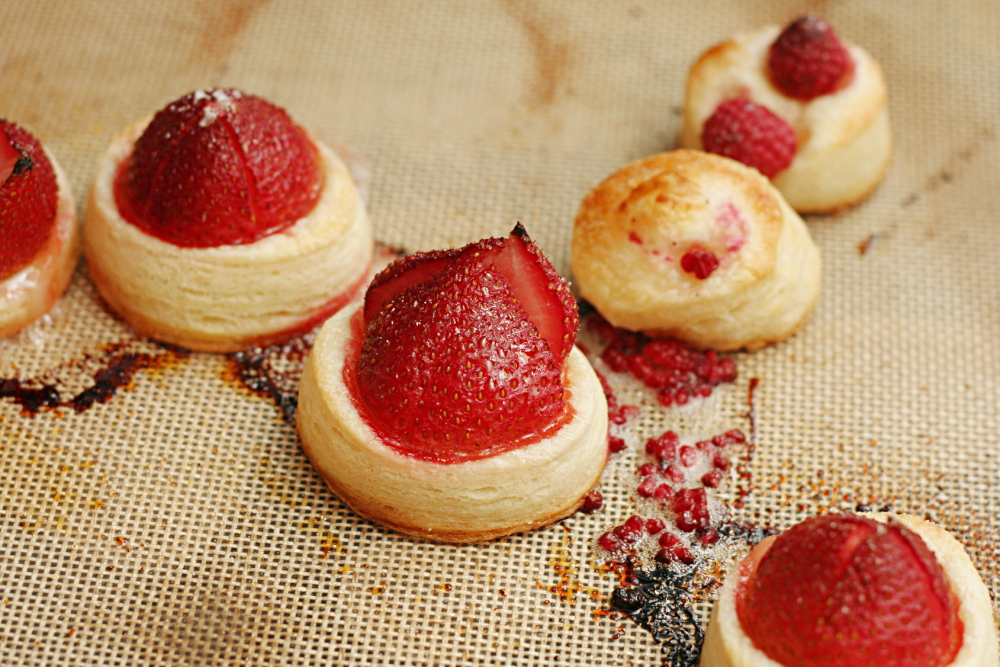
I made even miniaturer tarts too, each topped with a single raspberry, but those didn’t work quite as well. The pastry puffed the berries right off. I sort of balanced the berries back on the pastry after baking, and all was good.

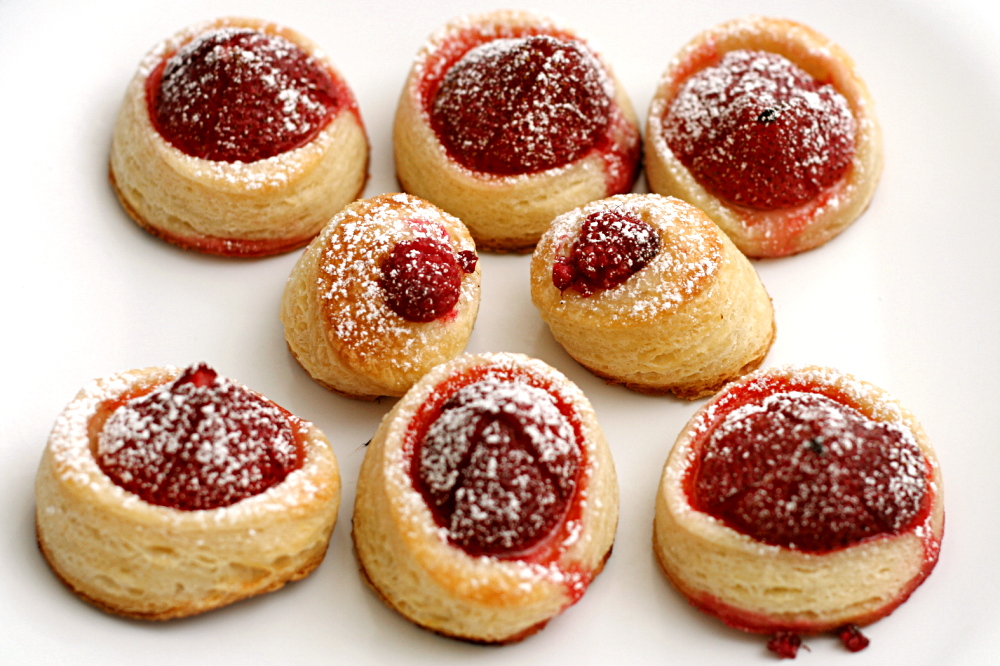
The tarts were great. The flaky, buttery pastry was a great base for the sweet berries.

copy-of-img_6101

Jessica has posted the recipe for this easy, tasty, impressive dessert that she chose for Tuesdays with Dorie.

One year ago: Pita Bread

copy-of-img_6107

strawberry cake

copy-of-img_5603

I do not like oddball mixing methods. In fact, unless they’re explained, my habit is to ignore them completely. I know that muffins are sometimes mixed like cakes and that there are different types of cookies, but in general, I’m familiar with the normal mixing methods, and if something strays too far from what I recognize, it annoys me and I adapt the recipe to what seems more sensible.

copy-of-img_5021

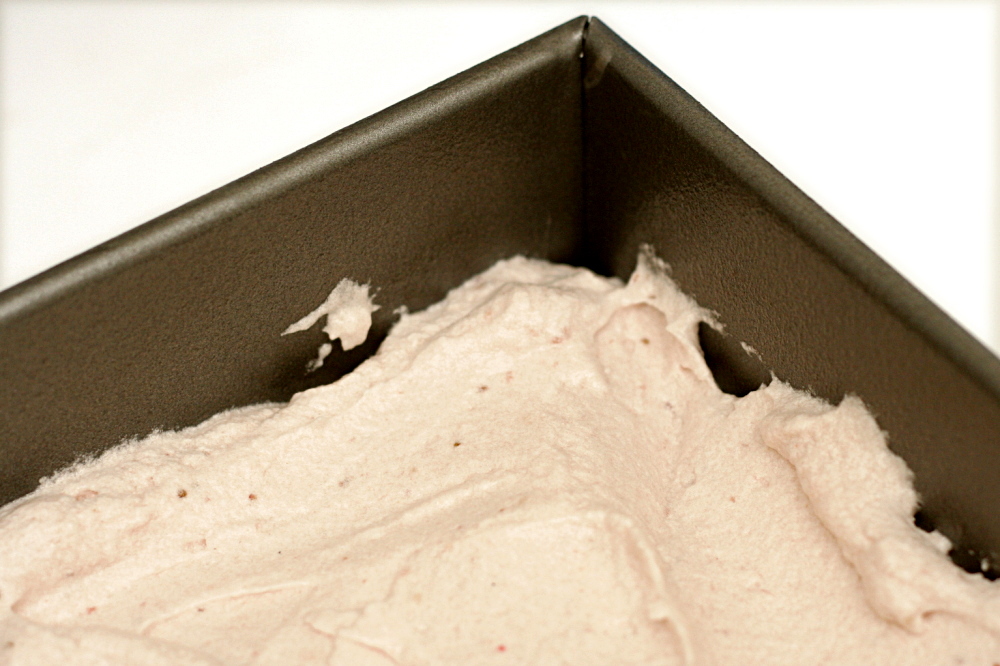
The first strawberry cake I made has a weird mixing method. You mix the dry ingredients in the mixer bowl, then add strawberry puree and softened butter and beat the mixture until it’s fluffy. Only then do you add milk and the egg whites in a few additions, mixing just until they’re mixed in.

copy-of-img_5026

The egg whites are added at the end? Bizarro.

*Disclaimer: I accidentally added the milk with the strawberry puree. I don’t think this would have a significant effect on the outcome, but I can’t be sure.

copy-of-img_5033

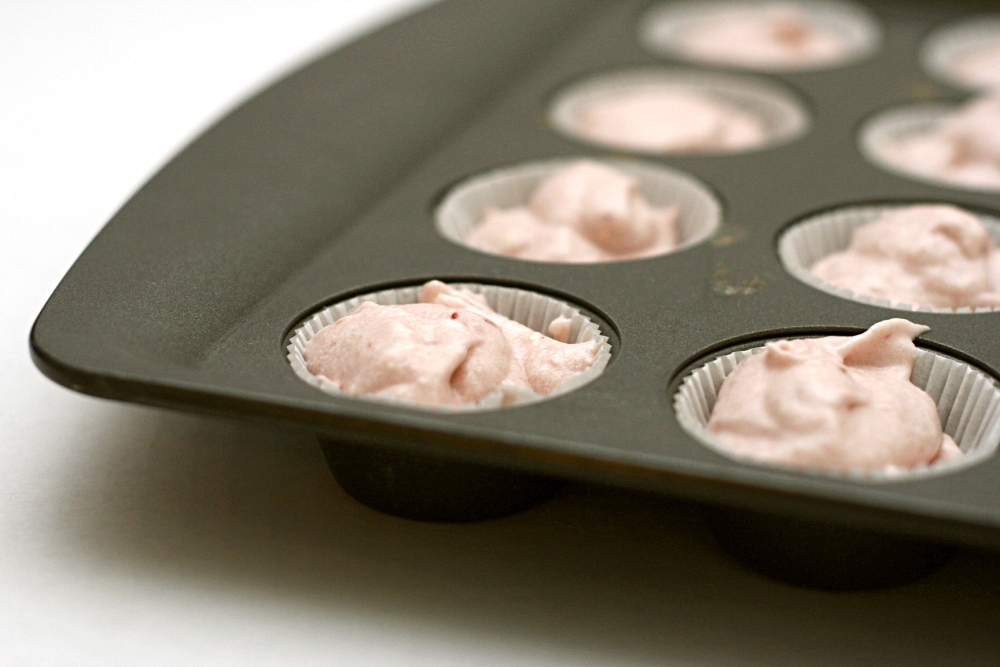
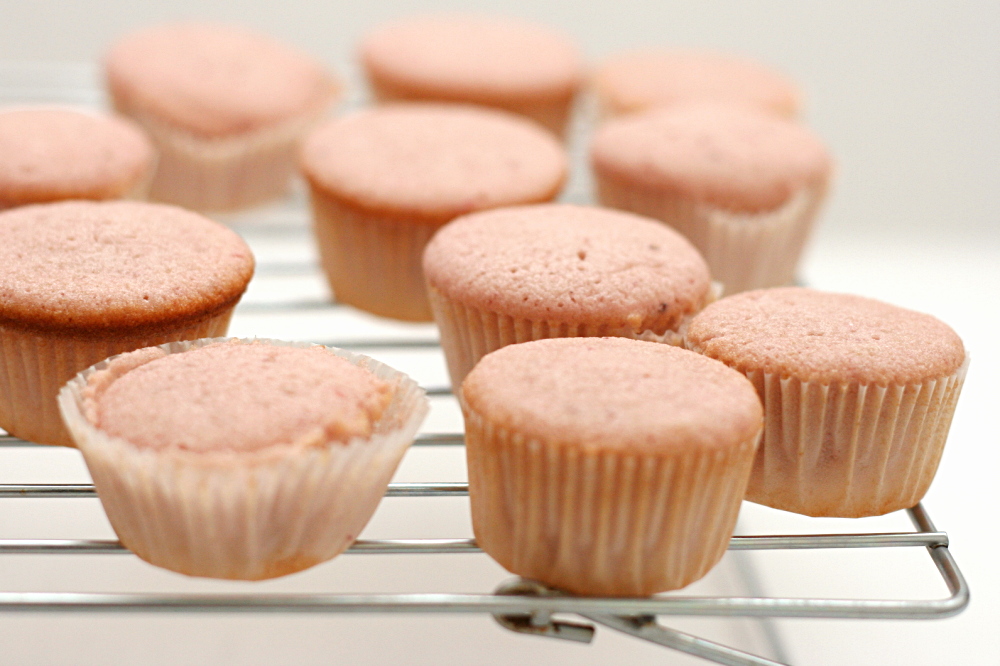
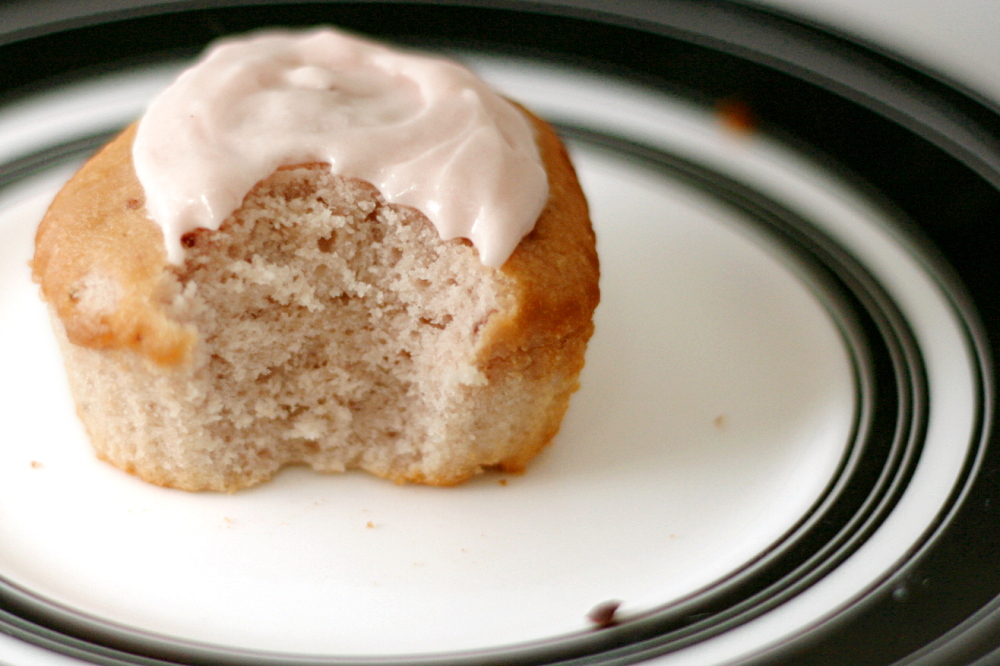
The cake was good, but, to me, not perfect. My mini cupcakes were a little sticky, or maybe gummy is a better word. What’s stranger is that all of the cupcake wrappers detached themselves from the cupcake within a few hours of baking. The flavor was great though, and every time I opened the lid to the container, I got a nice whiff of strawberries.

copy-of-img_5042

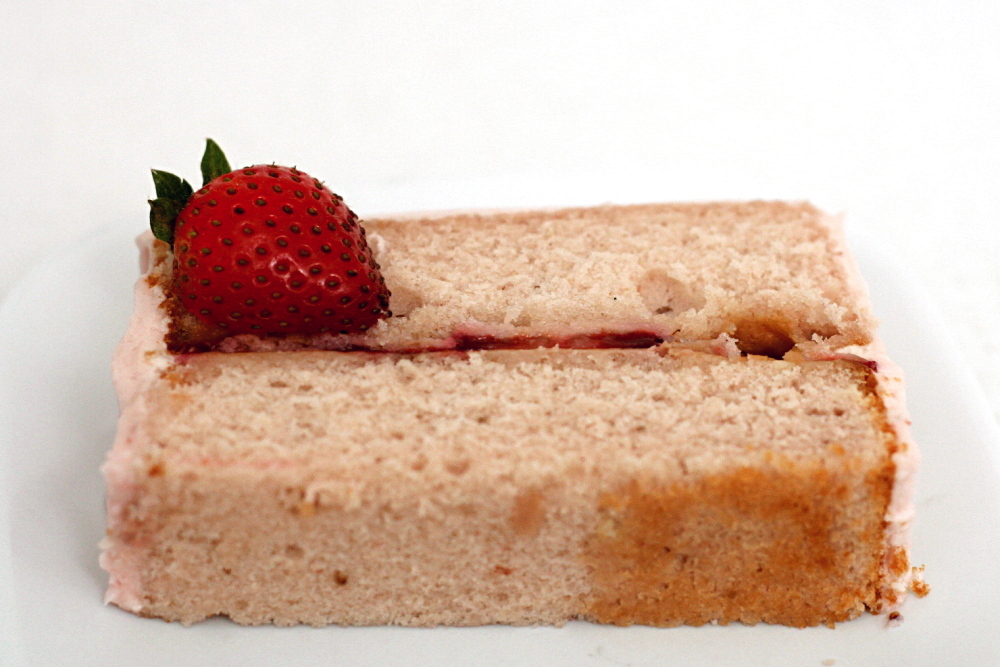
The other recipe I tried, from Good Things Catered, is similar to Cooks Illustrated’s white cake recipe, which I have previously enjoyed, with strawberry puree substituted for a portion of the milk. This recipe also has an unusual method – dry ingredients, then butter, most of the eggs + liquid, and then the rest of the eggs and liquid, followed by about a minute of beating the batter.

copy-of-img_5565

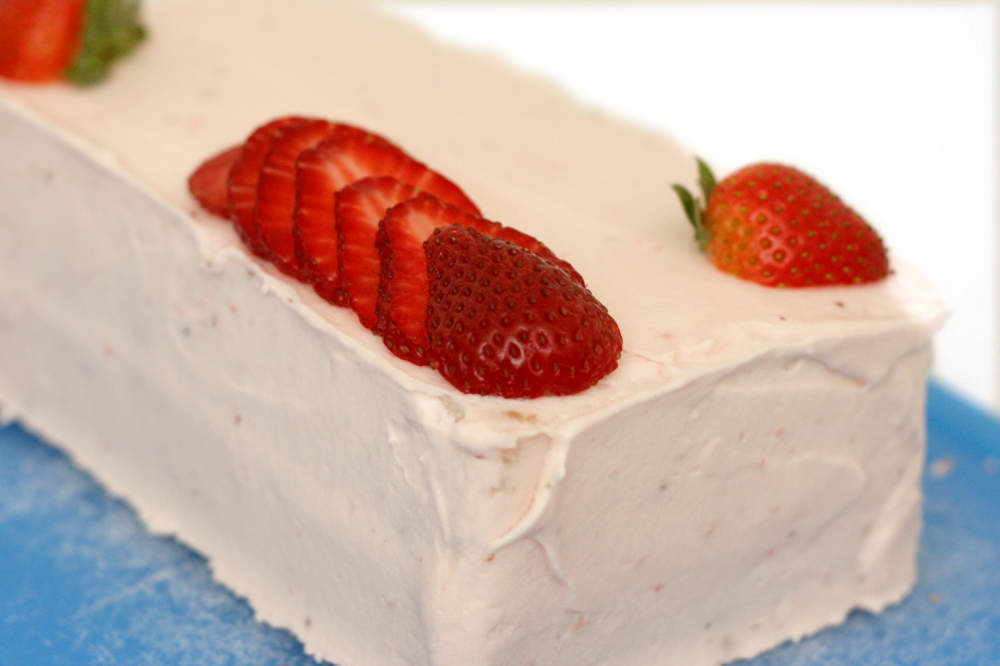
This cake, I have to admit, seemed a little dry. On the other hand, I did refrigerate it almost immediately after cooling, and then it was in and out of the freezer as I tried to neatly frost it, so perhaps I was a little too rough with it.

copy-of-img_5043

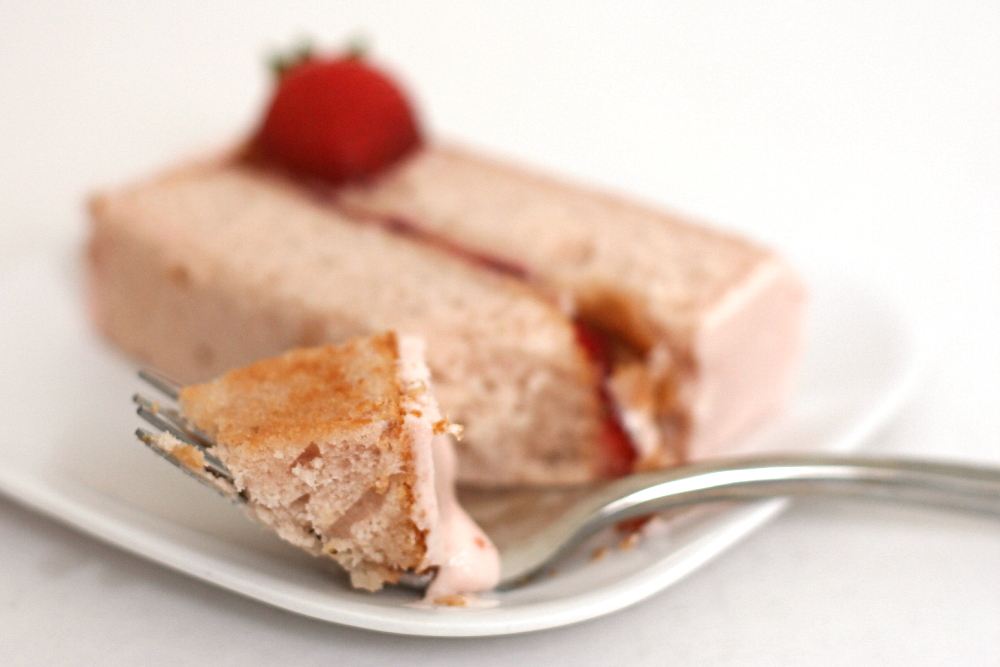
Both cakes were good. The strawberry flavor is definitely noticeable, which is nice. If I had to choose between the two, I’d choose the first one, from the Sky High cookbook, because it seemed more tender. However, what I really want to do is try the ingredients of the first one with a different mixing method. I have a feeling you can’t combine those ingredients and end up with anything that isn’t good, but I love to experiment.

copy-of-img_5568

One year ago: Baba Ghanoush and Fafafel

Pink Lady Cake (from Sky High via Smitten Kitchen)

Keep in mind that Sky High designs recipes for big cakes. If you’re not feeding a crowd, don’t be afraid to cut the recipe in half, which will yield the same amount of cake as most other cake recipes. Divide the batter between two 8- or 9-inch round pans and bake for 23-25 minutes.

All of the cupcake pictures are of this cake.

4½ cups cake flour
3 cups sugar
5¼ teaspoons baking powder
¾ teaspoon salt
3 sticks (12 ounces) unsalted butter, at room temperature
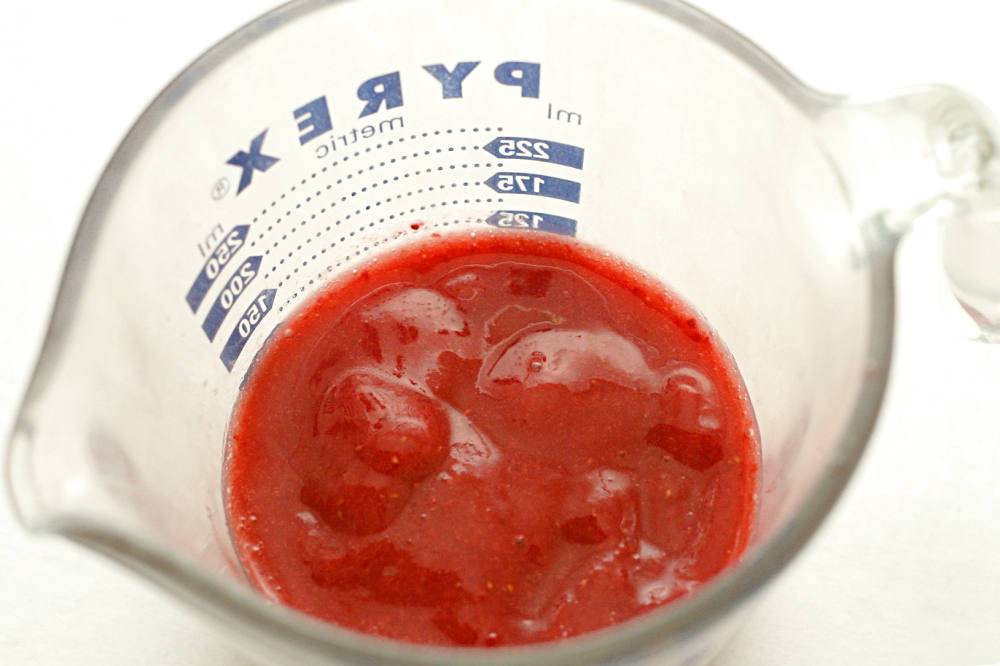
1½ cups pureed frozen strawberries (from about 12 ounces of strawberries)
8 egg whites
⅔ cup milk
1 to 2 drops red food dye, optional (to make the pink color more intense)

1. Preheat the oven to 350F. Butter three 9-inch round or 8-inch square cake pans. Line with parchment or waxed paper and butter the paper.

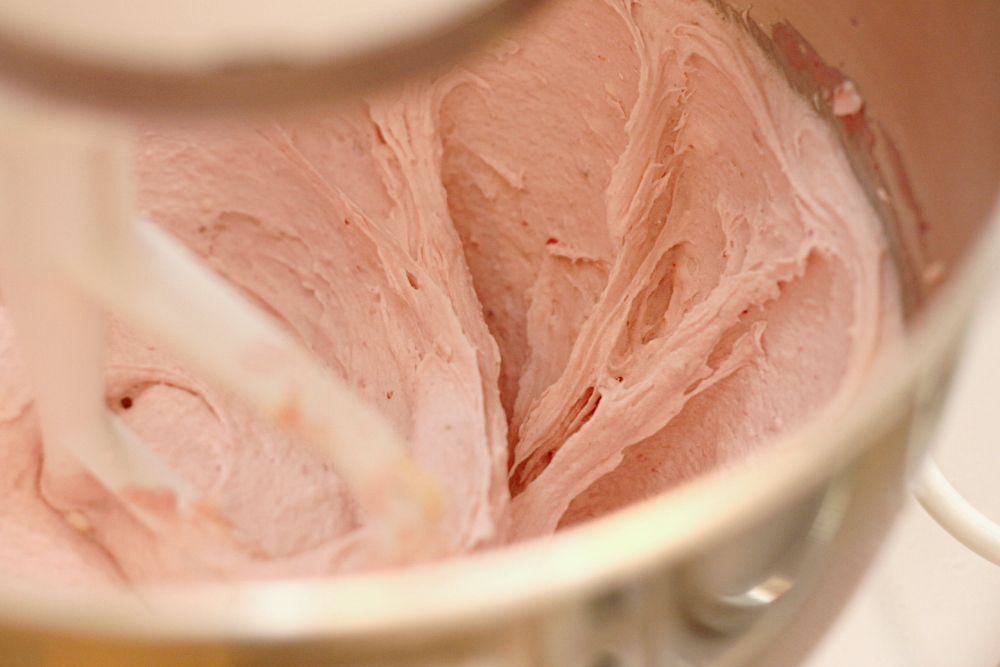
2. Put the flour, sugar, baking powder, and salt in a large mixer bowl. With the electric mixer on low speed, blend for 30 seconds. Add the butter and strawberry puree and mix to blend the ingredients. Raise the speed to medium and beat until light and fluffy, 2 to 3 minutes; the batter will resemble strawberry ice cream at this point.

3. In another large bowl, whisk together the egg whites, milk and red food dye, if using, to blend. Add the whites to the batter in two or three additions, scraping down the sides of the bowl well and mixing only to incorporate after each addition. Divide the batter among the three prepared pans.

4. Bake the cakes for 30 to 34 minutes, or until a cake tester or wooden toothpick inserted into the center comes out clean. Allow the layers to cool in the pans for 10 to 15 minutes. Invert and turn out onto wire racks and peel off the paper liners. Let stand until completely cooled before assembling the cake, at least an hour.

copy-of-img_5054

Strawberry Cake (adapted from Good Things Catered and Cooks Illustrated’s Classic White Layer Cake)

All of the layer cake pictures are from this cake.

Serves 12

Nonstick cooking spray
2¼ cups cake flour (9 ounces), plus more for dusting the pans
¼ cup whole milk, at room temperature
¾ cup strawberry puree (from about 6 ounces strawberries)
6 large egg whites (¾ cup), at room temperature
1 tablespoon vanilla extract
1¾ cups granulated sugar (12¼ ounces)
4 teaspoons baking powder
1 teaspoon table salt
12 tablespoons unsalted butter (1½ sticks), softened but still cool

1. Set oven rack in middle position. (If oven is too small to cook both layers on a single rack, set racks in upper-middle and lower-middle positions.) Heat oven to 350 degrees. Spray two 9-inch round cake pans with nonstick cooking spray; line the bottoms with parchment or waxed paper rounds. Spray the paper rounds, dust the pans with flour, and invert pans and rap sharply to remove excess flour.

2. Pour milk, strawberry puree, egg whites, and extract into 2-cup glass measure, and mix with fork until blended.

3. Mix cake flour, sugar, baking powder, and salt in bowl of electric mixer at slow speed. Add butter; continue beating at slow speed until mixture resembles moist crumbs, with no powdery streaks remaining.

4. Add all but ½ cup of strawberry mixture to crumbs and beat at medium speed (or high speed if using handheld mixer) for 1½ minutes. Add remaining ½ cup of strawberry mixture and beat 30 seconds more. Stop mixer and scrape sides of bowl. Return mixer to medium (or high) speed and beat 20 seconds longer.

5. Divide batter evenly between two prepared cake pans; using rubber spatula, spread batter to pan walls and smooth tops. Arrange pans at least 3 inches from the oven walls and 3 inches apart. (If oven is small, place pans on separate racks in staggered fashion to allow for air circulation.) Bake until thin skewer or toothpick inserted in the center comes out clean, 23 to 25 minutes.

6. Let cakes rest in pans for 3 minutes. Loosen from sides of pans with a knife, if necessary, and invert onto wire racks. Reinvert onto additional wire racks. Let cool completely, about 1½ hours.

copy-of-img_5597

aligot (french mashed potatoes)

copy-of-img_3910

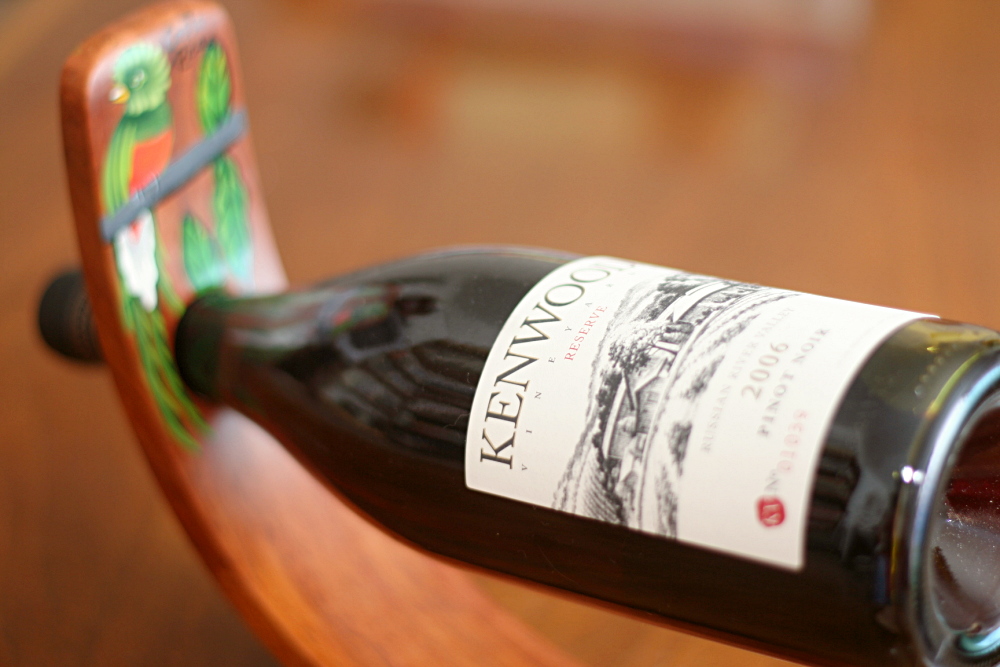
When I saw this recipe is a recent issue of Cooks Illustrated, it was immediately registered as “for special occasions only.” Seriously, I consider regular mashed potatoes fairly decadent, much less the cheese-laden variety. But then I managed to create a special occasion: Dave and I found a cheap, good bottle of Pinot Noir! In Pennsylvania even! (Don’t get me started on PA’s inane liquor laws.  Drives me. Up the. Wall.)

copy-of-img_3866

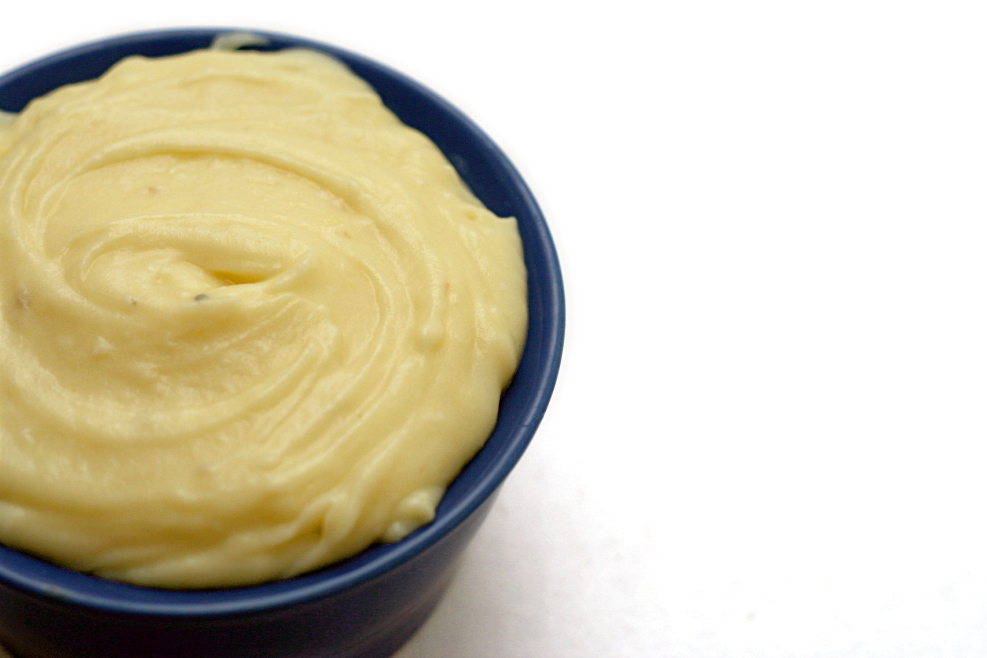
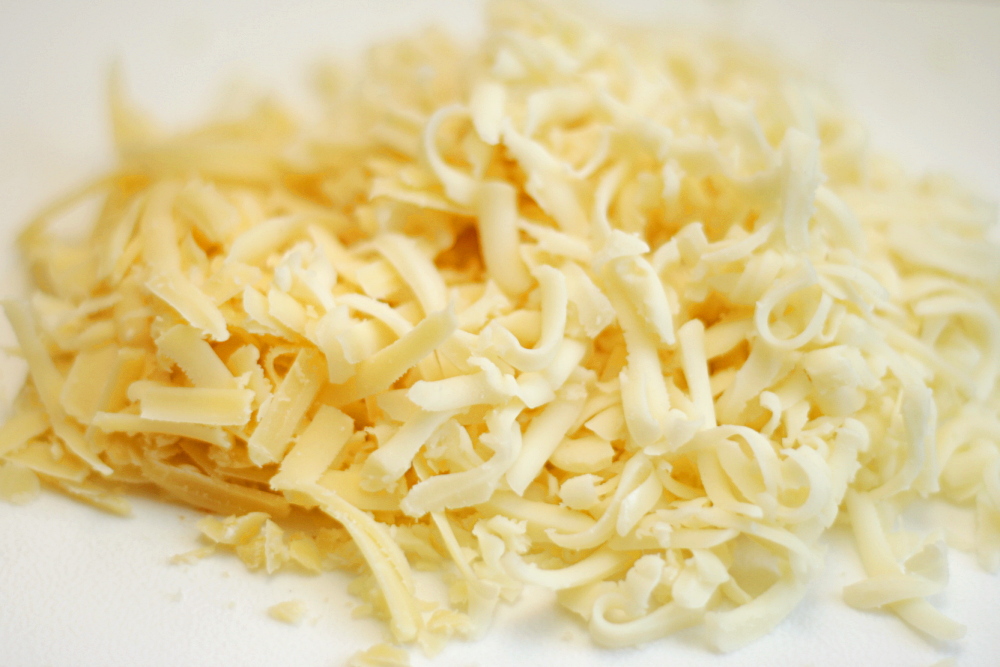
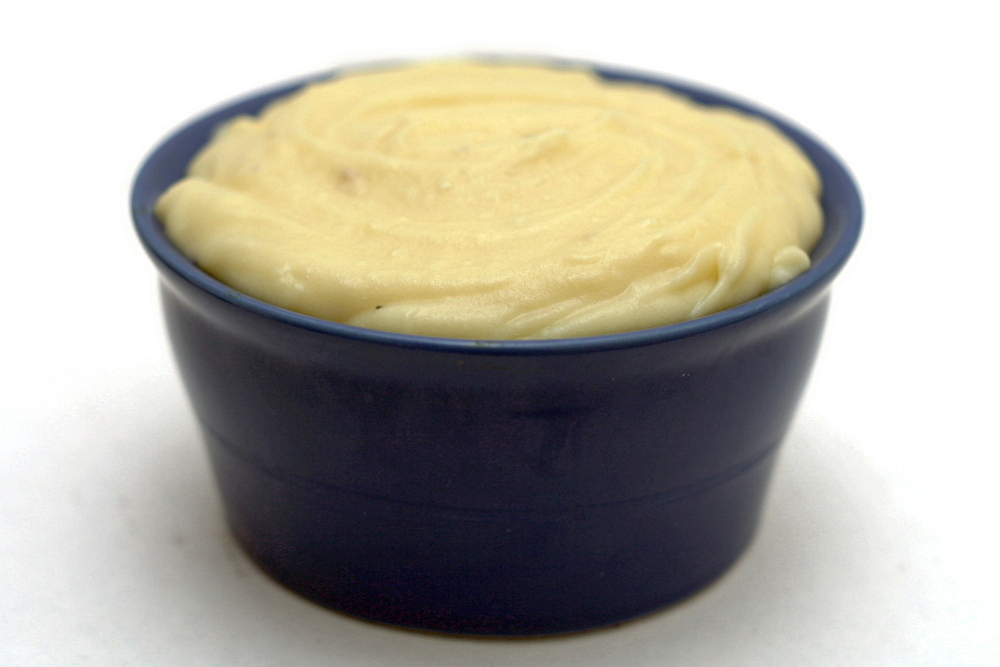
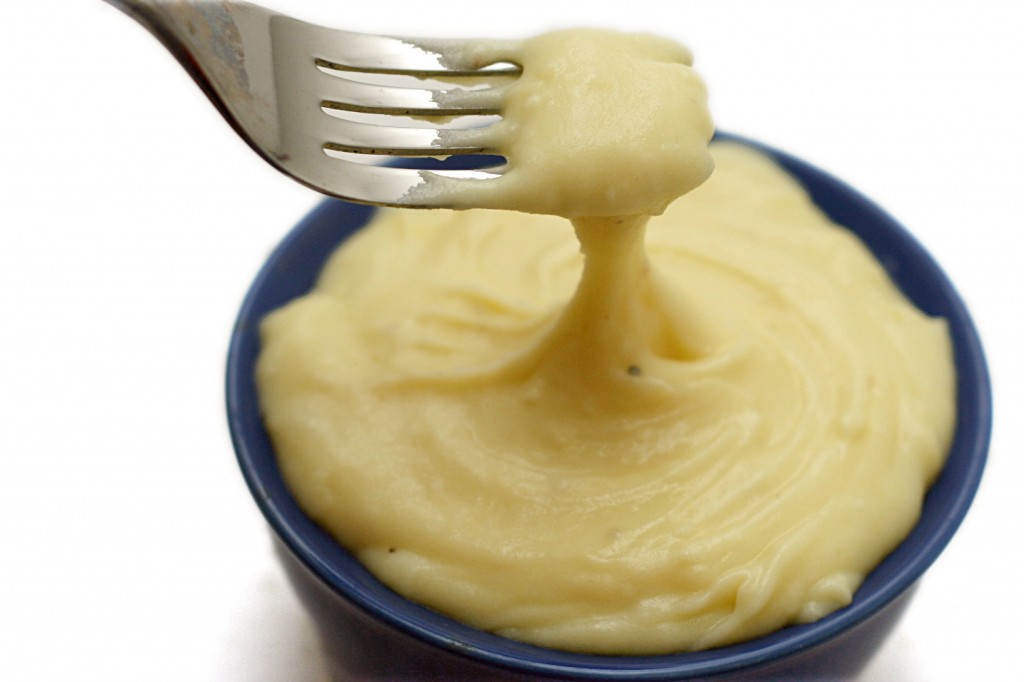
This is a great recipe for learning about the chemistry of potatoes. Have you ever heard that “mashing” boiled potatoes with a mixer will result in gluey mashed potatoes? This recipe goes one step further and processes them in the food processor. The resulting texture is fascinating – very stretchy, even before any cheese is added. Then the potatoes are mixed with garlic and milk, and shredded Gruyere (for flavor) and mozzarella (for texture) are vigorously stirred in.

copy-of-img_3880

I love how little changes in technique can make such a big difference in the outcome. I’m not giving up on regular mashed potatoes, but I also enjoyed the smooth texture and rich flavor of these. It’s hard to go wrong with potatoes and garlic and cheese.

copy-of-img_3912

One year ago: French Chocolate Brownies

Aligot (French Mashed Potatoes) (from Cooks Illustrated)

CI note: The finished potatoes should have a smooth and slightly elastic texture. White cheddar can be substituted for the Gruyere. For richer, stretchier aligot, double the mozzarella.

My potatoes did end up too salty, so that’s something to watch out for.

2 pounds Yukon Gold potatoes (4 to 6 medium), peeled, cut into ½-inch-thick slices, rinsed well, and drained
table salt
3 tablespoon unsalted butter
2 medium garlic cloves, minced or pressed through a garlic press (about 2 teaspoons)
1-1½ cups whole milk
4 ounces mozzarella cheese, shredded (about 1 cup)
4 ounces Gruyere cheese, shredded (about 1 cup)
Ground black pepper

1. Place the potatoes in a large saucepan, add water to cover by 1 inch and add 1 tablespoon salt. Partially cover the saucepan and bring the potatoes to a boil over high heat. Reduce the heat to medium-low and simmer until the potatoes are tender and just break apart when poked with a fork, 12 to 17 minutes. Drain the potatoes and dry the saucepan.

2. Transfer the potatoes to a food processor; add the butter, garlic, and 1½ teaspoon salt. Pulse until the butter is melted and incorporated into the potatoes, about ten 1-second pulses. Add 1 cup milk and continue to process until the potatoes are smooth and creamy, about 20 seconds, scraping down the sides halfway through.

3. Return the potato mixture to the saucepan and set it over medium heat. Stir in the cheeses, 1 cup at a time, until incorporated. Continue to cook the potatoes, stirring vigorously, until the cheese is fully melted and the mixture is smooth and elastic, 3 to 5 minutes. If the mixture is difficult to stir and seems thick, stir in 2 tablespoons of milk at a time (up to ½ cup) until the potatoes are loose and creamy. Season with salt and pepper. Serve immediately.
copy-of-img_3909

artos (greek celebration bread)

copy-of-img_5976

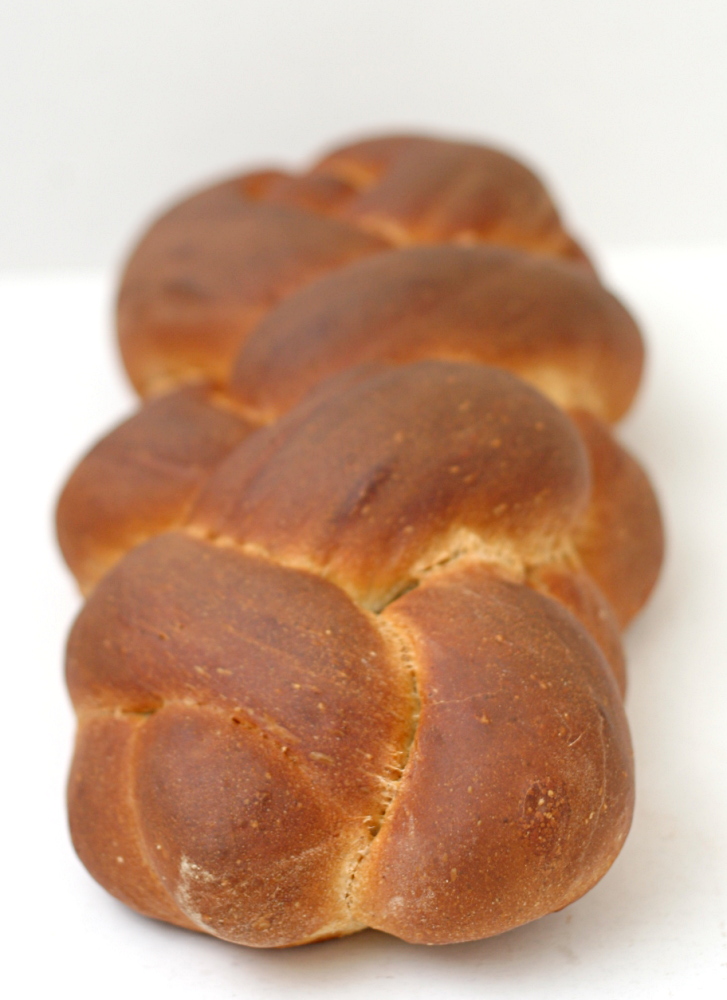
I’ve always wanted to make this bread just because the shape of one of the variations is so cool. It’s a round loaf with strips of dough crossed over the top, the ends split and curled around.

I ended up not using that shape though. The bread is flavored with all sorts of things – almond extract, lemon zest, fall spices, olive oil, honey – so I thought it would make a particularly good French toast, and a round loaf didn’t seem practical for that. Instead, I tried a 4-strand braid, which looks pretty much like a 3-strand braid after baking. That’s okay, it was easy to do.

When Dave tried the bread, he said “This smells like Christmas. Did you put Christmas in this? The bread did, indeed, make for some pretty amazing French toast. Except I think it needs more salt. I’m a broken record.

For the recipe for this bread, check Michelle’s blog.  She also shows the shape I described above.  However, I skipped the dried fruit, nuts, and glaze, plus I used sourdough starter instead of the poolish.

rhubarb scones

copy-of-img_5500

Scones get a seriously bad rap. People think they’re bland, dense, and/or crumbly. People think you can only enjoy them if you have a mug of coffee or tea with them. Branny told me that her husband thinks they taste like chalk. And these people aren’t completely wrong – some scones are pretty terrible. As for the whether they need to be accompanied by a hot drink, I happen to think that everything even a little sweet is better with coffee or tea.  But that doesn’t mean that I can’t enjoy a cookie without coffee.
copy-of-img_5281

Like a lot of foods, you might have to make scones yourself to get good ones. I can’t personally attest to the scones at coffee shops, but if they’re on par with every other baked treat I’ve ordered from a national coffee shop chain, they’ll be stale and bland. Don’t judge scones based on this example.

copy-of-img_5288

Scones are similar to biscuits, although many scone recipes have eggs included, which is rare in biscuits. In both, the dry ingredients are mixed first, and cold butter is cut in, then cold liquid is gently stirred in. Compared to the last scone recipe I made, this one has less butter, but richer dairy (cream as opposed to yogurt + milk).

copy-of-img_5517

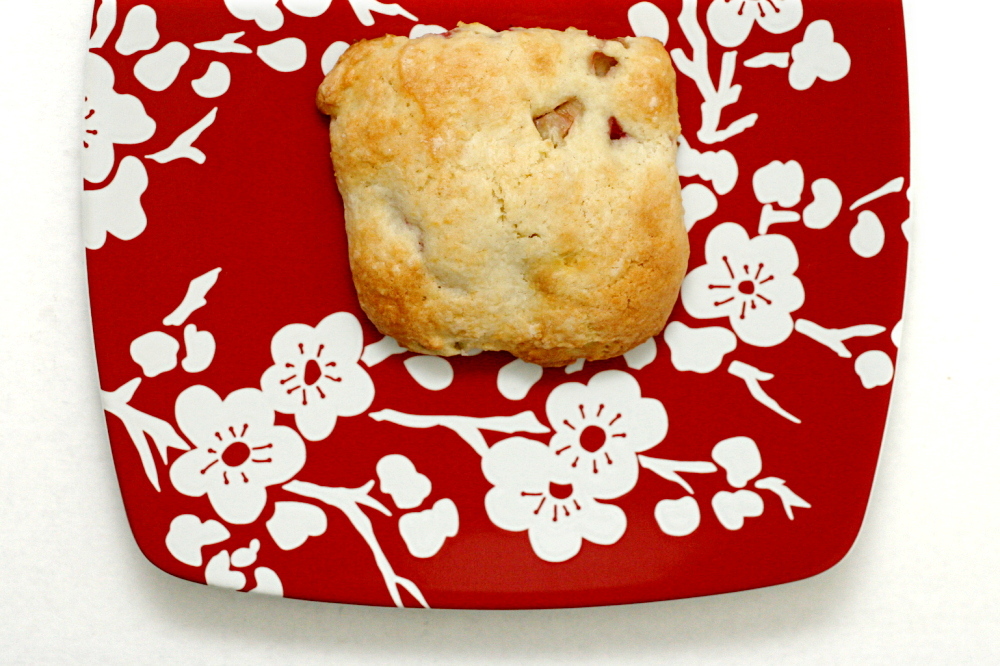
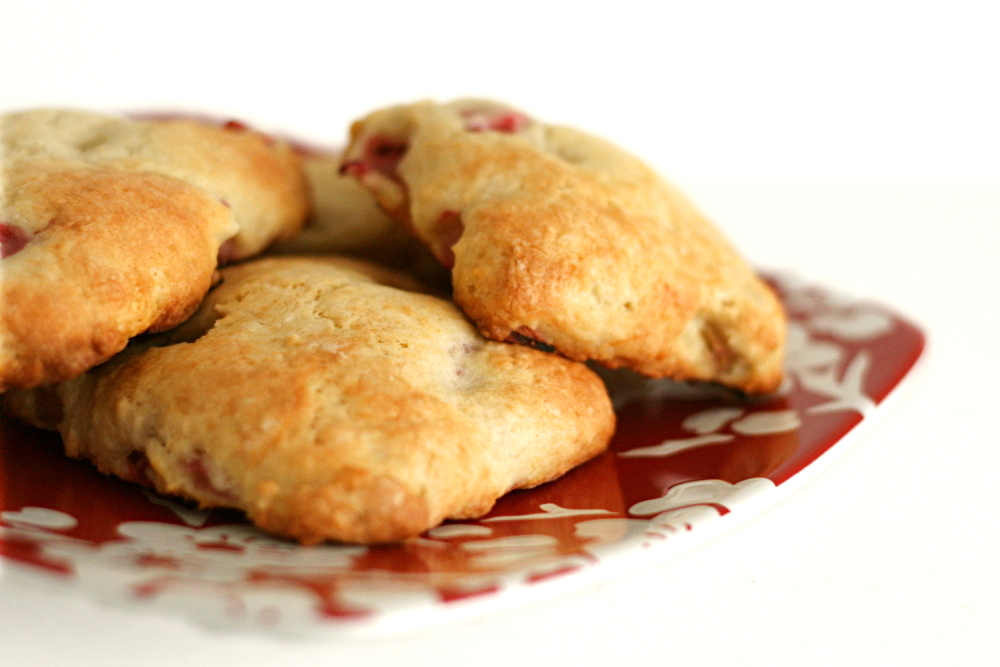
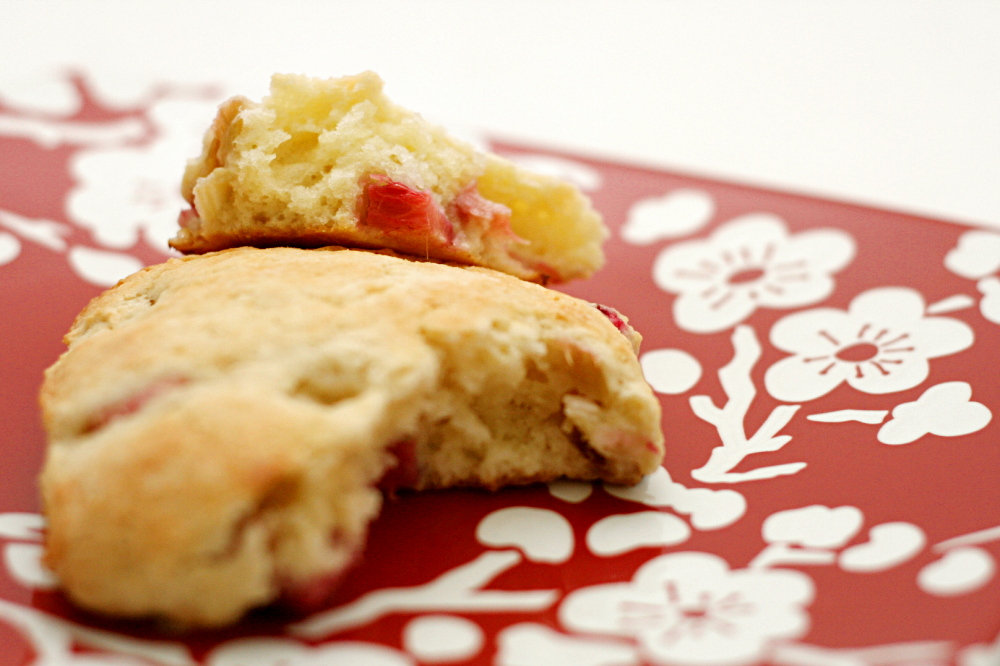
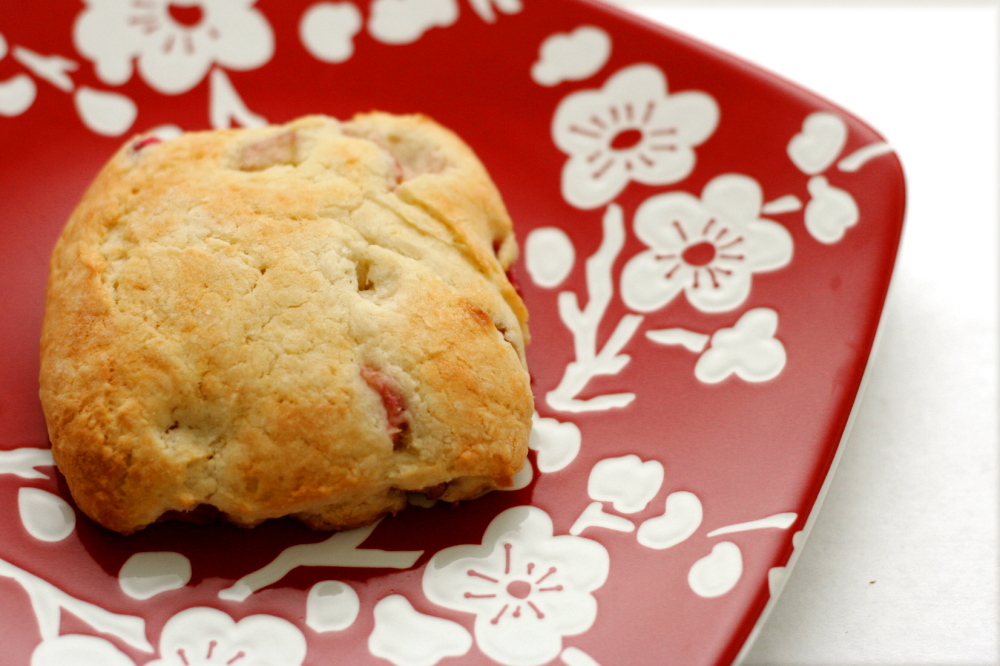
The cream changes the texture from flaky to melt-in-your-mouth tender. They’re sweet, but only slightly so, and studded by juicy, tart bits of rhubarb. There’s nothing bland, dense, crumbly, or chalky about these scones, and while I enjoyed mine with my Saturday cup of coffee, a hot drink is not required to appreciate these. If you think you don’t like scones, try these.

copy-of-img_5496

One year ago: Kaiser Rolls – I have to admit that I’ve made these twice and have decided that they’re just not worth the effort.  I like using this much easier dough instead.

Printer Friendly Recipe
Rhubarb Cream Scones
(adapted from Gourmet via Smitten Kitchen)

I only used 1½ cups (2 stalks) of rhubarb, but it wasn’t nearly enough. I would even err on the high side of 2 cups.

Update 5/8/2012 – While many people have had good results with this recipe, a few commenters have complained that their dough was too wet. This might have to do with imprecise volume measurements of flour, variability in rhubarb juiciness, or perhaps the size of the eggs used. Regardless, start with ½ cup of cream, then add more until the dough comes together but holds its shape. It might be sticky, but you should be able to pat it out with floured hands.

2½ cups (12 ounces) all-purpose flour
½ cup sugar (3.5 ounces) plus 3 tablespoons
1 tablespoon baking powder
½ teaspoon salt
¾ stick (6 tablespoons) cold unsalted butter, cut into bits
2 cups diced rhubarb (¼-inch cubes), about 3 stalks
1 large egg
1 large egg yolk
1 cup heavy cream (see update)

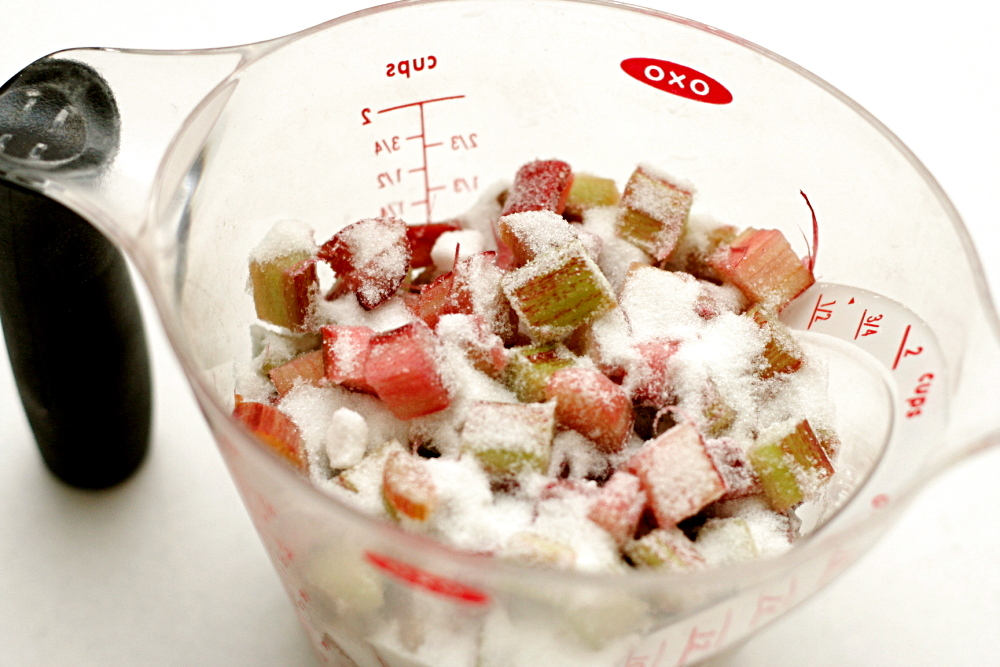
1. Preheat oven to 400F and line a large baking sheet with parchment paper. Adjust a baking rack to the middle position. In a small bowl, mix the rhubarb with 3 tablespoons sugar.

2. In a food processor, pulse the flour, ½ cup sugar, baking powder, and salt a few times, just to mix. Distribute the butter evenly over the dry ingredients and pulse until the mixture resembles coarse meal. Transfer to a large bowl.

3. Stir the rhubarb into the flour mixture. Lightly beat the egg, yolk, and cream together in a bowl (use the same one you used for the rhubarb), then add this mixture to the flour mixture. Stir until just combined.

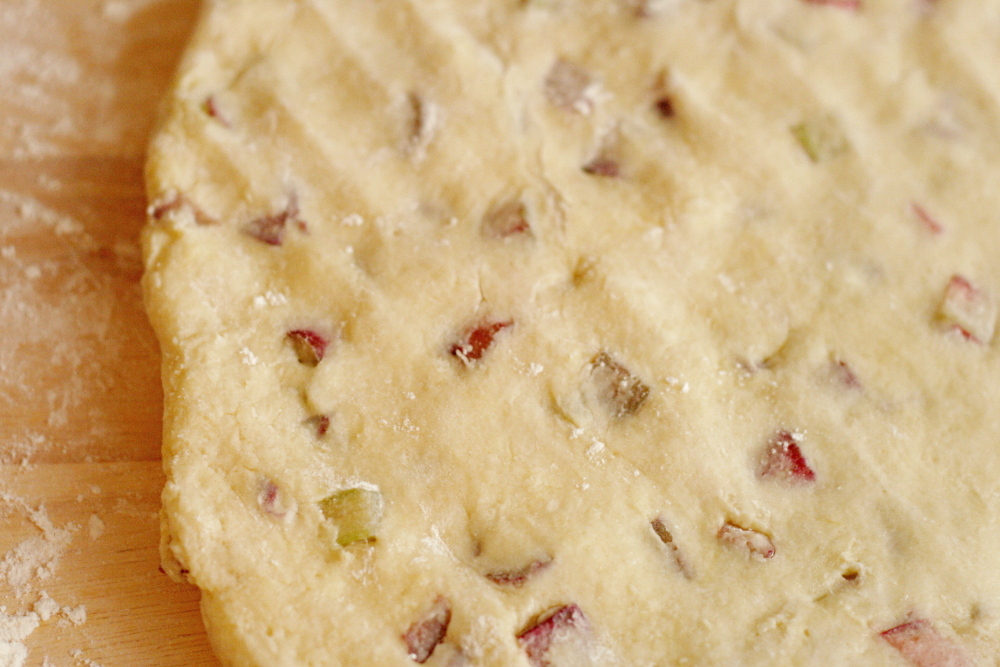
4. On a well-floured surface with floured hands, pat the dough into a 1-inch-thick round (about 8 inches in diameter). Using a 2-inch round cutter or rim of a glass dipped in flour, cut out as many rounds as possible, rerolling scraps as necessary. Arrange rounds about 1 inch apart on baking sheet and bake for 15 to 20 minutes, or until pale golden.  Transfer the scones to a cooling rack and let them cool slightly before serving.
copy-of-img_5495

cappuccino muffins

copy-of-img_5897

I apologize for being a Debbie downer, but I just wasn’t feeling this month’s Tuesdays with Dorie choices. Apples and cinnamon scream fall and winter to me, peaches won’t be ripe for another month, and two more celebration cakes? Really?

But it’s okay. I’m sure I’ll find something to enjoy about each one. I’ve made three already, and so far, so good.

copy-of-img_5877

The cinnamon cake really does look great, with its tender base, layer of cinnamon, and swirls of chocolate frosting. But I thought if I could cheat by skipping the frosting and reducing the chocolate in the filling, and get something closer to a muffin than a cake, then I could give them to Dave as a morning snack, freeing me up for another dessert recipe I was eager to make last week.

copy-of-img_5874

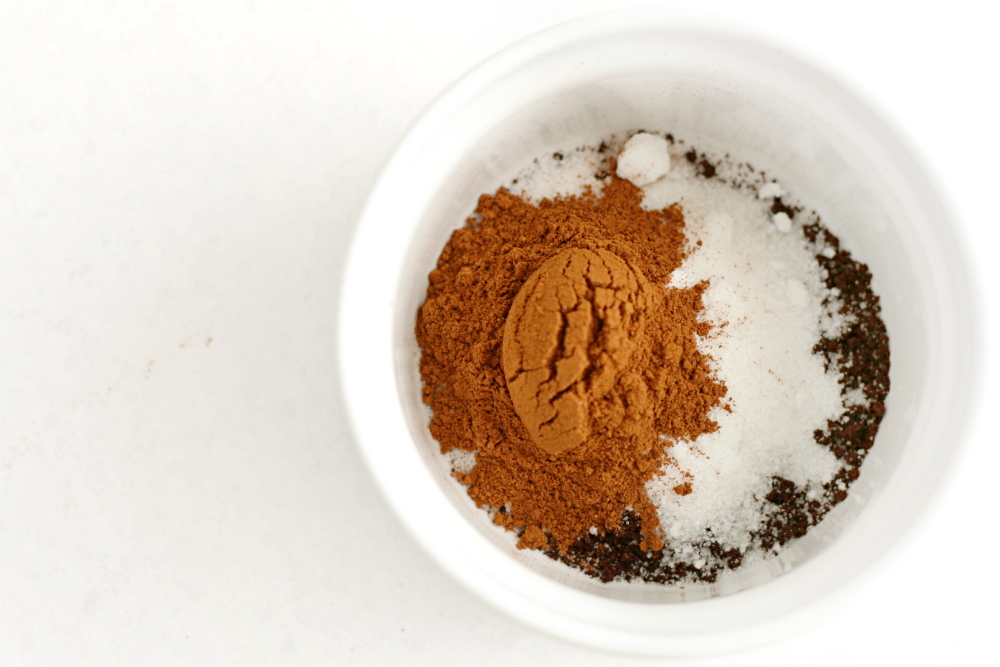
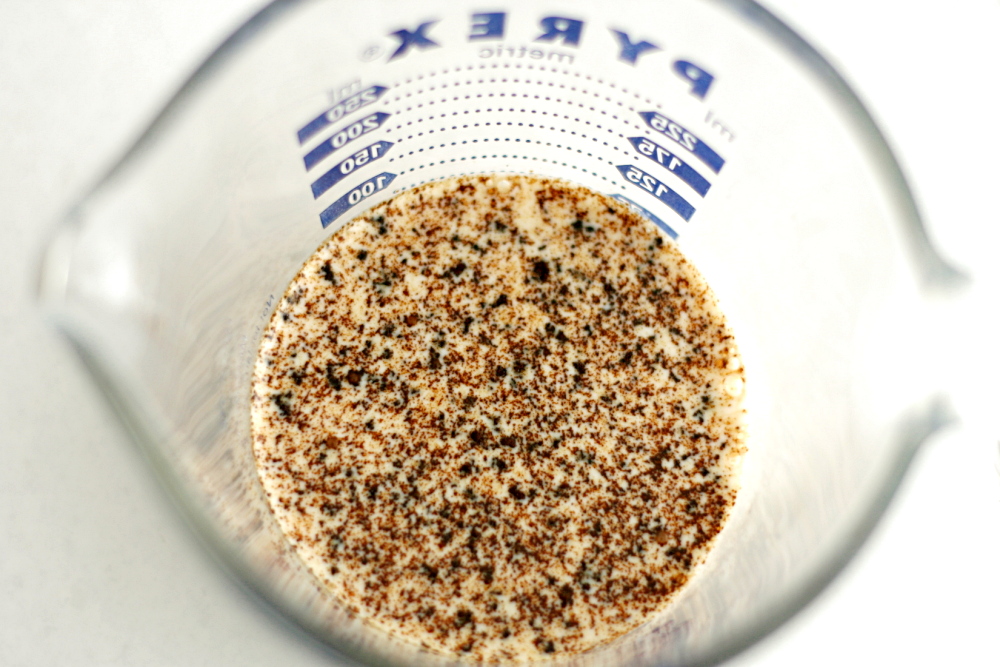
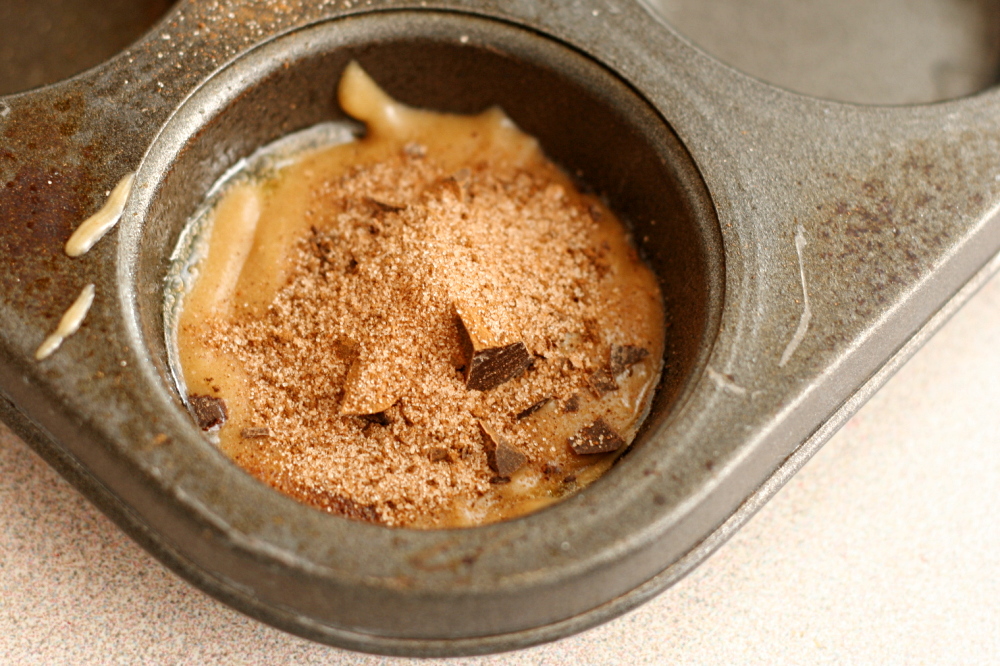
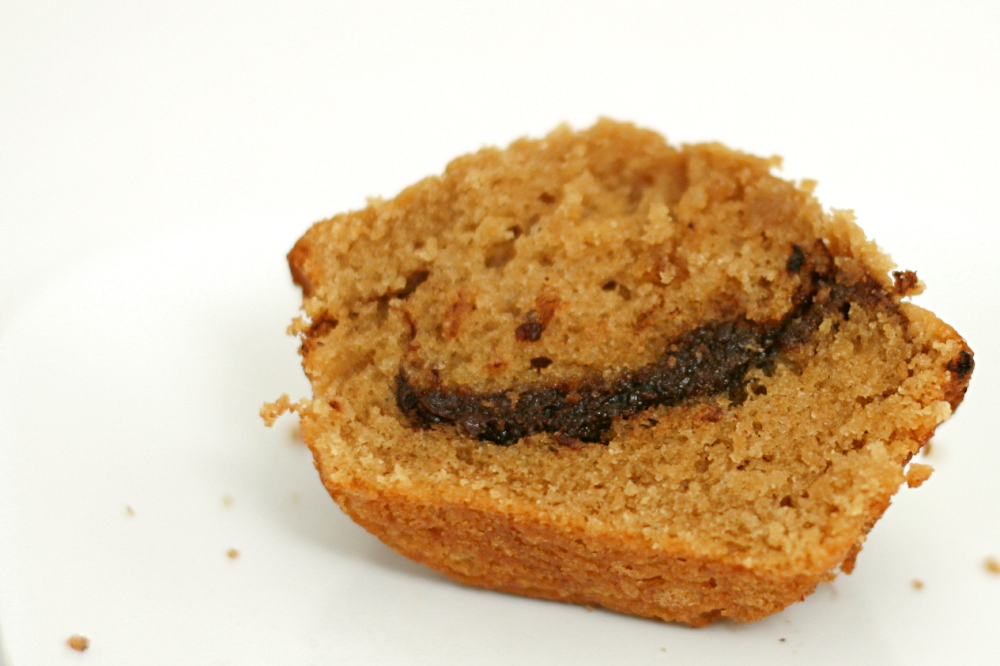
It wasn’t too far of a stretch, since the cake batter was mixed like a muffin – the dry and wet ingredients are mixed separately before being combined. Half of the batter is spread into a pan, a mixture of espresso powder, sugar, and cinnamon is sprinkled over the batter, then some chopped chocolate, and then the remaining batter. Dorie gives a cappuccino version of the recipe as well, where more espresso powder is mixed into the batter, and I made that variation in an effort to make this feel even less like a winter treat.

copy-of-img_5880

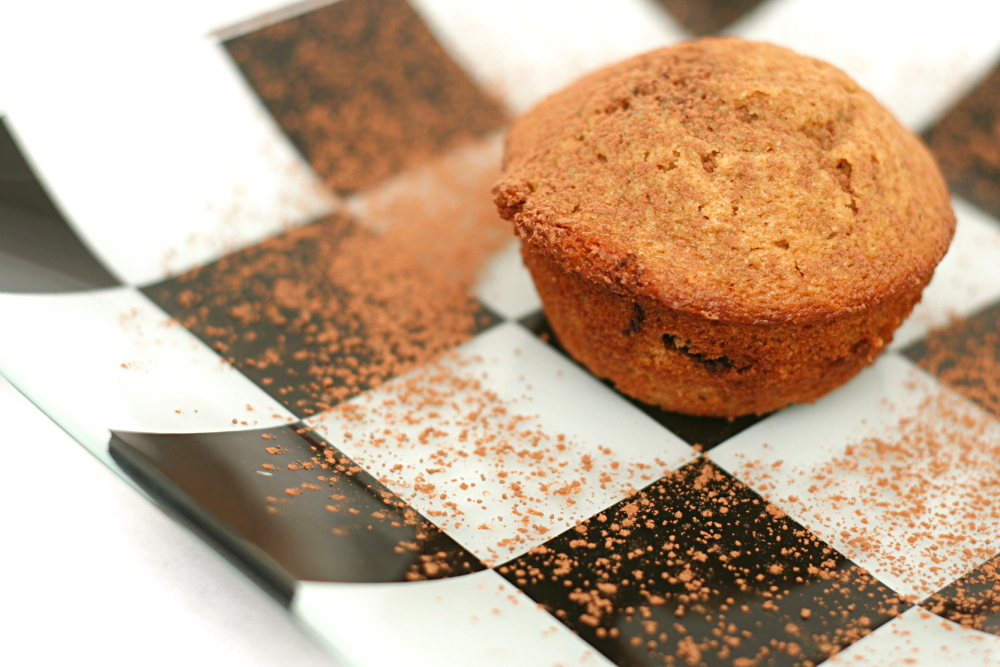
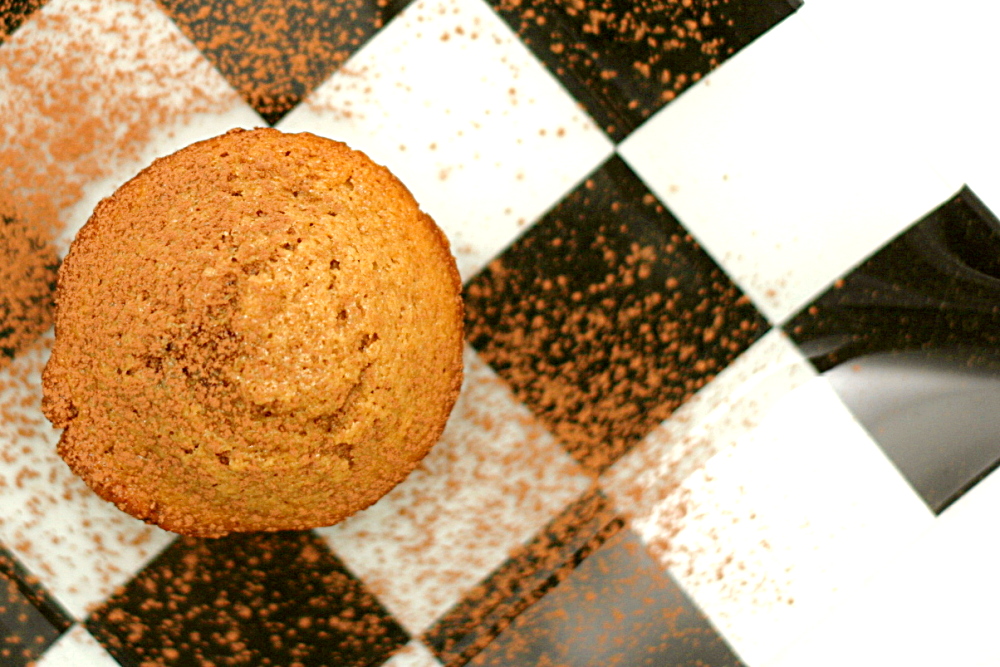
I was very happy with the result. The muffins were light and tender, with an interesting mix of flavors from the espresso, cinnamon, and chocolate. They’re certainly no replacement for our weekend cappuccino habit, but it’s not a bad substitute for a workday.

copy-of-img_5887

Tracey chose this recipe for Tuesdays with Dorie and has the recipe posted. I halved the chocolate in the filling, only used about 2/3 of the cinnamon sugar mixture, made the version with extra espresso, skipped the frosting, and baked the cake in muffin tins (use 12 for a full recipe) instead of a cake pan.

One year ago: Crockpot Pulled Pork

copy-of-img_5895

anadama bread

copy-of-img_5945

It’s a good thing I had well-behaved friends for the most part in high school, because I am apparently highly susceptible to peer pressure. A new baking group has recently been formed, somewhat similar to Tuesday with Dorie, but baking their way through Peter Reinhart’s Bread Baker’s Apprentice. I resisted joining the group for a few weeks, because I really don’t need another baking obligation. But I’ve had this book for years and love it, plus if this group can improve my bread-baking skills as much as TWD has improved my dessert-baking skills, it’ll be worth it. And when I heard that Reinhart supported the group, I made the decision to join. I’m a sucker for cookbook authors who support blogs.

I had some trouble figuring out how to fit a new baking group into my blog. I can only produce 3-4 blog entries per week, and I’d like the majority to be unaffiliated with a group. I think I’ve decided on short, simple (I’m doing something simply?!) entries with one photo and a brief analysis of the recipe. Since I joined the group a few weeks after it started, I’m doing a bit of catch up.

Anadama bread is a sandwich bread made with cornmeal and molasses. Reinhart’s MO is to soak grains and/or ferment dough slowly to release as much flavor from them as possible. In this recipe, that means soaking the cornmeal overnight before kneading in the remaining ingredients and continuing with rising and shaping. Reinhart recommends coarser-grained polenta over cornmeal, and it smelled particularly corny after soaking, which was nice.

Overall, this was a nice bread. The texture was very light. I definitely think it needs more salt (the recipe calls for 1.5 teaspoons for 20 ounces of flour; I’ll add at least 2 teaspoons next time). Also, the polenta grains didn’t soften in the bread as much as I would like, adding a crunchiness, but not a good crunchiness. I’ll use regular cornmeal next time. Or I might just stick to the last anadama bread recipe I tried, but adjust the method to soak the cornmeal overnight.

True to most groups who cook their way through a cookbook, we won’t all be posting the recipes. However, Michelle plans to post the recipes on her blog.

tofu mu shu

copy-of-img_5589

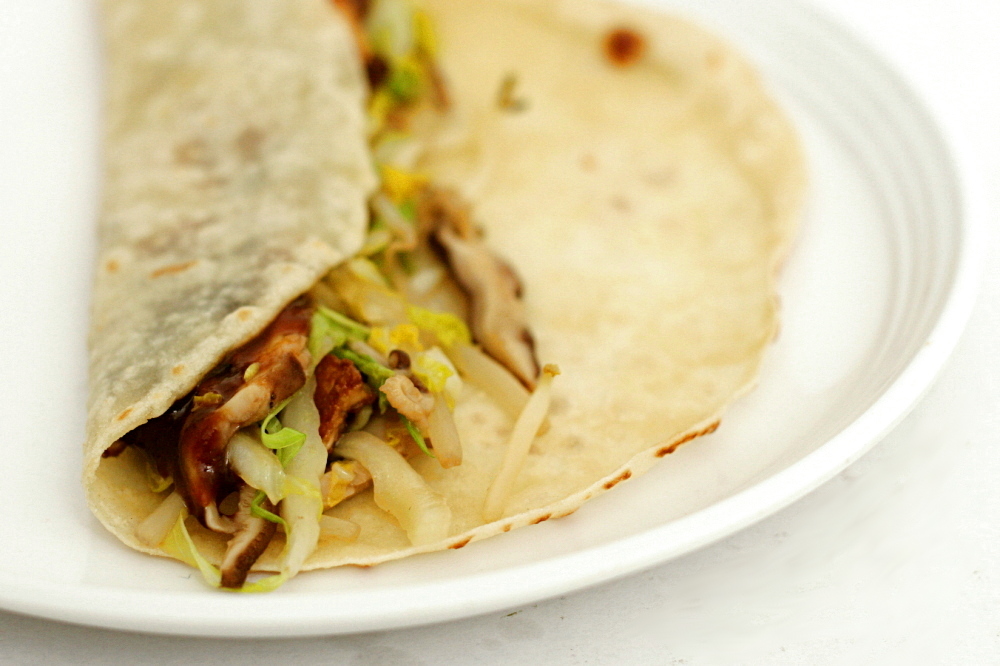
A friend of mine once, oh-so-innocently, asked me if I had any recipes with napa cabbage. Poor guy. You have to be careful talking to me about food, because I can go on forever. I sent him longwinded comments about a bunch of recipes. I also sent a recipe for tofu mu shu, which I overcomplicated by providing two versions, one a super-anal-Bridget-version and the other simpler. Of course I had only made the super anal one. Of course.

copy-of-img_5570

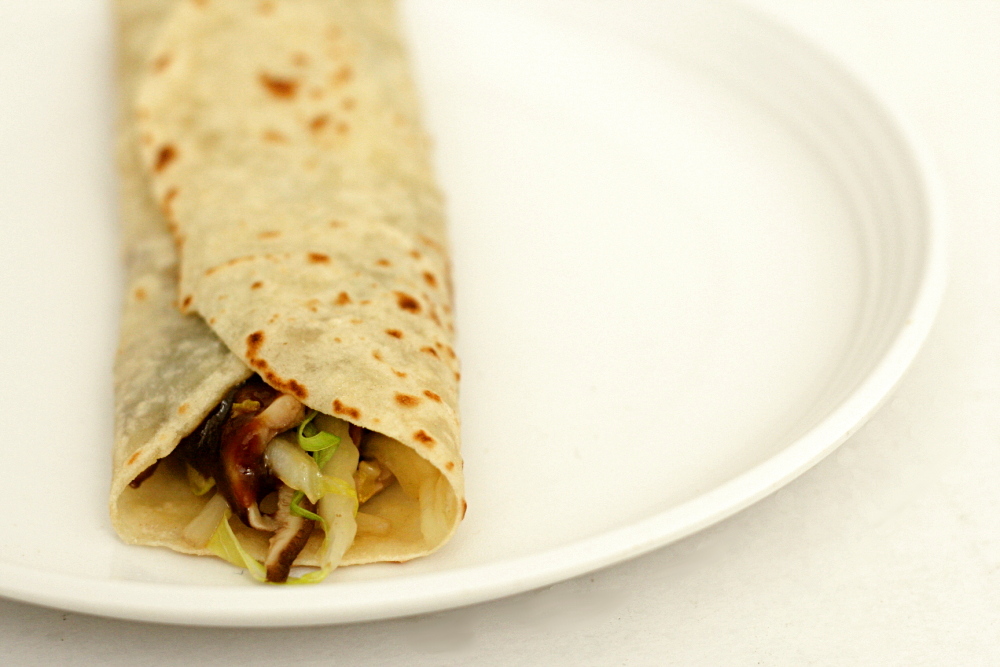
Mu shu is stir-fry wrapped in a thin bread-like shell. The first several times I made it with pork using Jen’s recipe, which is quite delicious. I did want a vegetarian version though, as we tend to save meat for special occasions (you know, like weekends). I haven’t been able to find the dried tofu cakes that Jen recommends substituting for the pork.

copy-of-img_5574

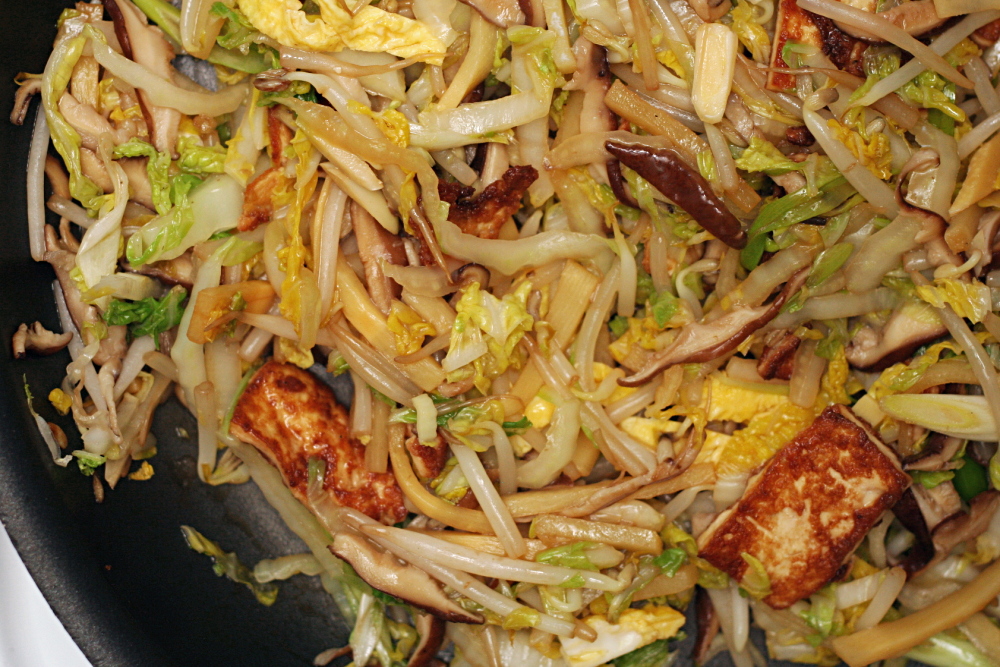
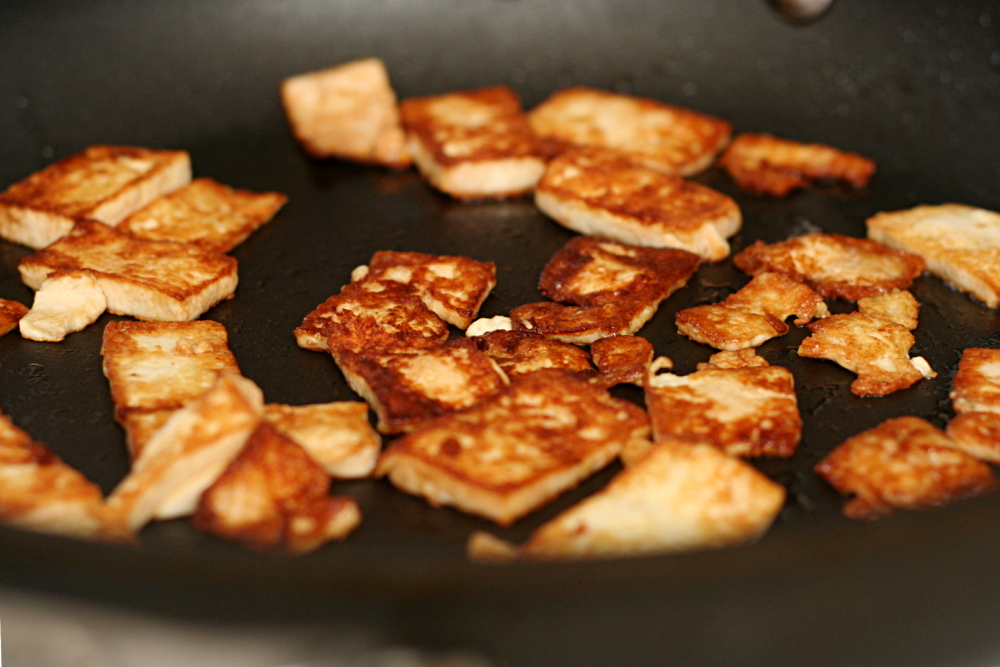
I’ve had good results from pressing firm tofu, marinating it briefly in soy sauce, and sautéing it in a very hot pan. Tofu prepared this way was excellent in mu shu, so it was included in my super-anal-Bridget-version.

copy-of-img_5580

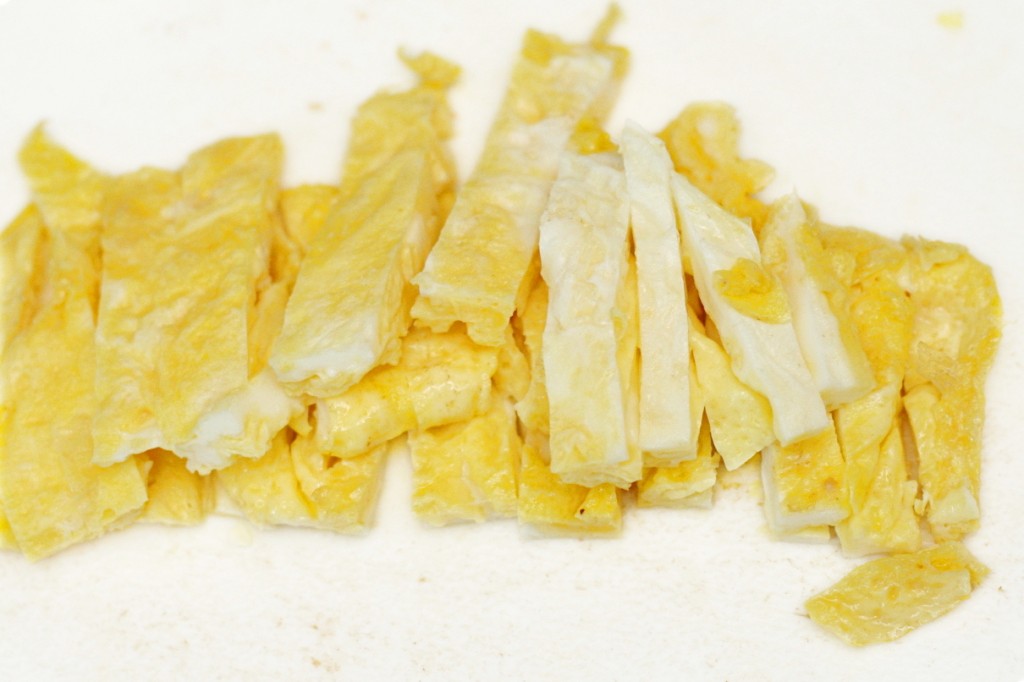
The other difference between my two recipes is the shape of the chopped ingredients. Jen has exceptional knife skills, and her prepped ingredients for mu shu are beautifully julienned. Frankly, it takes me forever to do. Jen also cooks the eggs as one sheet, then removes it from the pan and cuts it into strips, which is far more attractive than clumpy scrambled eggs.

copy-of-img_5582

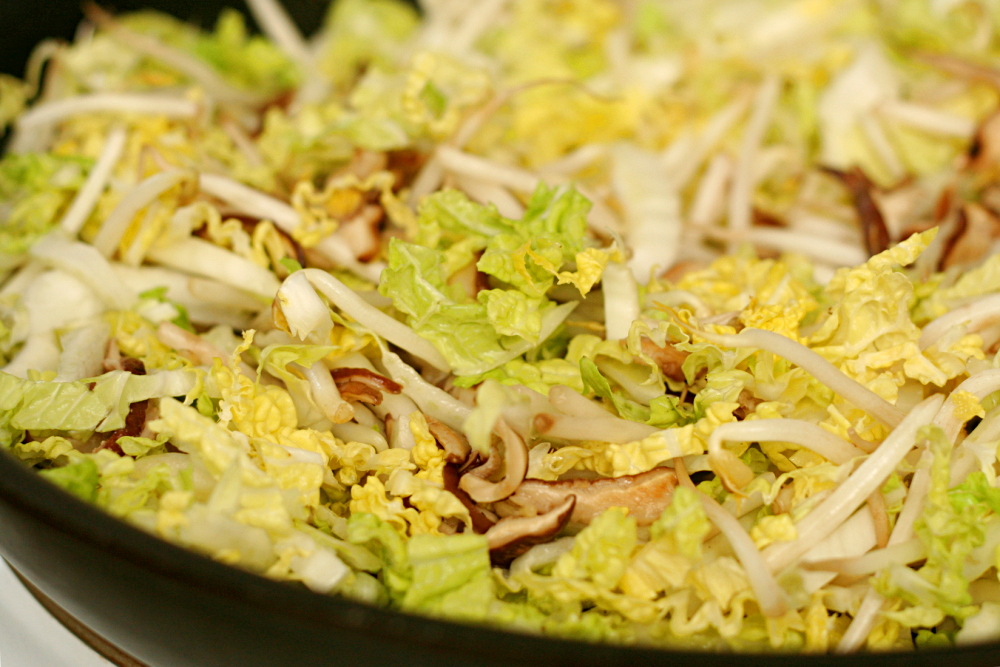
But are crisped tofu, julienned vegetables, and eggs cut into strips worth the extra time? I made my easy version first, with unbrowned tofu, scrambled eggs, and coarsely chopped vegetables. Two days later, I made the other version, sautéing the tofu, cooking the eggs as a sheet, and julienning the vegetables.

copy-of-img_5585

Dave and I didn’t notice a difference in flavor in the finished product. The easy version probably took me about 15 minutes less time. With pre-made mu shu pancakes, that makes this a pretty reasonable weeknight meal.

copy-of-img_5587

One consideration is that the more work-intensive method is more attractive, as the ingredients are all approximately the same shape. That could be an important consideration if you’re serving this to guests. I, for one, am happy to have a simpler version of this, so I can eat it that much more often.

copy-of-img_5588

One year ago: Pecan Honey Sticky Buns

Mu Shu Tofu (adapted from Use Real Butter)

Start to press the tofu before preparing the remaining ingredients.

Serves 6

1 (12-ounce package) firm or extra-firm tofu
3 tablespoons soy sauce
1 tablespoon toasted sesame oil
2 teaspoons cornstarch
3 teaspoons canola oil
3 eggs, beaten
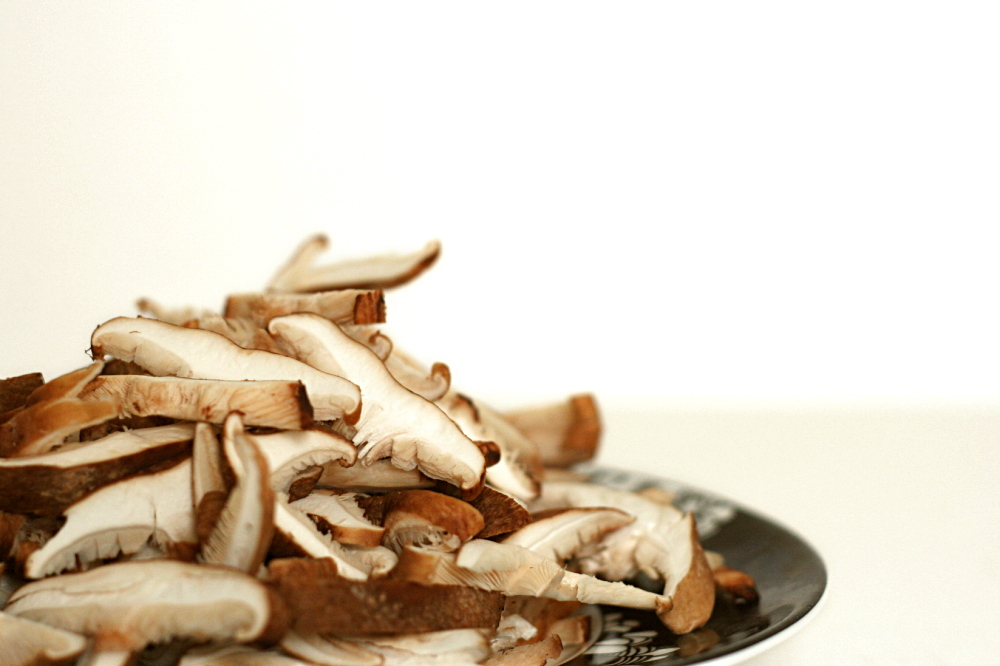
8 ounces shiitake mushrooms, stemmed and cut into strips
3 cloves garlic, minced or julienned
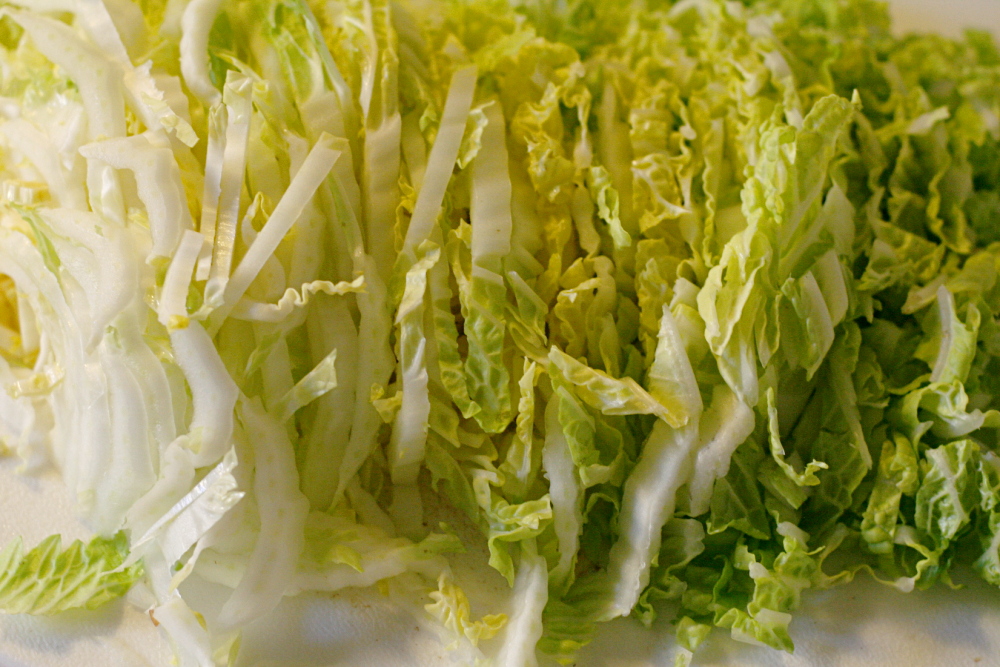
1 medium head napa cabbage, halved and shredded
2 cups bean sprouts
4 green onions, sliced
1 can bamboo shoots, roughly chopped
12 mu shu shells
hoisin sauce

1. Cut tofu in half horizontally to make two flat rectangles. Layer it between double layers of paper towels or clean dish towels. Put all of that in a pie plate and put something heavy on top, maybe another pie plate with some cans in it or something. Set it aside while you prepare the other ingredients.

2. In a small bowl, mix together the soy sauce, sesame oil, and cornstarch. Cut the tofu into strips and add it to liquid ingredients; stir gently.

3. Heat 2 teaspoons canola oil in a 12-inch nonstick skillet over medium-high heat and add the mushrooms. Once the mushrooms are softened (2-3 minutes), add the garlic; cook and stir until fragrant, about 30 seconds. Add the eggs and stir vigorously with wooden spoon until scrambled and barely moist, about 20 seconds. Add the cabbage and bean sprouts. Sauté until the cabbage is wilted but still a little crunchy, 3-4 minutes. Add the remaining ingredients and the tofu mixture. Cook and stir until evenly heated.

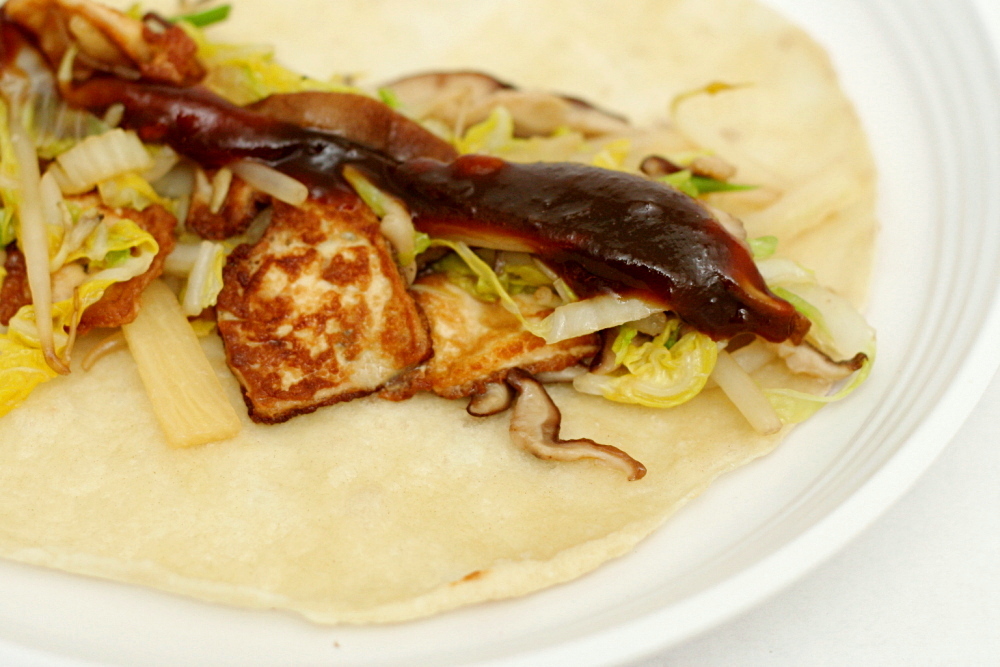
4. Heat the mu shu shells according to the instructions on the package. Serve each mu shu shell with a smear of hoisin sauce down the middle. Place several spoonfuls of mu shu on the shell and fold the sides in.

copy-of-img_5593

chipster-topped brownies

copy-of-img_5872
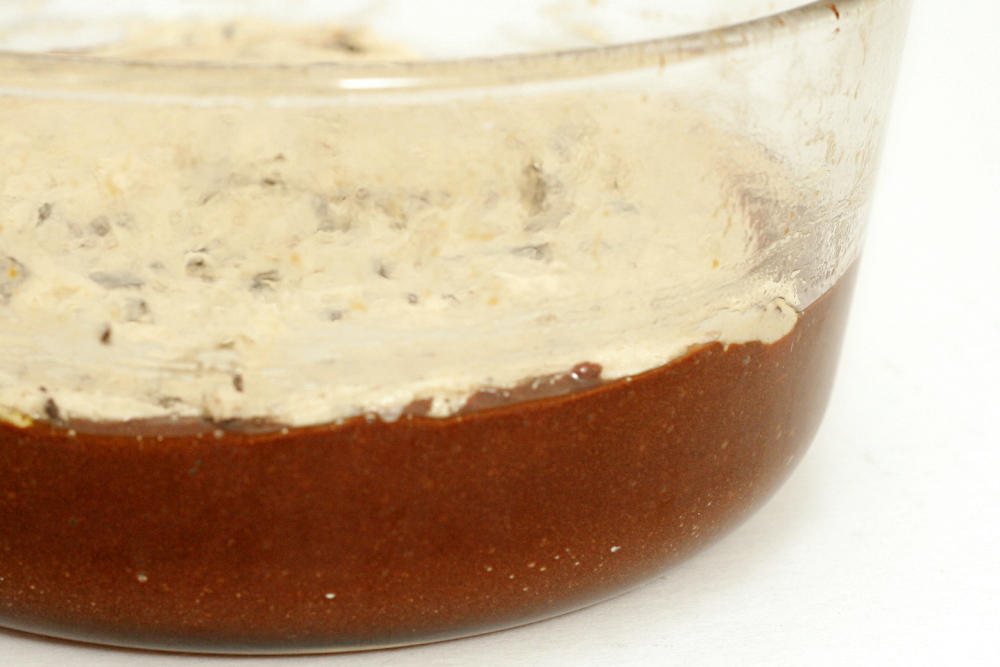
(chilled and therefore solid here)

One of my favorite things about the weekend is coffee. On weekdays, I limit myself to a big mug of black tea each day, maybe two mugs on Friday. But I have to be careful with caffeine, because even one mug of black tea makes me a little excited.  The day I made these brownies, I had about twice my normal weekend allotment of coffee at home, and then there was some deal at the bookstore, and I ended up getting a medium instead of my normal small cappuccino. Whoa.

I came home and tried to make dinner and these brownies. Dinner wasn’t too complicated, and this dessert is just a basic brownie recipe topped with a basic chocolate chip cookie recipe. But I couldn’t focus on anything. I kept walking into the kitchen, looking around, and basically thinking, “what should I do, what should I do, what should I do?” Bzzzzzt. That was my brain. Bzzzzt.

copy-of-img_5818

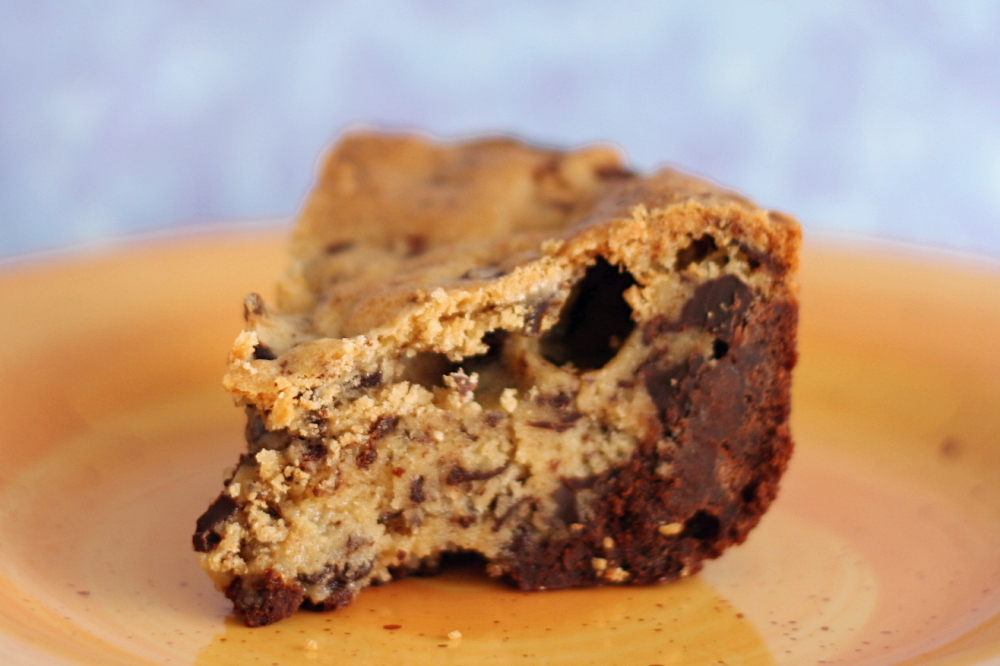
Dinner was sort of a disaster, so I decided to placate myself by skipping right to dessert – only to find that the middle of the pan of brownies was totally raw. That just made me irritated enough to grab a spoon and go to town.

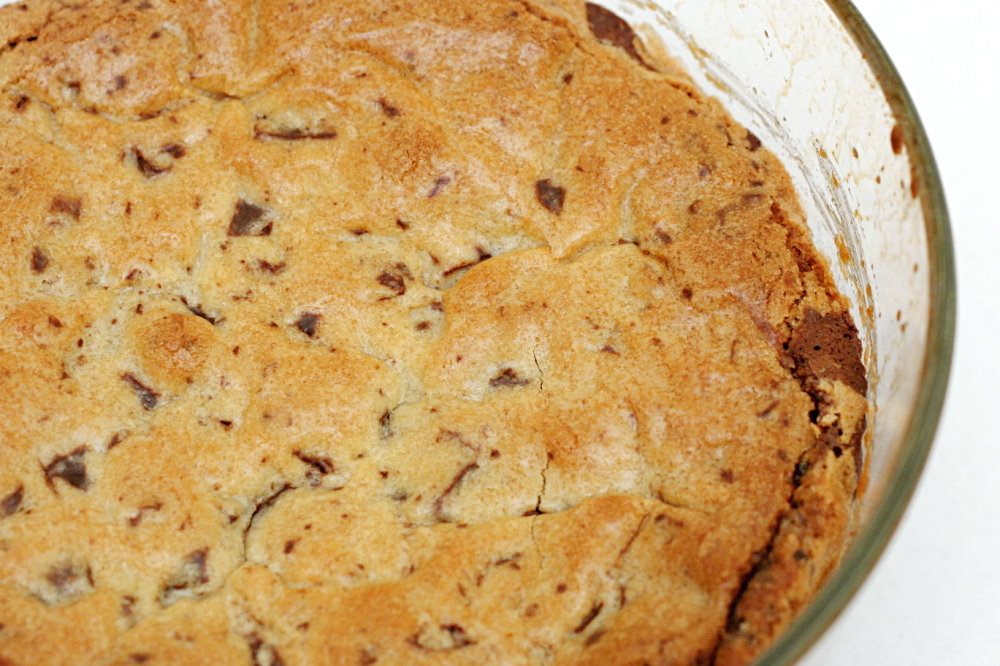
I have no one to blame but myself. I never bothered to check the doneness of the brownies at all. I didn’t pay attention to when they went into the oven, and then at some point later, it occurred to me that I should check on them. I noticed how dark the top was and assumed I’d overcooked them.

copy-of-img_5834

If I had bothered to read the discussion of this recipe on TWD’s site, which of course I hadn’t, I would have known that underdoneness was a common problem. To complicate matters, I made ¼ of the brownie portion and ½ of the cookie portion using a pan ¼ the size of what’s recommended for a full recipe. (Thanks to Caitlin for this advice – it was definitely closer to the ratio of brownie to cookie that I preferred.)

If this is the result, I’m really going to have to be more careful about my caffeine consumption. It’s a good thing that chocolate chip cookie dough is one of my favorite foods, because that and brownie batter is basically what this ended up as.

Chipster-Topped Brownies (from Dorie Greenspan’s Baking: From my Home to Yours)

For the brownie layer:
6 ounces bittersweet chocolate, coarsely chopped
3 ounces unsweetened chocolate, coarsely chopped
16 tablespoons (2 sticks) unsalted butter, cut into chunks
1⅔ cups (11.66 ounces) sugar
4 large eggs
½ teaspoon salt
½ teaspoon vanilla extract
1 cup (4.8 ounces) all-purpose flour
1 cup walnuts

For the cookie layer:
1¼ cups (6 ounces) all purpose flour
½ teaspoon baking soda
½ teaspoon salt
12 tablespoons (1½ sticks) butter, room temperature
¾ cup (5.25 ounces) packed brown sugar
⅔ cup (4.66 ounces) sugar
1 large egg
1 large egg yolk
1 teaspoon vanilla extract
6 ounces bittersweet chocolate, either chips or chunks

Getting Ready: Center a rack in the oven and preheat the oven to 350F. Butter a 9×13 inch pan, line it with wax or parchment paper and butter the paper. Put the pan on a baking sheet.

To make the brownie batter:
Put both chocolates and the butter in a bowl set over a saucepan of simmering water. Stirring occasionally, heat just until the ingredients are melted, shiny and smooth. If the mixture gets too hot, the butter will separate from the chocolate. Remove the bowl from the heat.

Working with a stand mixer, preferable fitted with a paddle attachment, or working with a hand mixer in a large bowl, beat the sugar and eggs on medium-high speed for about 2 minutes, until pale, thick and creamy. Beat in the salt and vanilla extract. Reduce speed to low and mix in the melted chocolate and butter, mixing only until incorporated. Scrape down the sides of the bowl with a rubber spatula, then, still on low speed, add the flour, mixing only until it disappear into the batter. Using a spatula, fold in the walnuts, and scrape the batter into the prepared pan. Set aside.

To make the cookie dough:
Whisk together the flour, baking soda and salt.

Working with the stand mixer in the cleaned bowl or with the hand mixer in another large bowl, beat the butter and both sugars together on medium-high speed until smooth and creamy, about 3 minutes. One at a time, add the egg and the yolk, beating for 1 minute after each addition. Beat in vanilla. Reduce the mixer speed to low and add the dry ingredients, mixing only until they disappear into the dough. Still on low, mix in the chocolate. Drop the cookie dough by spoonfuls over the brownie batter and, using a spatula and a light touch, spread evenly over the batter.

Bake for 50-55 minutes, or until the cookie top is deep golden brown and firm and thin knife inserted into the brownie layer comes out with only faint streaks of moist chocolate. Transfer the pan to a rack and cool to room temperature.

When the brownies are completely cool, carefully run a knife between the sides of the pan and the brownies, then invert them onto another rack, remove the paper and turn right side up onto a cutting board. Cut into bars about 2 inches by 1 inch.

One year ago: Ricotta Spinach Tofu Ravioli

copy-of-img_5837