marshmallows (twd)

Who knew making marshmallows would be so much fun? Judy chose marshmallows as our TWD recipe this week, and while I didn’t think I’d be excited about eating them, I was interested in making them. And even though I know making marshmallows is common, and I trust Dorie’s recipes, I was surprised when I took my first bite, and it was, well, marshmallowy. Spongy soft, sugary sweet, coated in fine powder.

I was wrong about not being excited about eating them. Topping off of mug of hot cocoa, lightly charred and melted on a s’more, and plain in a pillowy mound are all satisfying methods for munching marshmallows. I’ve had to resist grabbing “just one more” every time I pass them in the kitchen.

And I found them relatively easy to make. Egg whites are whipped, a sugar syrup is made, gelatin is dissolved, and everything is beaten together and allowed to set. For the first time since I joined a blog baking group, problems arose with the recipe that I didn’t have. After months of curdled coffee buttercream, soupy lemon curd, flat party cakes, not-so-gooey gooey chocolate cakes, and a lemon cream that just wouldn’t reach the recommended temperature, my marshmallows whipped up nicely and solidified without separating. There was some confusion over Dorie’s instructions to beat the egg whites until they were “firm but still glossy”, and I almost always underbeat when I see “do not overbeat” in a recipe, and I think the problems people had may be attributed to that.

The rest of us were lucky enough to create pillowy soft sweet treats that are ready for any of your favorite marshmallow applications, or just dissolving pleasantly in your mouth without any accompaniment.

Marshmallows (from Dorie Greenspan’s Baking: From My Home to Yours)

Including marshmallows as a spoon dessert may seem like cheating – after all, they’re eaten with fingers (or, by campers, from sticks picked up in the forest) – but making them at home is too much fun to miss. And in fact this dessert is related to others in this chapter: the base is meringue – sweetened and strengthened by a cooked sugar syrup and fortified by gelatin.

There’s nothing difficult about making the marshmallows, but the meringue does need a long beating. While you can use a hand mixer, a stand mixer makes the job easier.

Makes about 1 pound marshmallows

About 1 cup potato starch (found in the kosher foods section of supermarkets) or cornstarch
2 tablespoons light corn syrup
2 ¼-ounce packets unflavored gelatin
3 large egg whites, at room temperature
¾ cup cold water
1 tablespoon pure vanilla extract
1¼ cups plus 1 tablespoon sugar

GETTING READY: Line a rimmed baking sheet — choose one with a rim that is 1 inch high — with parchment paper and dust the paper generously with potato starch or cornstarch. Have a candy thermometer at hand.

Put 1/3 cup of the water, 1¼ cups of the sugar and the corn syrup in a medium saucepan over medium heat. Bring the mixture to a boil, stirring until the sugar dissolves. Once the sugar is dissolved, continue to cook the syrup — without stirring — until it reaches 265 degrees F on the candy thermometer, about 10 minutes.

While the syrup is cooking, work on the gelatin and egg whites. In a microwave-safe bowl, sprinkle the gelatin over the remaining cold water (a scant 7 tablespoons) and let it sit for about 5 minutes, until it is spongy, then heat the gelatin in a microwave oven for 20 to 30 seconds to liquefy it. (Alternatively, you can dissolve the gelatin in a saucepan over low heat.)

Working in the clean, dry bowl of a stand mixer fitted with the whisk attachment or in another large bowl with a hand mixer, beat the egg whites on medium-high speed until firm but still glossy — don’t overbeat them and have them go dull.

As soon as the syrup reaches 265 degrees F, remove the pan from the heat and, with the mixer on medium speed, add the syrup, pouring it between the spinning beater(s) and the sides of the bowl. Add the gelatin and continue to beat for another 3 minutes, so that the syrup and the gelatin are fully incorporated. Beat in the vanilla.

Using a large rubber spatula, scrape the meringue mixture onto the baking sheet, laying it down close to a short end of the sheet. Then spread it into the corners and continue to spread it out, taking care to keep the height of the batter at 1 inch; you won’t fill the pan. Lift the excess parchment paper up to meet the edge of the batter, then rest something against the paper so that it stays in place (I use custard cups).

Dust the top of the marshmallows with potato starch or cornstarch and let the marshmallows set in a cool, dry place. They’ll need about 3 hours, but they can rest for 12 hours or more.

Once they are cool and set, cut the marshmallows with a pair of scissors or a long thin knife. Whatever you use, you’ll have to rinse and dry it frequently. Have a big bowl with the remaining potato starch or cornstarch at hand and cut the marshmallows as you’d like — into squares, rectangles or even strips (as they’re cut in France). As each piece is cut, drop it into the bowl. When you’ve got 4 or 5 marshmallows in the bowl, reach in with your fingers and turn the marshmallows to coat them with starch, then, one by one, toss the marshmallows from one hand to the other to shake off the excess starch; transfer them to a serving bowl. Cut and coat the rest of the batch.

SERVING: Put the marshmallows out and let everyone nibble as they wish. Sometimes I fill a tall glass vase with the marshmallows and put it in the center of the table — it never fails to make friends smile. You can also top hot chocolate or cold sundaes with the marshmallows.

STORING: Keep the marshmallows in a cool, dry place; don’t cover them closely. Stored in this way, they will keep for about 1 week — they might develop a little crust on the outside or they might get a little firmer on the inside, but they’ll still be very good.

almond biscotti and hazelnut dried cherry biscotti

On one of our first dates, Dave and I drove two hours into Chicago to see one of his favorite musicians perform. It was a great night, one that moved our relationship from “so far, so good…” to “holy smokes this is going well.” At the beginning of every song, Dave would whisper in my ear that this one was his favorite. On the way home, we missed our exit not once, but twice, for which I still tease Dave. Fortunately, he had thought ahead and brought along some almond biscotti from his favorite bakery. It was one of my first times eating biscotti, and certainly the first time I gave it an honest chance.

It was good. I was surprised, always having likened biscotti to sweetened stale bread. But even though I enjoyed it that night, and Dave has asked me to make it several times in the past six years, I’d only bothered to once, and I sent that batch off to a friend. Dave still requested it, and I still said “yeah, of course, when I get around to it.” Deb finally convinced me that it was time with her recently published almond biscotti recipe.

And this recipe was worth getting out of my too-lazy-to-make-biscotti- for-my-boyfriend-then-fiance-then-husband habit. The biscotti are crunchy, but not rock hard. Sweet but not cloying. The almonds are a noticeable and satisfying addition.

The recipe is also adaptable. After the success I had with the almond variety, I wanted to try other flavors. I looked for good biscotti recipes on epicurious, but couldn’t find one that sounded good and had good reviews. So I decided to make the same base recipe I had before, but with different flavorings. I used dried cherries and hazelnuts, and it worked great.

Deb calls this recipe a hole in one, and I have to agree. Tasty, crunchy, straightforward, and adaptable – this recipe has it all.

Almond Biscotti (adapted from Bon Appetit, December 1999, as copied from Smitten Kitchen)

Deb note: They’re supposed to make 3 dozen, but my batch yielded at least 45.

Bridget note: The second time I skipped the egg white wash, and I recommend using it. I also substituted 1 cup of hazelnuts (toasted and chopped) and 1 cup of dried cherries for the almonds, and reduced the orange liqueur by half.  Also, my biscotti tended to be a little browner than I wanted, so I recommend reducing the baking times in the last step to 11 minutes on one side and 7 on the other.

3¼ cups all purpose flour
1 tablespoon baking powder
1/3 teaspoon salt
1½ cups sugar
10 tablespoons (1 ¼ sticks) unsalted butter, melted
3 large eggs
1 tablespoon vanilla extract
1 tablespoon Grand Marnier or orange liqueur
1 tablespoon orange zest
1 cup whole almonds, toasted, coarsely chopped or sliced almonds
1 large egg white

Position rack in center of oven and preheat to 350°F. Line baking sheet with parchment paper. Sift flour, baking powder and salt into medium bowl. Mix sugar, melted butter, 3 eggs, vanilla extract, orange liqueur and zest in large bowl. Add flour mixture to egg mixture and stir with wooden spoon until well blended. Mix in almonds.

Divide dough in half. Using floured hands, shape each dough half into 13½-inch-long, 2 ½-inch-wide log. Transfer both logs to prepared baking sheet, spacing apart. Whisk egg white in small bowl until foamy; brush over top and sides of each dough log.
Bake logs until golden brown (logs will spread), about 30 minutes. Cool logs completely on sheet on rack, about 25 minutes. Maintain oven temperature.

Transfer logs to work surface; discard parchment paper. Using serrated knife, cut logs on diagonal into ½-inch-wide slices. Arrange slices, cut side down, on same baking sheet. Bake 12 minutes. Turn biscotti over; bake until just beginning to color, about 8 minutes. Transfer to rack and cool.

Can be prepared 1 week ahead. Store in airtight container at room temperature.

sichuan green beans

I’m not very good at mise en place. I know that isn’t a sign of a particularly good cook, but I must be getting better lately because the kitchen isn’t so messy when I’m done cooking. I didn’t do a good job with this recipe though. I read “cook beans for 5-8 minutes” and I think Perfect! I’ll have just enough time to mince garlic, chop ginger, get the pork out of the fridge, measure out 3 liquids and 5 powders for the sauce, and slice the scallions! While stirring frequently. Dork.

Sichuan green beans was one of my favorite meals to make when I lived alone, and I still make it fairly often for me and Dave. It’s a quick, easy, balanced, healthy one pot meal. The recipe (according the Cooks Illustrated article) is based on a traditional Chinese meal involving deep-fried green beans. This recipe gets the same effect with just a couple tablespoons of oil over very high heat. The beans are cooked until they’re shriveled and blackened. It sounds like they’d be overcooked and soggy, but I swear they’re not. They’re crisp and sweet. It’s similar to what you get when you roast vegetables.

I did a quick scan on the internet of similar recipes, but I can see immediately that they’re not going to get the same sweet crunchiness out of the green beans. One steams the beans separately, one adds water to the pan to steam/boil them in the pan, one sautés them for a few minutes over medium heat. Bland (and extra work and dishes), boring, raw. No good. The high heat searing is necessary to get the most flavor out of the beans. I tried using Chinese long beans for this recipe once, but I actually didn’t like it as much. Besides costing far more than regular green beans, they weren’t as sweet.

The rest of the recipe is no problem. Cook some ground pork, add garlic and ginger, stir in some sauce ingredients, serve over white rice. You can leave the pork out and add shiitakes instead. This would make a nice side dish, but doesn’t have any protein source for a full meal. Either way, just make sure you do your chopping and measuring before you do your cooking. Otherwise you’ll be scrambling around like a dork, like I was.

Stir-Fried Sichuan Green Beans (from Cooks Illustrated January 2007)

Serves 4 as a side dish or 2 as a main course

CI note: To make this dish vegetarian, substitute 4 ounces of shiitake mushrooms, stemmed and minced, for the pork. If using mushrooms, you will need to add a teaspoon of oil to the pan in step 3 before adding the mushrooms. The cooking of this dish goes very quickly, so be sure to have all of the ingredients prepped before you start. Serve this dish with steamed white rice.

2 tablespoons soy sauce
1 tablespoon dry sherry
1 teaspoon sugar
½ teaspoon cornstarch
¼ teaspoon ground white pepper
¼ teaspoon red pepper flakes
¼ teaspoon dry mustard
2 tablespoons water
2 tablespoons vegetable oil
1 pound green beans, ends trimmed, cut into 2-inch pieces
¼ pound ground pork
3 medium cloves garlic, minced or pressed through a garlic press (about 1 tablespoon)
1 tablespoon minced fresh ginger
3 scallions, white and light green parts sliced thin
1 teaspoon toasted sesame oil

1. In small bowl, stir together soy sauce, sherry, sugar, cornstarch, white pepper, pepper flakes, mustard, and water until sugar dissolves; set aside.

2. Heat oil in 12-inch nonstick skillet over high heat until just smoking. Add beans and cook, stirring frequently, until crisp-tender and skins are shriveled and blackened in spots, 5 to 8 minutes (reduce heat to medium-high if beans darken too quickly). Transfer beans to large plate.

3. Reduce heat to medium-high and add pork to now-empty skillet. Cook, breaking pork into small pieces, until no pink remains, about 2 minutes. Add garlic and ginger; cook, stirring constantly, until fragrant, 15 to 20 seconds. Stir sauce to recombine and return beans to pan with sauce. Toss and cook until sauce is thickened, 5 to 10 seconds. Remove pan from heat and stir in scallions and sesame oil. Serve immediately.

Per Serving:
Cal 200; Fat 14 g; Sat fat 3 g; Chol 20 mg; Carb 12 g; Protein 8 g; Fiber 4 g; Sodium 680 mg

lemon cream tart (twd)

I don’t deal well with lemon desserts. I lose self-control. Lemon tastes so light and fresh that I have trouble wrapping my mind around all the butter that’s usually paired with it. The Extraordinary Lemon Cream Tart that Mary chose for this week’s Tuesdays With Dorie recipe is extreme in the amount of butter called for – just shy of a full pound for a 9-inch tart.

With only Dave to share it with, I had to consider my options concerning this dessert. Unless I planned to serve nothing but salads or do nothing but exercise for several days, I was going to have to find a way to control my lemon tart intake. I decided that I needed tartelette pans so I could cut the recipe in half. Plus tartelette pans are super cute.

One of the fun aspects of being in a group like TWD is the opportunity to troubleshoot recipes. When my gooey chocolate cakes were a bit overcooked the first time I made them, my first thought was that my oven temperature was off, but with 100 other people making the recipe and most having the same problem, it seemed like it was the recipe that was off.

This week the problem that popped up involved the temperature that our lemon mixture was supposed to reach while being stirred over a double boiler. Dorie wanted our mixture to get to 180 degrees, which she said would take about 10 minutes. That seemed accurate for about half of us, but for the other half (myself included), the temperature topped out around 155 degrees and stayed there. In our ongoing discussion of the recipe, it seemed like there might be a correlation between the material of the mixing bowl used and the temperature reached – metal bowls were more likely to reach 180 degrees than glass bowls (although there were a couple outliers). I’m interested in trying the recipe again with a metal bowl instead of the pyrex bowl I used.

But I doubt I’ll be making this again. Not that it wasn’t good, because it was – very good in fact. But there’s just so much butter in it. I don’t generally shy away from rich foods, but they have to be worth it. And with over 600 calories per slice at the serving size that Dorie suggests, this tart has a lot to live up to.

The lemon cream was delicious – smooth with just the right balance of sweet and tart. But lemon curd is delicious too, and it only takes 4 tablespoons to make enough curd for a 9-inch tart, as opposed to 21 tablespoons that this cream needed. I’ll have to settle for rich-but-not-ridiculous lemon curd in the future.

The Most Extraordinary Lemon Cream Tart (from Dorie Greenspan’s From My Home To Yours)

The filling in this tart is everything. It is the lemon cream I learned to make from Pierre Hermé, and it is the ne plus ultra of the lemon world. The tart is basic-a great crust, velvety lemon cream-and profoundly satisfying. It is also profoundly play-aroundable. You can add a fruit topping (circlets of fresh rasp-berries are spectacular with this tart) or a layer of fruit at the bottom; you can finish the tart with meringue; or you can serve it with anything from whipped cream to raspberry coulis.

1 9-inch tart shell made with Sweet Tart Dough, fully baked and cooled
1 cup sugar
Finely grated zest of 3 lemons
4 large eggs
½ cup fresh lemon juice (from 4-5 lemons)
2 sticks plus 5 tablespoons (10½ ounces) unsalted butter, cut into tablespoon-size
pieces, at room temperature

Getting Ready: Have an instant-read thermometer, a strainer and a blender (first choice) or food processor at hand. Bring a few inches of water to a simmer in a saucepan.

Put the sugar and zest in a large heatproof bowl that can be set over the pan of simmering water. Off the heat, rub the sugar and zest together between your fingers until the sugar is moist, grainy and very aromatic. Whisk in the eggs, followed by the lemon juice.

Set the bowl over the pan, and start stirring with the whisk as soon as the mixture feels tepid to the touch. Cook the lemon cream until it reaches 180 degrees F. As you whisk-you must whisk constantly to keep the eggs from scrambling-you’ll see that the cream will start out light and foamy, then the bubbles will get bigger, and then, as it gets closer to 180 degrees F, it will start to thicken and the whisk will leave tracks. Heads up at this point-the tracks mean the cream is almost ready. Don’t stop whisking or checking the temperature, and have patience-depending on how much heat you’re giving the cream, getting to temp can take as long as 10 minutes.

As soon as it reaches 180 degrees F, remove the cream from the heat and strain it into the container of the blender (or food processor); discard the zest. Let the cream stand, stirring occasionally, until it cools to 140 degrees F, about 10 minutes.

Turn the blender to high (or turn on the processor) and, with the machine going, add the butter about 5 pieces at a time. Scrape down the sides of the container as needed as you incorporate the butter. Once the butter is in, keep the machine going-to get the perfect light, airy texture of lemon-cream dreams, you must continue to blend the cream for another 3 minutes. If your machine protests and gets a bit too hot, work in 1-minute intervals, giving the machine a little rest between beats.

Pour the cream into a container, press a piece of plastic wrap against the surface to create an airtight seal and refrigerate for at least 4 hours or overnight. (The cream will keep in the fridge for 4 days and, or tightly sealed, in the freezer for up to 2 months; thaw it overnight in the refrigerator.)

When you are ready to assemble the tart, just whisk the cream to loosen it and spoon it into the tart shell. Serve the tart, or refrigerate ‘until needed.

Serving: It’s a particular pleasure to have this tart when the cream is cold and the crust is at room temperature. A raspberry or other fruit coulis is nice, but not necessary; so is a little crème fraîche. I know it sounds odd to offer something as rich as crème fraîche with a tart like this, but it works because the lemon cream is so light and so intensely citric, it doesn’t taste or feel rich.

Storing: While you can make the lemon cream ahead, once the tart is constructed, it’s best to eat it the day it is made.

Sweet Tart Dough:
Makes enough for one 9-inch crust

Storing: Well wrapped, the dough can be kept in the refrigerator for up to 5 days or frozen for up to 2 months. While the fully baked crust can be packed airtight and frozen for up to 2 months, I prefer to freeze the unbaked crust in the pan and bake it directly from the freezer-it has a fresher flavor. Just add about 5 minutes to the baking time.

In French, this dough is called pâte sablée because it is buttery, tender and sandy (that’s what sablée means). It’s much like shortbread, and it’s ideal for filling with fruit, custard or chocolate.

The simplest way to make a tart shell with this dough is to press it into the pan. You can roll out the dough, but the high proportion of butter to flour and the inclusion of confectioners’ sugar makes it finicky to roll. I always press it into the pan, but if you want to roll it, I suggest you do so between sheets of plastic wrap or wax paper or inside a rolling slipcover.

1½ cups all-purpose flour
½ cup (2 ounces) confectioners’ sugar
¼ teaspoon salt
1 stick plus 1 tablespoon (9 tablespoons) very cold (or frozen) unsalted butter, cut into small pieces
1 large egg yolk

Put the flour, confectioners’ sugar and salt in a food processor and pulse a couple of times to combine. Scatter the pieces of butter over the dry ingredients and pulse until the butter is coarsely cut in-you should have some pieces the size of oatmeal flakes and some the size of peas. Stir the yolk, just to break it up, and add it a little at a time, pulsing after each addition. When the egg is in, process in long pulses-about 10 seconds each-until the dough, which will look granular soon after the egg is added, forms clumps and curds. Just before you reach this stage, the sound of the machine working the dough will change-heads up. Turn the dough out onto a work surface and, very lightly and sparingly, knead the dough just to incorporate any dry ingredients that might have escaped mixing.

To press the dough into the pan: Butter a 9-inch fluted tart pan with a removable bottom. Press the dough evenly over the bottom and up the sides of the pan, using all but one little piece of dough, which you should save in the refrigerator to patch any cracks after the crust is baked. Don’t be too heavy-handed-press the crust in so that the edges of the pieces cling to one another, but not so hard that the crust loses its crumbly texture. Freeze the crust for at least 30 minutes, preferably longer, before baking.

Center a rack in the oven and preheat the oven to 375 degrees F.

Butter the shiny side of a piece of aluminum foil and fit the foil, buttered side down, tightly against the crust. (Since you froze the crust, you can bake it without weights.) Put the tart pan on a baking sheet and bake the crust for 25 minutes. Carefully remove the foil. If the crust has puffed, press it down gently with the back of a spoon.

Bake for another 8 minutes or so, or until it is firm and golden brown. (I dislike lightly baked crusts, so I often keep the crust in the oven just a little longer. If you do that, just make sure to keep a close eye on the crust’s progress-it can go from golden to way too dark in a flash.) Transfer the tart pan to a rack and cool the crust to room temperature before filling.

To patch a partially or fully baked crust, if necessary: If there are any cracks in the baked crust, patch them with some of the reserved raw dough as soon as you remove the foil. Slice off a thin piece of the dough, place it over the crack, moisten the edges and very gently smooth the edges into the baked crust. If the tart will not be baked again with its filling, bake for another 2 minutes or so, just to take the rawness off the patch.

cinnamon rolls

On one of my first trips to meet Dave’s family, his mom mentioned her plan to buy cinnamon rolls from the grocery store, and Dave insisted that I make fantastic cinnamon rolls that she needed to try. We were staying with friends, I didn’t have the recipe or any ingredients or equipment, but I didn’t want to pass up this chance to impress my boyfriend’s parents. I made the cinnamon rolls, and the in-laws were duly impressed. Six years later, my mother-in-law still talks about how good they were.

But I make better cinnamon rolls now. I’ve tried a few recipes and taken my favorite parts of each, and now I can say for certain that this is the best cinnamon roll that I have ever eaten. Dead serious.

Most cinnamon roll recipes are similar. The original recipe I used, the one that Dave’s mom raved about, is one my mother taught me. It’s the dough for country crust bread with softened butter and cinnamon sugar spread over the flattened dough and a simple powdered sugar glaze on top of the baked rolls. I used this recipe for years and can’t complain – it’s damn good.

But that didn’t stop me from trying new things. The next recipe I tried was published in the back of Knit One, Kill Two, a mystery novel about a knitter. I liked that the dough was richer, melted butter was spread over the dough instead of softened, and brown sugar was mixed with cinnamon for the filling instead of granulated. But the frosting in this recipe contained four ounces of cream cheese, and it was way too rich for me.

The next recipe I tried was Cooks Illustrated’s. Their dough is even richer, and the resultant rolls are therefore more tender. They don’t call for any butter in the filling, which I thought made the baked rolls too sticky. Their icing contains a whopping eight ounces of cream cheese, even though they refer to their rolls as “reserved” and “civilized”. Yikes. I also tried their Quick Cinnamon Buns, a recipe for chemically leavened cinnamon rolls. This recipe calls for a small amount of butter to be mixed in with the other filling ingredients. I like this method, as it reduces the amount of filling that spills out of the rolls when they’re rolled and cut, and it eliminates the stickiness I’d disliked in the other recipe without adding as much butter as my first two recipes had called for.

The recipe I currently use is hobbled together from all of these, although most of it comes from Cooks Illustrated. I follow their dough recipe almost exactly. I reduce the cinnamon in their filling recipe a bit because I found that the original amount was so spicy that it reminded me of Red Hots. I add a tablespoon of melted butter to the filling to hold the powder together. Rather than add more butter to an already decadent breakfast, I reduce the butter in the dough to compensate. For the glaze, I’ve gone back to my original powdered sugar and milk combination, with just one tablespoon of cream cheese mixed in to provide some extra flavor.

Like most bread recipes, cinnamon rolls require kneading, rising, shaping, proofing, baking, and cooling before they can be eaten. No one wants to wait for all this to happen before they can eat breakfast. Take heart – you can do everything up until the baking the night before. After the rolls are shaped and cut, put the pan in the refrigerator. In the morning, the rolls will need to warm up and they may need a bit more time to rise. You can speed this up by doing it in a warm oven. Heat your oven to its “warm” setting, then turn it off and put the rolls in the oven. They should be warm and ready to bake in half and hour or so. With minimal waiting time and almost no work at all, you can have a fantastic treat for breakfast.

Update 3/16/10: I’ve successfully used this method to make these cinnamon rolls whole wheat.  I made the pre-dough out of 10 ounces whole wheat flour, ½ teaspoon salt, and 7/8 cup (1 cup minus 2 tablespoons) water.  After letting that sit overnight, I mixed it with the rest of the ingredients – 2 tablespoons milk, 7 tablespoons unsalted butter, 2¼ teaspoons yeast, ¼ cup sugar, 1 egg and 2 yolks, 1 teaspoon salt, and about 10 ounces flour.

Cinnamon Rolls (adapted from Cooks Illustrated’s The New Best Recipe)

This was the first time I’ve used dental floss to cut the rolled and filled dough into rolls. It worked wonderfully, but a serrated knife will get the job done as well.

The pictures are showing a half recipe.

Dough:
½ cup milk
7 tablespoons unsalted butter
½ cup warm water (about 110 degrees)
1 envelope (2¼ teaspoons) yeast
¼ cup (1¾ ounce) sugar
1 large egg, plus 2 large egg yolks
1½ teaspoons salt
4-4 ½ cups (20 to 21¼ ounces) unbleached all-purpose flour, plus more for dusting the work surface

Filling:
¾ cup packed (5¼ ounces) light brown sugar
2 tablespoons ground cinnamon
1/8 teaspoon salt
1 tablespoon melted butter

Glaze:
1 cup (4 ounces) confectioners sugar, sifted to remove lumps
1 ounce cream cheese, softened
½ teaspoon vanilla extract
1-2 tablespoons milk

1. Heat the milk and butter in a small saucepan or in the microwave until the butter melts. Remove the pan from the heat and set aside until the mixture is lukewarm (about 100 degrees).

2. In the bowl of a standing mixer fitted with the paddle, mix together the water, yeast, sugar, egg, and yolks at low speed until well mixed. Add the salt, warm milk mixture, and 2 cups of the flour and mix at medium speed until thoroughly blended, about 1 minute. Switch to the dough hook, add another 2 cups of the flour, and knead at medium speed (adding up to ¼ cup more flour, 1 tablespoon at a time, if necessary) until the dough is smooth and freely clears the sides of the bowl, about 10 minutes. Shape the dough into a round, place it in a very lightly oiled large bowl, and cover the bowl with plastic wrap. Leave in a warm, draft-free spot until doubled in bulk, 1½ to 2 hours.

3. Mix together the filling ingredients in a small bowl. Grease a 13 by 9-inch baking dish.

4. After the dough has doubled in bulk, press it down and turn it out onto a lightly floured work surface. Using a rolling pin, shape the dough into a 16 by 12-inch rectangle, with a long side facing you. Mix together the filling ingredients in a small bowl and sprinkle the filling evenly over the dough, leaving a ½-inch border at the far edges. Roll the dough, beginning with the long edge closest to you and using both hands to pinch the dough with your fingertips as you roll. Moisten the top border with water and seal the roll. Lightly dust the roll with flour and press on it ends if necessary to make a uniform 16-inch cylinder. Cut the roll in 12 equal pieces and place the rolls cut-side up in the prepared baking dish. Cover with plastic wrap and place in a warm, draft-free spot until doubled in bulk, 1½ to 2 hours.

5. When the rolls are almost fully risen, adjust an oven rack to the middle position and heat the oven to 350 degrees. Bake the rolls until golden brown and an instant-read thermometer inserted into the center of one reads 185 to 188 degrees, 25 to 30 minutes. Cool for 10 minutes. Meanwhile, stir the glaze ingredients together until smooth. Glaze the rolls and serve.

blueberry poppy seed brunch cake

11.jpg

Because what better to serve with sausage-wrapped deep-fried hard-boiled eggs than cake, I made this blueberry poppy seed brunch cake last weekend. It has “brunch” in the title, so clearly it’s breakfast food. Disregard the stick of butter and half cup of sour cream. And the cup of sugar. Not including the glaze. It’s breakfast food, I tell you.

21.jpg

My sister gave me the Pillsbury Complete Cookbook when I left for college. It was my first cookbook, and it’s been really handy. It has a lot of basic recipes which were good to have when I was cooking on my own for the first time, but where it really shines is in its original recipes, like this cake and the salmon pesto pasta. A bunch of my favorite recipes are rooted in this book.

31.jpg

This cake is the best brunch cake I’ve made. The cake itself is tender and flavorful – the lemon zest adds brightness without making the cake taste lemony. The blueberry filling, which is spooned over the cake rather than mixed in, is the perfect compliment to the cake.

One warning though – the recipe specifies that if you’re using frozen berries, they should be thawed and drained on paper towels. Don’t skip this step! I recommend adding an extra teaspoon of flour to the filling if you use frozen blueberries as well. Otherwise, you might end up with this:

41.jpg

Oops.

Blueberry-Poppy Seed Brunch Cake (adapted from the Pillsbury Complete Cookbook)

8 servings

Cake:
2/3 cup (4.67 ounces) granulated sugar
8 tablespoons (1 stick) butter, softened
2 teaspoons lemon zest
1 egg
1½ cups (7.5 ounces) unbleached flour
2 tablespoons poppy seed
½ teaspoon baking soda
¼ teaspoon salt
½ cup sour cream

Filling:
2 cups fresh or frozen blueberries, thawed, drained on paper towels
1/3 cup (2.33 ounces) granulated sugar
2 teaspoons all-purpose flour
¼ teaspoon nutmeg

Glaze:
1/3 cup powdered sugar
1 to 2 teaspoons milk

1. Heat oven to 350 degrees. Grease and flour bottom and sides of 9 or 10-inch springform pan. In medium bowl, combine 1½ cups flour, poppy seed, baking soda and salt; set aside.

2. Beat butter and sugar with electric mixer on medium-high speed until light and fluffy, about 2 minutes. Add lemon zest and egg to butter-sugar mixture and beat well. Beat in one-half of dry ingredients. Beat in one-third of sour cream. Beat in remaining dry ingredients in two batches, alternating with sour cream, until incorporated. Transfer batter to prepared pan and spread evenly.
3. In another medium bowl, combine all filling ingredients; mix well. Spoon over center of batter.

4. Bake at 350 degrees for 45 to 55 minutes or until crust is golden brown. Cool 10 minutes; remove sides of pan.

5. In small bowl, blend powdered sugar and enough milk for desired drizzling consistency. Drizzle over warm cake. Serve warm or cool.

51.jpg

scotch eggs

1.jpg

I’m always hearing about people frying crazy things. There’s the twinkies, and the snickers bars, and now brownies. I had a fried oreo at a street fair in Manhattan, and it was delicious. Of course it was delicious – it’s a deep-fried oreo. It’s also kind of absurd.

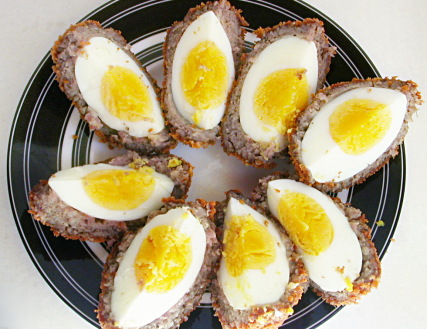
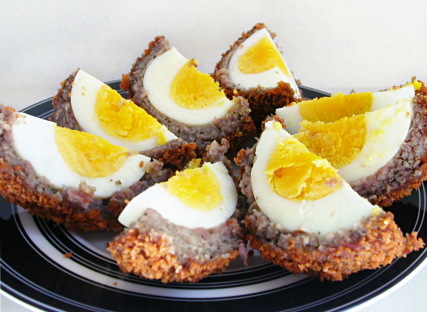
Speaking of absurd, what about peeling a hard-boiled egg, covering it in sausage, breading it, and frying it? Oh, and then serving it for breakfast (alongside cake).

In the Scotch egg’s defense, my understanding is that these are pub fare in Scotland, and therefore probably not served for breakfast. Whatever, we ate them for breakfast, and we were happy.

My mom used to make these for brunch parties when I was a kid. When I asked her for the recipe, she gave me two and was wishy-washy on which she uses. I found two more and ended up with four similar but distinct recipes.

My biggest question concerned the sausage to egg ratio. My four recipes had four different ratios varying from 2 to 5 ounces of sausage per hard-boiled egg. I settled on three ounces, which ended up being pretty much perfect. Any more and the sausage would overwhelm the egg, but with much less, it would be difficult to evenly coat the egg.

5.jpg

Each recipe had a different frying temperature as well, ranging from 325 to 375 degrees. I generally try to maintain an oil temperature between 350 and 375 degrees while deep-frying, and that worked perfectly here. Two recipes used fresh bread crumbs, one used cracker meal, one used dried bread crumbs. I used panko (Japanese coarse-grained dried bread crumbs) because it’s all I had, but I’m thinking fresh would work great as well.

So, there you go. Scotch eggs. Not very healthy, but really freakin’ good. Serve with beer! Or for breakfast! But probably don’t drink beer for breakfast. Ew.

Scotch Eggs

1 egg, beaten
1 teaspoon Dijon mustard
½ cup (2½ ounces) unbleached flour
1 pound bulk sausage
2 cups breadcrumbs, either panko or fresh
5 eggs, hard-boiled and peeled
vegetable or peanut oil for frying

Mix egg and mustard in a medium bowl to blend. Place flour in another bowl. Place breadcrumbs in another bowl. Roll 1 hard-boiled egg in flour. Using wet hands, press 1/5 of sausage around egg to coat. Roll sausage-covered egg in beaten egg mixture, then roll in breadcrumbs, covering completely and pressing to adhere. Place Scotch egg on plate. Repeat with remaining eggs. (Can be made 1 day ahead. Cover and refrigerate.)

Add enough oil to heavy large saucepan to reach depth of 1½ inches. Attach deep-fry thermometer and heat oil to 360-370 °F. Add 3 prepared eggs to oil; fry until sausage is cooked through and coating is deep brown, about 6 minutes. Using slotted spoon, transfer eggs to paper towels to drain. Repeat with remaining 2 eggs. Serve warm.

6.jpg

gooey chocolate cakes (twd)

copy-of-dscn5019.jpg

The popularity of Dorie Greenspan’s Baking: From My Home to Yours is infectious. I’ve been following the baking of the Tuesdays with Dorie group since it was formed in the beginning of this year, but I had no intention of joining, or even buying the book. I once fancied myself a collector of cookbooks, but now I feel silly for having a shelf of books when I only use a few of them. The last thing I needed was another cookbook, especially a baking book.

But after months of overwhelmingly good reviews of the book, plus flipping through it several times in bookstores, plus the fantastic Perfect Party Cake I made for the Daring Bakers, I broke down and bought the book. And TWD is a great way to make sure it doesn’t languish on my bookshelf unused, like so many other cookbooks. Furthermore, it’s actually nice to have someone else pick a recipe for me each week, because it insures that my baking stays creative and I don’t limit myself to my favorite types of recipes.

Leigh of Lemon Tartlet chose Gooey Chocolate Cakes as this week’s recipe, which is Dorie’s take on molten chocolate cakes. It’s a relatively simple dessert to put together, although my first attempt was moist, but certainly not gooey. I made them again and cooked them for one minute less, and they were gooey, but not runny. I made them again and cooked them for another half minute less, and they were exactly what I wanted in the beginning. Maybe it’s because I was using ramekins and not the muffin pan Dorie calls for, maybe my oven’s temperature cycles widely. They were good each time, but the more liquidy, the better, I think.

copy-of-dscn5025.jpg

(Please note that I did not make 18 molten chocolate cakes over the course of a week. That would be insane. I halved the recipe twice, and the second time I baked one in the afternoon to take pictures and stashed the other two in the fridge until I was ready for dessert that evening.)

You really can’t go wrong with molten chocolate cakes. I served mine with ice cream, as per Dorie’s insistence, plus made up a strawberry coulis. This dessert was a great introduction into this group!

Gooey Chocolate Cakes (from Dorie Greenspan’s Baking: From My Home to Yours)

6 servings

It’s been more than ten years since the molten chocolate cake won the hearts of just about every pastry chef here and in France. There doesn’t seem to be a chocolate lover on either side of the ocean who hasn’t savored this cake: small, dark and warm, with a lava-like runny center, sophisticated, easily dressupable and, best of all, truly easy to make. In fact, it’s one of few restaurant desserts that can be made at home with foolproof results, even if you’re not a star baker. The most important rule to remember in making these individual cakes is to use not only the best chocolate you can find, but the chocolate you most love to eat, since that’s the ingredient you will taste.

Usually these cakes are made in individual ramekins, but with all the ramekins stacked in my cupboard, I couldn’t come up with six that were the right size. Then I discovered that disposable aluminum foil muffin pans are ideal. I buy the kind that have six cups and come two pans to a package. I also wash them in the dishwasher and re-use them.

1/3 cup all-purpose flour
3 tablespoons unsweetened cocoa powder
¼ teaspoon salt
5 ounces bittersweet chocolate, 4 ounces coarsely chopped, 1 ounce very finely chopped
1 stick (8 tablespoons) unsalted butter, cut into 8 pieces
2 large eggs, at room temperature
1 large egg yolk, at room temperature
6 tablespoons sugar

Getting Ready: Center a rack in the oven and preheat the oven to 400 degrees. Butter (or spray – it’s easier) 6 cups of a regular-size muffin pan, preferably a disposable aluminum foil pan, dust the insides with flour and tap out the excess. Put the muffin pan on a baking sheet.

Sift the flour, cocoa and salt together.

Set a heat proof bowl over a saucepan of gently simmering water, put the coarsely chopped chocolate and the butter in the bowl and stir occasionally over the simmering water just until they are melted – you don’t want them to get so hot that the butter separates. Remove the bowl from the pan of water.

In a large bowl, whisk the eggs and yolk until homogenous. Add the sugar and whisk until well blended, about 2 minutes. Add the dry ingredients and, still using the whisk, stir (don’t beat) them into the eggs. Little by little, and using a light hand, stir in the melted chocolate and butter. Divide the batter evenly among the muffin cups and sprinkle the finely chopped chocolate over the batter.

Bake the cakes for 13 minutes. Transfer them, still on the baking sheet, to a rack to cool for 3 minutes. (There is no way to test that these cakes are properly baked, because the inside remains liquid.)

Line a cutting board with a silicone baking mat or parchment or wax paper, and, after the 3-minute rest, unmold the cakes onto the board. Use a wide metal spatula to lift the cakes onto dessert plates.

Serving: These should be served as soon as they are put on plates. The cakes are not meant to be served alone – they need something to play off their warm, gooey, soooooo chocolaty interior. Ice cream is the most obvious choice and, to my mind, the best in terms of texture and, of course, temperature. Any chocolate-friendly flavor will be good. Circling the cakes with crème anglaise is another good idea and, for those for whom too much is not enough, circling the cakes with crème anglaise and running a ring of bittersweet chocolate sauce through the custard is an even better idea.

Storing: Although the whole point of a warm, runny cake is to eat it when it is warm and runny, the cake is still delicious, but different, the following day. If you wrap the cooled cakes in plastic wrap and keep them at room temperature, the next day the texture of the center of the cake (the part that was once gooey) will remind you of ganache. Eating the cake will be like enjoying a bonbon: it will be firm on the outside and creamy within.

copy-of-dscn5016.jpg

perfect party cake (daring bakers march 2008)

copy-of-dscn4743.jpg

I was excited to see that Morven chose a recipe from Dorie Greenspan’s Baking: From My Home to Yours for this month’s Daring Baker challenge. This book is extremely popular among food bloggers, but I had never made anything from it. Oh, and also, I love cake. And I had too many egg whites in the freezer left over from the pound cake experiments.

The cake came together easily. We were allowed to change the flavoring from the original lemon if we chose, but I didn’t because I was interested in the subtly-lemon flavored cake. I’m a major batter eater, and this batter tasted great, which is always a good sign.

copy-of-dscn4720.jpg

Like a few of the Daring Bakers, my cakes didn’t rise as much as I expected. This may be a result of the previously-frozen state of my egg whites, but I suspect it’s because I used a bit too much flour. Apparently the copy of the recipe I used had a mistake (oops!) in the amount of flour called for. I was a little worried about cutting the thin layers in half and probably would have skipped that step if this hadn’t been a DB challenge. However, Dorie refers to this cake as “sturdy” and I imagine the extra flour makes it more so, so I had no problems whatsoever cutting my thin layers in half.

The buttercream is my favorite of the few meringue buttercreams I’ve made. The lemon juice gave it a flavor beyond lightly sweetened butter. It came together quickly and was easy to work with.

copy-of-dscn4771.jpg

I’m glad I was able to halve each layer, because the alternating stripes of raspberry jam and buttercream is so pretty. I was a little surprised that Dorie called for one quarter of the buttercream to be used in between each layer, leaving just one quarter for both the top and the sides. I tried to use less in between the layers, so that I’d have some more to work with on the outside. In the future, if I’m serving the cake immediately, I might make just ⅔ – ¾ of the buttercream recipe, and leave the sides of the cake bare. I think it would be really pretty. Plus it would cut down on the ridiculous amount of butter involved in this dessert.

Overall, I thought the cake was delicious. The lemon, the raspberry, and the sweet cake were great compliments. The cake was easy to work with, “sturdy”, as Dorie refers to it. I thought it was maybe just a bit dry, so I was relieved to hear that I used too much flour, because now I can say that the first recipe I made from Dorie Greenspan lived up to all the hype. And in fact, I bought the book a few days later!

copy-of-dscn4758.jpg

Perfect Party Cake (from Dorie Greenspan’s Baking: From My Home to Yours)

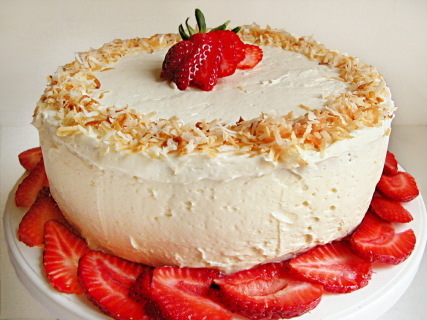
Dorie note: Stick a bright-coloured Post-it to this page, so you’ll always know where to turn for a just-right cake for any celebration. The original recipe was given to me by my great dear friend Nick Malgieri, of baking fame, and since getting it, I’ve found endless opportunities to make it – you will too. The cake is snow white, with an elegant tight crumb and an easygoing nature: it always bakes up perfectly; it is delicate on the tongue but sturdy in the kitchen – no fussing when it comes to slicing the layers in half or cutting tall, beautiful wedges for serving; and, it tastes just as you’d want a party cake to taste – special. The base recipe is for a cake flavoured with lemon, layered with a little raspberry jam and filled and frosted with a classic (and so simple) pure white lemony hot-meringue buttercream but, because the elements are so fundamental, they lend themselves to variation (see Playing Around), making the cake not just perfect, but also versatile.

For the Cake
2¼ cups (9 ounces) cake flour
1 tablespoon baking powder
½ teaspoon salt
1¼ cups whole milk or buttermilk (I prefer buttermilk with the lemon)
4 large egg whites
1½ cups (10½ ounces) sugar
2 teaspoons grated lemon zest
1 stick (8 tablespoons or 4 ounces) unsalted butter, at room temperature
½ teaspoon pure lemon extract

For the Buttercream
1 cup sugar
4 large egg whites
3 sticks (12 ounces) unsalted butter, at room temperature
¼ cup fresh lemon juice (from 2 large lemons)
1 teaspoon pure vanilla extract

For Finishing
2/3 cup seedless raspberry preserves stirred vigorously or warmed gently until spreadable
About 1½ cups sweetened shredded coconut

Getting Ready:
Center a rack in the oven and preheat the oven to 350 degrees F. Butter two 9 x 2 inch round cake pans and line the bottom of each pan with a round of buttered parchment or wax paper. Put the pans on a baking sheet.

To Make the Cake:
Sift together the flour, baking powder and salt.

Whisk together the milk and egg whites in a medium bowl.

Put the sugar and lemon zest in a mixer bowl or another large bowl and rub them together with your fingers until the sugar is moist and fragrant. Add the butter and working with the paddle or whisk attachment, or with a hand mixer, beat at medium speed for a full 3 minutes, until the butter and sugar are very light. Beat in the extract, then add one third of the flour mixture, still beating on medium speed. Beat in half of the milk-egg mixture, then beat in half of the remaining dry ingredients until incorporated. Add the rest of the milk and eggs beating until the batter is homogeneous, then add the last of the dry ingredients. Finally, give the batter a good 2- minute beating to ensure that it is thoroughly mixed and well aerated.

Divide the batter between the two pans and smooth the tops with a rubber spatula. Bake for 30-35 minutes, or until the cakes are well risen and springy to the touch – a thin knife inserted into the centers should come out clean. Transfer the cakes to cooling racks and cool for about 5 minutes, then run a knife around the sides of the cakes, unfold them and peel off the paper liners. Invert and cool to room temperature, right side up (the cooled cake layers can be wrapped airtight and stored at room temperature overnight or frozen for up to two months).

To Make the Buttercream:
Put the sugar and egg whites in a mixer bowl or another large heatproof bowl, fit the bowl over a plan of simmering water and whisk constantly, keeping the mixture over the heat, until it feels hot to the touch, about 3 minutes. The sugar should be dissolved, and the mixture will look like shiny marshmallow cream. Remove the bowl from the heat. Working with the whisk attachment or with a hand mixer, beat the meringue on medium speed until it is cool, about 5 minutes.

Switch to the paddle attachment if you have one, and add the butter a stick at a time, beating until smooth. Once all the butter is in, beat in the buttercream on medium-high speed until it is thick and very smooth, 6-10 minutes. During this time the buttercream may curdle or separate – just keep beating and it will come together again. On medium speed, gradually beat in the lemon juice, waiting until each addition is absorbed before adding more, and then the vanilla. You should have a shiny smooth, velvety, pristine white buttercream. Press a piece of plastic against the surface of the buttercream and set aside briefly.

To Assemble the Cake
Using a sharp serrated knife and a gentle sawing motion, slice each layer horizontally in half. Put one layer cut side up on a cardboard cake round or a cake plate protected by strips of wax or parchment paper. Spread it with one third of the preserves. Cover the jam evenly with about one quarter of the buttercream. Top with another layer, spread with preserves and buttercream and then do the same with a third layer (you’ll have used all the jam and have buttercream leftover). Place the last layer cut side down on top of the cake and use the remaining buttercream to frost the sides and top. Press the coconut into the frosting, patting it gently all over the sides and top.

Serving
The cake is ready to serve as soon as it is assembled, but I think it’s best to let it sit and set for a couple of hours in a cool room – not the refrigerator. Whether you wait or slice and enjoy it immediately, the cake should be served at room temperature; it loses all its subtlety when it’s cold. Depending on your audience you can serve the cake with just about anything from milk to sweet or bubbly wine.

Storing
The cake is best the day it is made, but you can refrigerate it, well covered, for up to two days. Bring it to room temperature before serving. If you want to freeze the cake, slide it into the freezer to set, then wrap it really well – it will keep for up to 2 months in the freezer; defrost it, still wrapped overnight in the refrigerator.

Playing Around
Since lemon is such a friendly flavour, feel free to make changes in the preserves: other red preserves – cherry or strawberry – look especially nice, but you can even use plum or blueberry jam.

Fresh Berry Cake
If you will be serving the cake the day it is made, cover each layer of buttercream with fresh berries – use whole raspberries, sliced or halved strawberries or whole blackberries, and match the preserves to the fruit. You can replace the coconut on top of the cake with a crown of berries, or use both coconut and berries. You can also replace the buttercream between the layers with fairly firmly whipped sweetened cream and then either frost the cake with buttercream (the contrast between the lighter whipped cream and the firmer buttercream is nice) or finish it with more whipped cream. If you use whipped cream, you’ll have to store the cake the in the refrigerator – let it sit for about 20 minutes at room temperature before serving.

copy-of-dscn4729.jpg

spinach feta pine nut tart

copy-of-dscn4941.jpg

Dave is not so interested in food. Before we moved in together, his dinners varied between frozen pizza, microwave popcorn, and whatever leftovers I forced on him. I can’t get it through my head that he just doesn’t care, so I keep asking him for ideas when I plan our meals. When he can think of anything at all to suggest, it’s salmon pesto pasta. But this week he requested an ingredient instead of a dish, which is perfect, because he gets food he’ll enjoy, and I get to be creative with our meal planning.

The ingredient he suggested was pine nuts. (If he can’t have salmon pesto pasta, he’ll just request the ingredients in salmon pesto pasta.) I found a recipe for a Spinach Feta Pine Nut Tart on epicurious that sounded really interesting.

Wow, it was better than interesting. It was fantastic. The flavors melded together perfectly, with none bullying the others to be the star. The phyllo was flaky, the pine nuts were crunchy, and the eggs and spinach were creamy.

copy-of-dscn4950.jpg

Although I only slightly strayed from the original recipe’s ingredients, I adjusted the cooking method substantially. It called for one onion to be sautéed in 1/3 cup of olive oil. I couldn’t see any reason for that much oil, so I used about a tablespoon. I cooked my own fresh spinach, because frozen spinach is always so stemmy. And I made the whole thing on a baking sheet instead of the rectangular tart pan that the original recipe called for.

Making the tart was far easier than I was expecting. The filling was relatively simple to prepare, even with cooking my own spinach. This was my first time working with phyllo, and I found it a bit of a hassle, with the dampened towels and the brushing melted butter, but not exceptionally so.

Overall, I was very pleased with this meal. The only problem I had with it is that I wanted more.  Don’t let the original recipe fool you into thinking this is six servings – four is a more reasonable estimation.

copy-of-dscn4966.jpg

Spinach Feta Pine Nut Tart (adapted from epicurious)

Serves 4 as a main course

Filling may be made 1 day ahead and chilled, covered. Bring filling to room temperature before proceeding.

½ cup pine nuts (about 3 ounces)
1 medium onion, finely chopped
1 tablespoon olive oil
2 10-ounce packages frozen chopped spinach, thawed
2 large eggs
½ teaspoon salt
½ cup crumbled feta (about 3 ounces)
seven 17- by 12-inch phyllo sheets
5 tablespoons unsalted butter
6 tablespoons plus ¼ cup (1¼ ounce) freshly grated Parmesan

Preheat oven to 375°F.

Wet spinach leaves and place in a 12-inch nonstick skillet over medium-high heat. Cover and cook until spinach wilts, 2-3 minutes. Wring dry and roughly chop.

Toast pine nuts in small skillet over medium heat.

In the same 12-inch skillet used for the spinach, heat 1 tablespoon olive oil over medium-low heat. Add onion and cook, stirring occasionally, until softened.

In a large bowl, whisk eggs until combined and stir in spinach, onions, pine nuts, salt and feta until combined well.

Stack phyllo sheets and cover with 2 overlapping sheets plastic wrap and then a dampened kitchen towel. In a small saucepan melt butter and cool slightly. Spray a baking sheet with nonstick spray.

On a work surface lightly brush 1 phyllo sheet with butter. Sprinkle 1 tablespoon Parmesan evenly over buttered phyllo and repeat layering with 5 more phyllo sheets, butter, and 5 tablespoons Parmesan. Arrange last phyllo sheet on stack and lightly brush with butter. Spoon filling onto phyllo, spreading evenly and leaving outer 1½ inches free of filling. Fold edges of pastry over filling, leaving center uncovered, and lightly brush top of phyllo with butter. Sprinkle remaining ¼ cup Parmesan over exposed filling and bake tart in middle of oven until golden, 25 to 30 minutes. Serve tart warm or at room temperature.

copy-of-dscn4960.jpg