blueberry barbecue salmon

blueberry salmon 7

Dave and I sometimes go to lunch at a little coffeehouse that used to have only one sandwich option each day. There was no pattern to which sandwich would be available when, so we would just cross our fingers for reubens or the turkey pesto panini. It’s fortunate that neither of us is picky, but there was one sandwich I got there that I disliked – tuna salad with chunks of apples.

blueberry salmon 1

I’m working my way around to sweet and savory combinations, and thinly sliced apple on a sandwich with cheddar and turkey sounds appealingly crisp and sweet. I like applesauce with pork. But I could not wrap my mind around chunks of apple in tuna salad, so, like a picky little brat, I picked them all out.

blueberry salmon 3

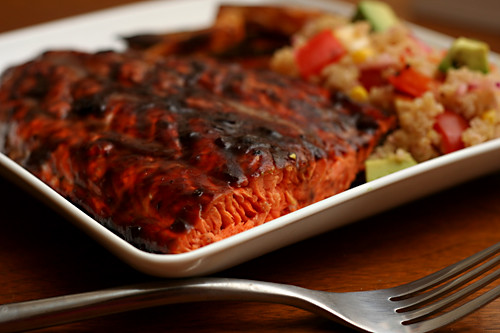
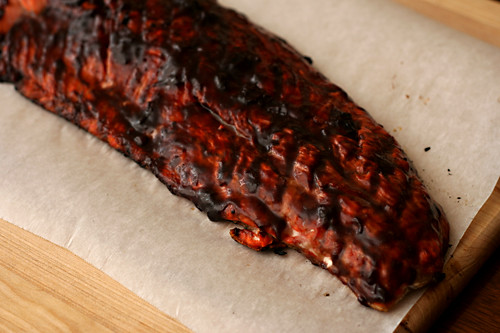
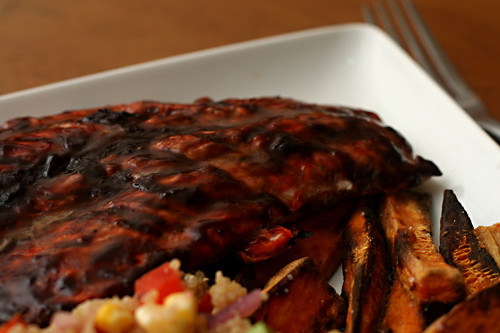
And yet blueberries in barbecue sauce sounds like a perfect match. Barbecue sauce is a mix of tangy, spicy, and sweet flavors, so why not throw some fruit into the mix to add to the sweet balance. I had never eaten salmon with barbecue sauce, but salmon is so rich and meaty that it’s a perfect match.

blueberry salmon 2

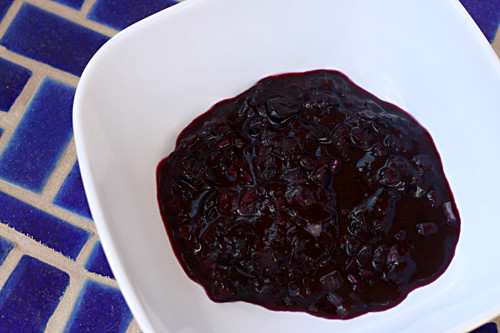
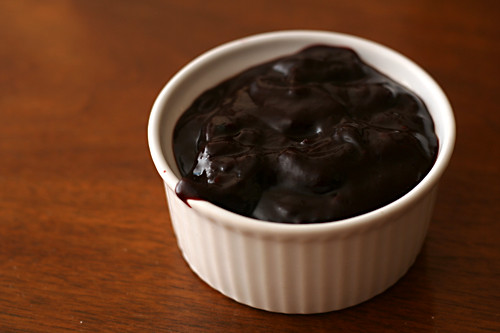
In the end, I could hardly taste the blueberry anyway, although the barbecue sauce was a particularly vibrant shade of purple. Maybe that means this wasn’t a true test of my sweet plus savory acceptance, but I still think it’s one step closer. Just don’t give me one of those chicken salads with grapes in it.

blueberry salmon 4

Housekeeping: If you’re reading this through a feed reader like Google Reader, you’re missing out on my brand new design! Click on over to check it out. I’ve also added a couple of new pages – a long overdue list of my favorite food blogs and a few notes on how I approach recipe writing and categorizing. Finally, I’ve created a Facebook page for The Way the Cookie Crumbles, because apparently between this blog, Twitter, and at least half of my personal conversations, I wasn’t getting enough avenues to talk about food.
One year ago: Penne alla Vodka
Two years ago: Amaretto Cheesecake
Three years ago: Mashed Potatoes with Kale

Printer Friendly Recipe
Blueberry Barbecue Salmon (adapted from How Sweet It Is via Pink Parsley)

Serves 4

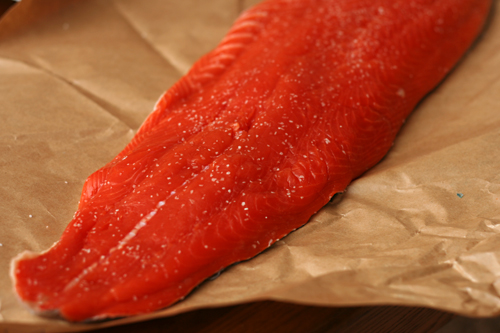
4 (6-oz) salmon fillets, skin on
kosher salt and freshly ground pepper
1 teaspoon olive oil
1 shallot, minced
1 clove garlic
pinch red pepper flakes
½ cup fresh blueberries, rinsed and patted dry
⅓ cup ketchup
1 tablespoon apple cider vinegar
1 tablespoon balsamic vinegar
2 tablespoons brown sugar
1 teaspoon Dijon mustard
1 teaspoon Worcestershire sauce

1. Prepare the grill to its highest setting. Pat the salmon dry and season it liberally with salt and pepper.
2. In a small saucepan, heat the oil over medium heat. Add the shallots and cook, stirring occasionally, until just starting to brown around the edges, stirring occasionally. Add the garlic and red pepper flakes and cook, stirring constantly, until fragrant, about 30 seconds. Reduce the heat to medium-low, add the blueberries, and cook until they begin to soften and burst, about 10 minutes. Use the back of a spoon to mash them, then add the ketchup, vinegars, brown sugar, mustard, and Worcestershire sauce. Whisk well to combine and break up the blueberries, then increase the heat to medium. Stirring often, cook until the mixture begins to bubble, then lower the heat to medium low. Continue to cook, stirring frequently, until the sauce has thickened, another 10-20 minutes. The sauce will be thicker and clumpier than traditional barbecue sauce.

3. Use a paper towel and tongs to oil the grates of the grill well, then lay the salmon, flesh-side-down, on the grill. Cook 5 minutes, then carefully flip. Brush the salmon with half the barbecue sauce, then cook an additional 3-5 minutes, or until it is mostly cooked through but still pink in the center. Remove from grill, brush with the remaining sauce, and serve.

blueberry salmon 5

grilled pita

pita 4

It’s news to no one that homemade pita is a hundred times better than storebought pita. But it might be news to some that grilled homemade pita is a hundred times better than baked homemade pita. True story.

pita 7

Pita dough and pizza dough are so similar that I keep batches in the freezer (actually lately I’ve been using Tartine’s country bread dough) and use them interchangeably. Both are rounds of dough that are stretched out thin, and when cooked, are expected to be spotty browned but still tender. So if grilled pizza is so popular lately, why not grilled pita?

pita 6

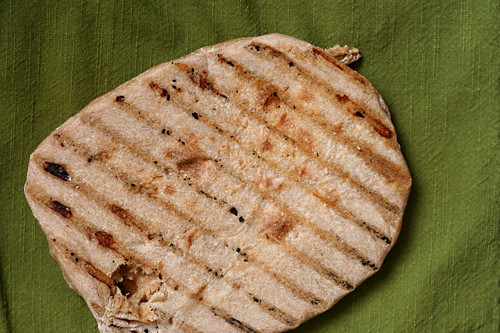
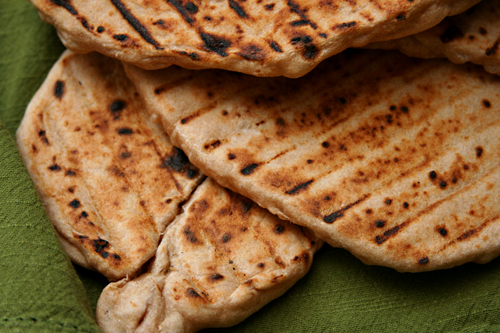
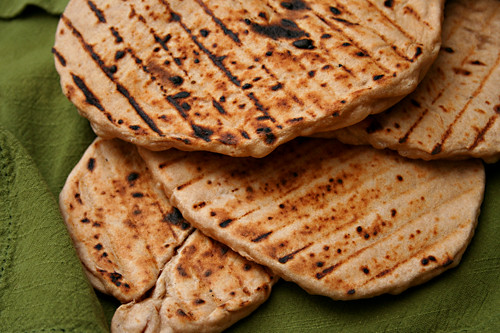
Grilling pita is particularly convenient for me because all of my favorite pita fillings are grilled. So once the chicken comes off the grill and is resting, I plop a round of dough on the hot coals, wait a minute until it bubbles and browns, then flip it. Your pita breads likely won’t be perfectly round, because transferring sticky stretchy dough to hot hot coals isn’t a trivial process. But what they might lack in symmetry, they make up for in grill lines – not to mention crisp edges, soft middles, and that touch of smoke that only the grill can provide.

pita 1

One year ago: Baked French Toast
Two years ago: Pasta with No-Cook Tomato Sauce and Fresh Mozzarella
Three years ago: Blackberry Swirl Ice Cream

Printer Friendly Recipe
Grilled Pocketless Pitas

12 pitas

2½ pounds pizza dough, fully risen
nonstick spray or olive oil

1. Working on a damp towel, cut the dough into 12 pieces. Shape each into a ball by gently pulling the edges toward one side and pinching the seam to seal it. Roll the ball of dough on the towel to smooth and even the shape. Let the dough rest for 15-30 minutes. Meanwhile, heat the grill to medium-high heat.

2. Pick up one ball of dough by an edge; stretch and pull it into a 5- to 6-inch round. If it becomes too elastic to shape, set it aside, loosely covered, for 5 minutes before trying again. Spray the tops of the shaped rounds with nonstick spray or brush with olive oil.

3. Carefully lay the pita rounds, oiled side down, directly on the grill. When the pita bubbles and the bottom is spottily browned, after 1-2 minutes, use tongs to flip the pita. Continue cooking until the second side begins to brown, about 1 minutes. Serve immediately or wrap in a kitchen towel for up to 30 minutes.

pita 3

bruschetta with chickpea puree

chickpea bruschetta 5

I wouldn’t say I have a black thumb, but I certainly don’t have a green thumb. Every spring I get really excited about gardening. Besides the quality and convenience of produce from the backyard, I love to watch things grow. I especially enjoy watching seeds sprout, as the green shoot springs up and then slowly uncurls, stands tall, and spreads its first two leaves. I like creating something so impressive from almost nothing at all.
chickpea bruschetta 4

Gardening in southern New Mexico is relatively easy. Our growing season, from last frost to first frost, extends from March all the way to November. Overwatering and mold certainly aren’t problems, since it almost never rains here. Our soil is hardpacked clay, but it wasn’t difficult or expensive to build a small raised bed. A layer of mulch and the lack of rain keep most weeds at bay. With a timed sprinkler system, there’s little effort involved with keeping a garden beyond the initial planting.

chickpea bruschetta 3

Except for the bugs. Squash bugs always get my zucchini plants eventually. And last year I think grasshoppers ate more tomatoes than I did. This year, even worse, I bought a diseased tomato plant and it spread its fungus to the rest of the bunch. They’ll have to be pulled, I’m afraid.

chickpea bruschetta 2

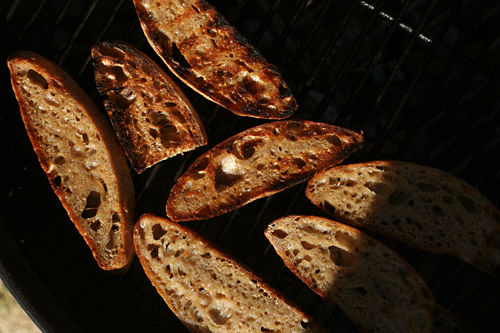
So my hopes for panzanella, slow-roasted tomatoes, BLTs, pasta with tomatoes and fresh mozzarella, big pots of sauce to freeze, and a whole long list of other tomato recipes I love – this isn’t the year for that. Instead of topping grilled garlic-rubbed slices of Tartine’s country bread with fragrant tomatoes from my garden, I’ll have to find other ideas.

chickpea bruschetta 1

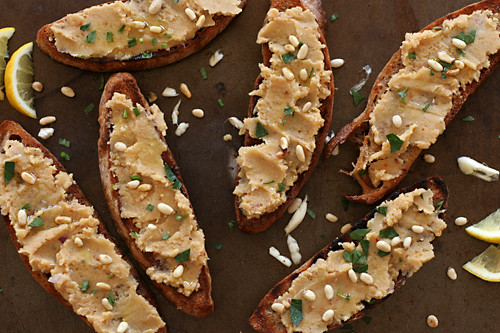
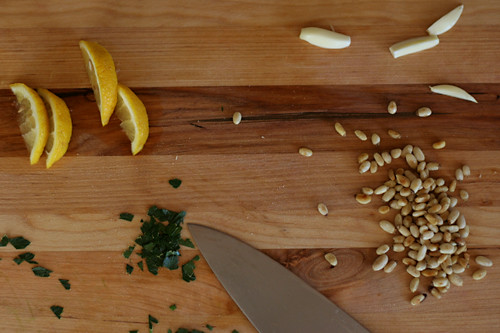
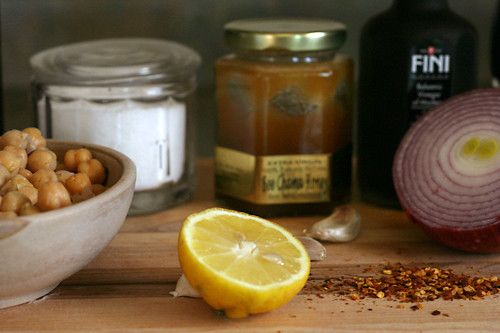
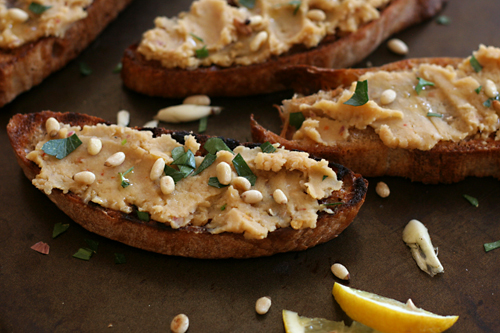
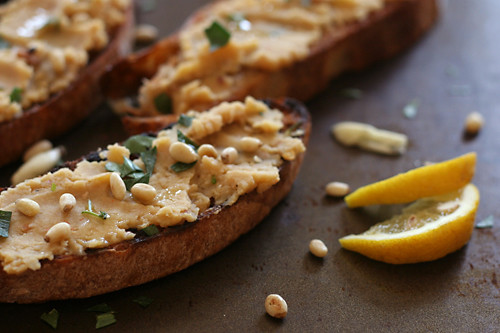
While nothing is going to live up to perfectly ripe summer tomatoes, I won’t complain about this chickpea spread. Something that could so easily be bland – a bowl of mashed beans – is kicked up with all sorts of good things, like tangy bits of red onion, spicy red pepper flakes, sweet balsamic vinegar, and tart lemon juice. Then it’s topped with crunchy toasted nuts and fresh herbs. It’s not garden-fresh tomatoes, but it’ll do in a pinch.

chickpea bruschetta 7

One year ago: Stuffed Squash Flowers
Two years ago: Dried Fruit Compote
Three years ago: Sautéed Shredded Zucchini

Printer Friendly Recipe
Bruschetta with Spicy Chickpea Purée (adapted from Rick Tramonto’s Fantastico via epicurious)

8 slices rustic bread
4 garlic cloves, peeled and halved lengthwise
½ teaspoon kosher salt
1 (16-ounce can) chickpeas, drained and rinsed
½ small red onion, minced
2 tablespoons extra virgin olive oil, plus more for drizzling
2 tablespoons fresh lemon juice
1 tablespoon balsamic vinegar
1 teaspoon crushed red pepper flakes (use more or less to taste)
½ teaspoons honey
Kosher salt and freshly ground black pepper
2 tablespoons pine nuts, toasted
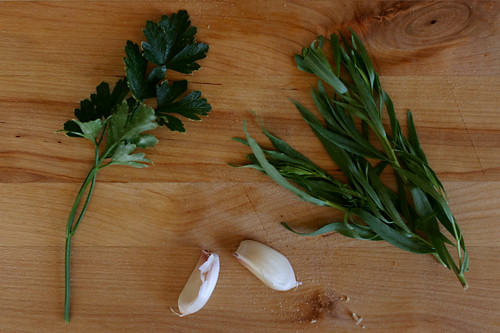
1 tablespoon chopped fresh tarragon (optional)
1 tablespoon chopped fresh flat-leaf parsley
8 lemon wedges

1. In the bowl of a food processor fitted with the metal blade, pulse the chickpeas, onion, 2 tablespoons of oil, lemon juice, vinegar, red pepper, and honey. Scrape down the sides of the bowl several times and pulse until the mixture is smooth. Season to taste with salt and black pepper. The texture of the paste should be that of spreadable peanut butter; if necessary, thin it with water and pulse again.

2. Prepare gas or charcoal grill or preheat the broiler or a panini press. The heating elements or coals should be medium-hot. Cut the slices in half and brush both sides with a generous amount of olive oil. Season both sides with salt and pepper. Grill or broil the bread, turning once, until lightly browned on both sides. Rub 1 side of the toasts with garlic.

3. Spread the bean paste on the bruschetta. Sprinkle with pine nuts, tarragon (if using), and parsley. Drizzle with olive oil, and serve garnished with lemon wedges for squeezing over the bruschetta.

chickpea bruschetta 6

thai grilled-beef salad

thai steak salad 4

My habit is that on weekdays, I eat vegetarian and am healthy, and on weekends, I eat meat and am not healthy. I save alcohol and lately even dessert for weekends. It all evens out in the end so that I’m relatively fit and trim, but I’m starting to wonder – would it be so bad to eat meat and be healthy, all at the same time?

thai steak salad 1

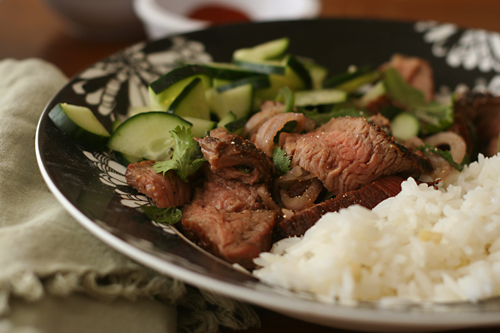
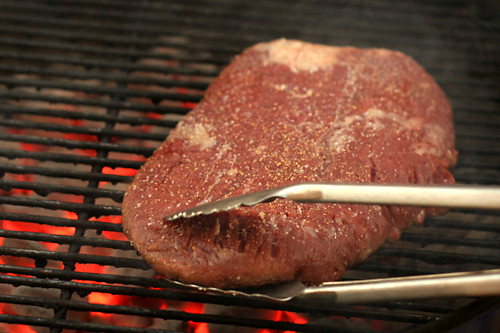
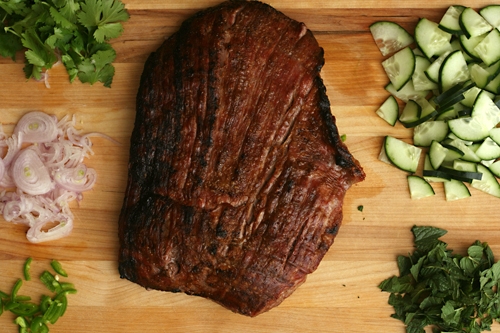
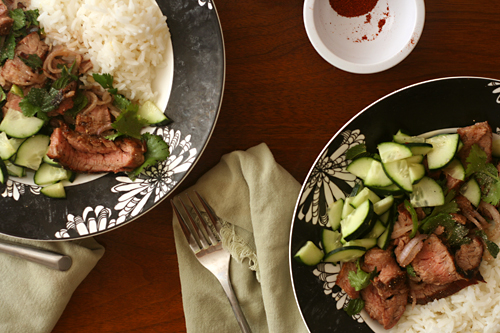
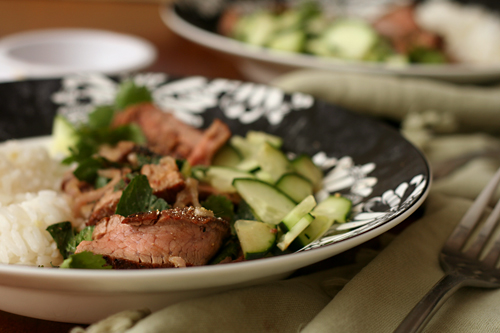
Steak doesn’t have to mean huge T-bones and potatoes. It can mean slivers of beef mixed with herbs and served with cucumbers. This flank steak is seasoned with salt and (white) pepper, grilled and sliced, then dressed with a mixture of lime juice and fish sauce. Toasted white rice powder deepens the flavors while fresh herbs lighten them.

thai steak salad 3

I wonder how many other great meat-topped salads are out there that I’ve been overlooking. Although even if there aren’t any others worth trying, I’d be perfectly happy making this one over and over again. Eating healthy on weekends doesn’t feel like a sacrifice when it tastes so good – and besides, I still get to have a glass of wine on the side.

thai steak salad 5

One year ago: Garlic Mustard Glazed Skewers
Two years ago: Seafood Lasagna
Three years ago: Vanilla Ice Cream

Printer Friendly Recipe
Thai Grilled-Beef Salad (from Cooks Illustrated)

Serves 4 to 6

1 teaspoon sweet paprika
1 teaspoon cayenne pepper
1 tablespoon white rice
3 tablespoons lime juice (from 2 limes)
2 tablespoons fish sauce
2 tablespoons water
½ teaspoon sugar
1½ pound flank steak, trimmed
Salt and white pepper, coarsely ground
4 shallots, sliced thin
1½ cups fresh mint leaves, torn
1½ cups fresh cilantro leaves
1 Thai chile, stemmed and sliced thin into rounds
1 seedless English cucumber, sliced ¼ inch thick on bias

1. Heat the paprika and cayenne in an 8-inch skillet over medium heat; cook, shaking the pan, until fragrant, about 1 minute. Transfer to a small bowl. Return the now-empty skillet to medium-high heat, add the rice, and toast, stirring frequently, until deep golden brown, about 5 minutes. Transfer to a second small bowl and cool for 5 minutes. Grind the rice with a spice grinder, mini food processor, or mortar and pestle until it resembles fine meal, 10 to 30 seconds (you should have about 1 tablespoon rice powder).

2. Whisk the lime juice, fish sauce, water, sugar, and ¼ teaspoon toasted paprika mixture in a large bowl and set aside.

3. For a Charcoal Grill: Open the bottom vent completely. Light a large chimney starter filled with charcoal briquettes (6 quarts). When the top coals are partially covered with ash, pour the coals evenly over half of the grill. Set the cooking grate in place, cover, and open the lid vent completely. Heat the grill until hot, about 5 minutes.

For a Gas Grill: Turn all burners to high, cover, and heat the grill until hot, about 15 minutes. Leave the primary burner on high and turn off the other burner(s).

4. Clean and oil the cooking grate. Season the steak with salt and white pepper. Place the steak over the hot part of the grill and cook until it’s beginning to char and beads of moisture appear on the outer edges of the meat, 5 to 6 minutes. Flip the steak and continue to cook on the second side until charred and the center registers 125 degrees, about 5 minutes longer. Transfer to a plate, tent loosely with aluminum foil, and let rest for 5 to 10 minutes (or allow to cool to room temperature, about 1 hour).

5. Slice the meat, against the grain and on the bias, into ¼-inch-thick slices. Transfer the sliced steak to the bowl with the fish sauce mixture. Add the shallots, mint, cilantro, chile, and half of the rice powder; toss to combine. Transfer to a platter lined with cucumber slices. Serve, passing the remaining rice powder and toasted paprika mixture separately.

thai steak salad 6

chicken gyros

chicken gyros 14

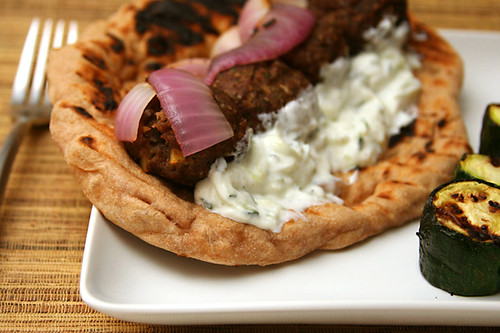
Elly’s chicken gyros are so very popular for good reason – it’s a simple recipe with exceptional results. I, of course, can’t keep anything simple. After I made Elly’s recipe a few times, I noticed how similar it is to chicken fajitas – marinated chicken wrapped in flat bread with vegetables. My favorite chicken fajita recipe has a few tricks up its sleeve that I love, so I started incorporating those into Elly’s chicken gyro recipe.

chicken gyros 1

My favorite trick is saving a portion of the marinade (before mixing it with raw meat, of course) to stir into the cooked and shredded chicken, reviving any flavors that might be lost during cooking. Another portion of the marinade is stirred into the vegetables, brightening their flavor while the vinegar tames the onion’s bite. I also insist on taking advantage of everyone’s favorite cooking method – fire. I love grilling the chicken and then toasting the pita over the remaining coals.

chicken gyros 2

I’m fairly certain that traditionally, gyros aren’t topped with red peppers and feta, and the first few times I made this recipe, I served those on the side as part of Mediterranean Pepper Salad. But each time, more and more of the salad made its way onto the gyro, and eventually I stopped keeping them separate at all. With the vegetables right on top of the marinated grilled chicken and toasted flatbread, topped with tart white sauce, these were even more similar to chicken fajitas, except – dare I say – even better.

chicken gyros 5

One year ago: Croissants (Martha Stewart’s recipe)
Two years ago: Rhubarb Scones
Three years ago: Pita (cook these right on the grill instead of baking!)

Printer Friendly Recipe
Chicken Gyros (adapted from Elly Says Opa and from Cooks Illustrated’s Chicken Fajita recipe)

Greek yogurt is often sold in 7-ounce containers. If you don’t have extra plain yogurt around to use in the marinade, using 2 tablespoons of the Greek yogurt meant for the tzatziki recipe in your marinade won’t hurt your tzatziki at all.

Chicken:
¼ cup juice from 1 to 2 lemons
2 tablespoons olive oil
3 medium garlic cloves, crushed
1 tablespoon red wine vinegar
1 teaspoon sugar
table salt and ground black pepper
2 tablespoons plain yogurt
3 boneless, skinless chicken breasts (about 1½ pounds), trimmed of fat, tenderloins removed, pounded to ½-inch thickness

Tzatziki:
½ cucumber, unpeeled, shredded
½ teaspoon kosher salt
7 ounces Greek yogurt
1 tablespoon freshly squeezed lemon juice
½ tablespoon white wine vinegar
½ tablespoon minced fresh dill (optional)
1 clove garlic, minced
¼ teaspoon freshly ground black pepper

For serving:
½ red onion, quartered lengthwise and sliced thinly
1 large red bell pepper, quartered lengthwise and sliced thinly
½ cucumber, quartered lengthwise and sliced thinly
1 tomato, chopped medium, or 1 cup grape tomatoes, halved
½ cup feta, crumbled
4-6 (6-inch) pocketless pitas

1. In a medium bowl, whisk together the lemon juice, oil, garlic, vinegar, sugar, 1 teaspoon salt, and ¾ teaspoon pepper. Reserve 3 tablespoons of the marinade in a small bowl; set aside. Add the yogurt and another teaspoon salt to the remaining marinade. Place the chicken in the marinade; cover with plastic wrap and refrigerate 15 minutes.

2. Meanwhile, using a large chimney starter, ignite 6 quarts of charcoal briquettes and burn until the coals are fully ignited, about 20 minutes. Empty the coals into the grill, spreading them in a single layer; place an additional 20 unlit coals over the lit coals on one side of grill to create a two-level fire. Position the grill grate over the coals and heat the grate for 5 minutes; scrape clean with a grill brush. (For a gas grill, light all burners and turn to high, cover, and heat the grill until hot, about 15 minutes; scrape the grill grate clean with a grill brush. Leave one burner on high heat while turning the remaining burner(s) down to medium.)

3. For the tzatziki: Place the cucumber in a strainer set over a medium bowl and add the salt. Set aside for at least 15 minutes to drain. Transfer the cucumber to a clean kitchen towel and squeeze dry. Combine the drained cucumber with the yogurt, lemon juice, vinegar, dill, garlic, and pepper.

4. Add 2 tablespoons of the reserved marinade to a bowl; add the sliced onion to the marinade. Set aside to lightly pickle while you prepare the remaining toppings. Mix all of the vegetables and feta into the bowl with the onion.

5. Remove the chicken from the marinade and place it smooth side down on the hotter side of the grill; discard the remaining marinade. Cook the chicken until it’s well browned, 4 to 5 minutes; using tongs, flip the chicken and continue grilling until it’s no longer pink when cut into with a paring knife or an instant-read thermometer inserted into the thickest part registers about 160 degrees, 4 to 5 minutes longer. Transfer to a plate; cover to keep warm.

6. Working in 2 or 3 batches, place the pitas in a single layer on the cooler side of the now-empty grill and cook until warm and lightly browned, about 20 seconds per side (do not grill too long or the pitas will become brittle). As the pitas are done, wrap them in a kitchen towel or a large sheet of foil.

7. Slice the chicken into ¼-inch strips and toss with the remaining tablespoon of reserved marinade in another bowl; arrange the chicken and vegetables on a large platter and serve with the warmed pitas.

chicken gyros 8

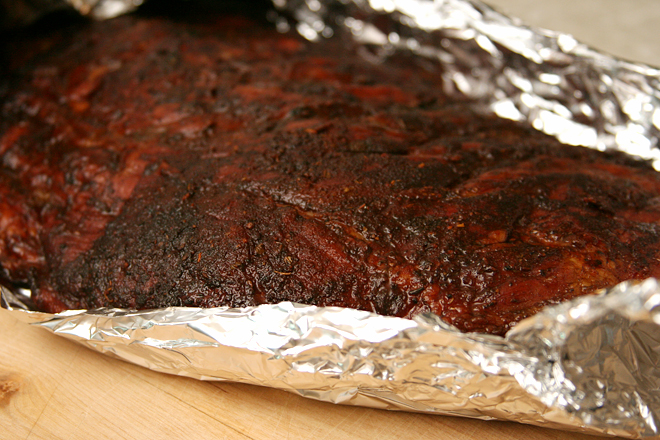
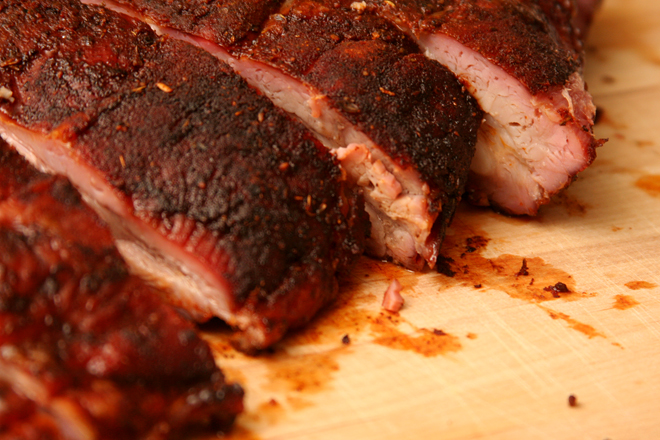
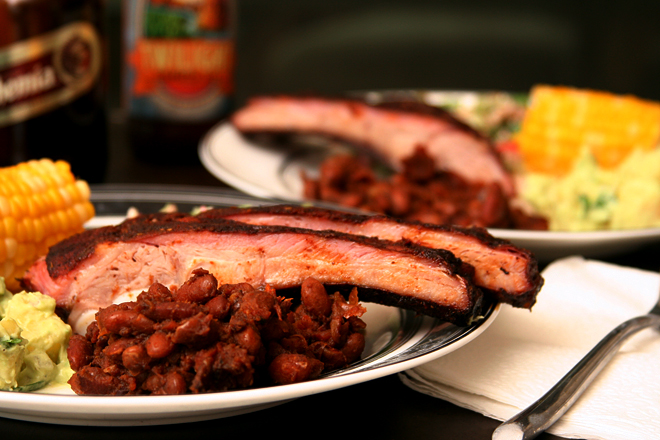
barbecued pulled pork

The best part of barbecuing a whole pork shoulder on the grill is that you are forced to spend all day outside tending the grill. I can’t think of many better ways to spend a Saturday. We started the grill before breakfast, then spent the rest of the day in the backyard.  First we drank coffee, then some water because you have to to survive, even on weekends, and then it was time for afternoon margaritas, and then we capped it off with beer, because what else are you going to drink with pulled pork?

The truth is that while you do need to keep a constant-ish eye on the grill, you don’t need to spend much time actually doing anything with it. Once the pork is cooking, it takes just a couple of seconds every hour or so to add a handful of fresh coals. A thermometer is key to monitor the temperature, although a cheap oven thermometer – which is what I used – will work just fine.  And if you do find the temperature varying widely, it won’t ruin your pork; just let it slowly come down to the right temperature range or add more coals to bring it up and continue cooking. Cooking a whole pork shoulder on the grill is a simple and forgiving process, even if it does take a long time.

I know the question everyone is asking: Is it really better than crockpot pulled pork?  Well, of course it is.  Crockpot pulled pork, especially using the same spice rub, is incredible – flavorful, tender, and easy easy easy.  Barbecued pulled pork isn’t as moist and as a result, its flavor seems more concentrated.  It’s still easy to pull, but it has more chew than crockpot pulled pork, which can get mushy if you’re not careful.  The biggest difference were the outside bits of the roast, which were deeply browned and crisp.  (This is not the same thing as the blackened top in the photo below, which is a thick layer of fat that I discarded.)  Dave and I filled up on those while I was still shredding the roast.  But the best part of making pulled pork on the grill as opposed to in the crockpot is that while one method frees you up to do chores and run errands all day, and the other keeps you in the backyard with a book and a beer.

One year ago: Home Corned Beef and Corned Beef Hash
Two years ago: Orange Oatmeal Currant Cookies
Three years ago: Hash Browns with Sauteed Vegetables and Poached Eggs

Printer Friendly Recipe
Barbecued Pulled Pork (spice rub from Cooks Illustrated)

Serves a lot

The least messy way I’ve found to add the spices to the meat is to line a rimmed baking sheet with a large piece of plastic wrap. Set the pork on the plastic wrap; add the spice rub, rotating the meat to rub all sides. Wrap the plastic wrap around the meat, then wrap another layer of plastic around in the opposite direction.

I use all of the spice rub on one roast, but if you think it’ll be too much, save half for another use. It’ll keep in the pantry for months.

Spice Rub:
1 tablespoon ground black pepper
1-2 teaspoons cayenne pepper
2 tablespoons chili powder
2 tablespoons ground cumin
2 tablespoons dark brown sugar
1 tablespoon dried oregano
4 tablespoons paprika
2 tablespoons table salt
1 tablespoon granulated sugar
1 tablespoon ground white pepper

1 (6-8 pound) bone-in pork shoulder

1. Combine all of the ingredients in the spice rub. At least one day, and up to three days, before cooking the pork, rub the spice rub onto all sides of the pork (see note). Wrap the pork in a double layer of plastic wrap. Refrigerate overnight or up to three days.

2. About 10 hours before you plan to serve the pork, remove it from the refrigerator; let it set at room temperature for 1 hour. Meanwhile, soak 4 wood chunks (or 4 cups of wood chips) in water for an hour.

3. About 20 minutes before you’re ready to grill, light about 30 charcoal briquettes (half a chimney starter). Once the coals are covered with a layer of ash, dump them into a pile on one side of the grill, then top with ¼ of the wood chunks or chips. Open the bottom vents completely. Place the meat, fat side up, on a double layer of aluminum foil with the edges folded up or in a 9×13-inch disposable aluminum baking pan. Place the meat on the side of the grill opposite the coals. Put the lid on the grill with the vents opposite the coals; adjust vents to be ¾ open.

4. Use a grill or oven thermometer to monitor the temperature of the grill, which should remain between 200 and 250 degrees. Add fresh coals, about 8 every hour, when the temperature drops. Add more wood chips an hour after you start cooking, then again at the 2- and 3-hour mark. (Don’t worry if the top of the meat blackens; you’ll discard that layer of fat anyway.)

5. After about 5 hours, when the internal temperature of the pork reaches 165 degrees, wrap it completely in foil. Continue cooking until the internal temperature of the pork is 195 degrees, another 2-3 hours.

6. Remove the pork from the grill and let it set at room temperature, covered, for one hour.

7. Place the pork on a large rimmed baking sheet. Remove and discard the thick layer of fat. Use your fingers or forks to shred the remaining meat. Serve.

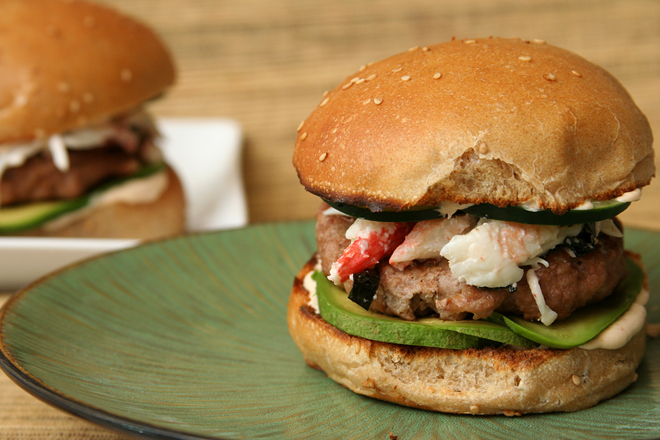
fig-glazed burgers with onion jam

We’ve gotten into a loose routine with our weekend meals. Friday is usually some sort of pizza, unless we get takeout sushi; Saturday with its meat-carb-vegetable makeup is the only day of the week I bother with side dishes; and Sunday is something sandwich-like. I’m not going to say that sandwich night is my favorite, but there’s something undeniably happy-making (or maybe that’s the Sunday champagne habit) about carbs and their fillings, whether its tacos, gyros, burgers, or whatever else.

We’re pretty attached to our backyard these days, so Sunday sandwiches are usually cooked on the grill. Not that I’m bored of green chile cheeseburgers (or that I won’t put green chile on a fig-glazed burger), but there are so many great burger ideas out there, it would be a shame to stick to one favorite. This is just the first on a long list of great options.

It’s odd that I chose the sweet plus meat burger off of that list, since it isn’t a combination I often crave. Or it wasn’t. It might be now. It doesn’t hurt that it’s also mixed with vinegary onion jam and melty cheese. Our Sunday dinner sandwich habit might turn into a Sunday fig-glazed burgers habit.

One year ago: Pizza with Figs, Prosciutto, Gorgonzola, Balsamic, and Arugula (oddly similar flavors)
Two years ago: Pasta with Cauliflower, Walnuts, and Ricotta Salata
Three years ago: Creamy Buttermilk Coleslaw (This is no longer my favorite classic coleslaw. I’ll post the new recipe soon.)

Printer Friendly Recipe
Fig-Glazed Burgers with Red Onion Jam (adapted from Southern Living via Pink Parsley)

Makes 4 burgers

I like my burgers a little smaller, so I made six out of this amount of meat mixture instead of four.

Red onion jam:
1 teaspoon olive oil
1 large red onion, sliced thin
Pinch salt
2 tablespoons brown sugar
¼ cup balsamic vinegar
¾ teaspoon chopped fresh thyme

Cheeseburgers:
1½ pounds ground chuck
2 tablespoons chopped fresh oregano
1 teaspoon kosher salt
1 tablespoon Dijon mustard
¼ teaspoon garlic powder
½ teaspoon ground black pepper
3 tablespoons fig preserves
4 (½-oz) Muenster cheese slices
4 hamburger buns, split and toasted

1. In a large skillet, heat the oil over medium-high heat until it flows like water when you tilt the pan. Add the onions and salt; cook, stirring often, for 5 minutes, until the onions are just golden around the edges. Reduce the heat to medium-low; add the sugar, vinegar, and thyme; cover and cook 10 minutes, until the onion is tender and most of the liquid is absorbed.

2. Gently mix the beef, oregano, salt, mustard, garlic powder, and black pepper. Divide the mixture into four portions and shape each one into a ½-inch thick patty. Form a divot in the center of each patty.

3. Prepare a medium-hot grill. Using a paper towel, grease the grates with vegetable oil. Grill the patties for 5 minutes; flip, and continue grilling another 5 minutes. Brush each patty with fig preserves and top with a slice of cheese. Grill an additional 2 minutes, or until the beef is cooked and the cheese is melted. Serve on buns with onion jam.

eggplant rollatini

The only thing I can remember cooking for the last several years that turned out so badly that not only did I refuse to eat it, but even Dave did, is grilled eggplant. I don’t remember what went wrong – cook time too long? cook temp too low? too high? salt, don’t salt, cut thicker cut thinner, I don’t know – but the resulting mush of eggplant goo is all too vivid still.

I hadn’t eaten eggplant since. I’ve seen recipes in which every other component sounded like something I would enjoy, but as soon as I spotted that nefarious eggplant in the ingredient list, I scrolled right on past. I knew I’d have to try eggplant again someday. But I wasn’t ready then.

Now I am. Cheese and tomato sauce is never a bad way to ease into an ingredient. Each grilled slice of eggplant is rolled with a slice of cheese, then topped with a quick marinara sauce and heated until the flavors meld and the cheese softens. For me, they were too messy to serve as a hand-held hors d’œuvre, but instead made for a very nice plated first course. That’s right, a recipe with eggplant was very nice. I’m one step closer toward liking eggplant again.

One year ago: Pasta with Baked Ricotta and Sweet Tomato Sauce
Two years ago: Vegetarian Chili
Three years ago: Salmon Pesto Pasta

Printer Friendly Recipe
Eggplant Rollatini (adapted from Cara’s Cravings)

I just stick a pair of kitchen shears into the can of tomatoes and chop away a bit. It’s coarser than a puree, but still just fine for sauce. If you want it smoother, puree the tomatoes in the food processor.

We grilled the eggplant; I haven’t personally tried the roasting technique recommended in the original Gourmet recipe.

4 small Italian eggplants or 2 regular eggplants
Kosher salt
1 tablespoon olive oil
2 garlic cloves, finely chopped
¼ teaspoon dried hot red-pepper flakes
1 (15-ounce) can diced tomatoes, chopped, undrained
½ teaspoon salt
¼ cup coarsely chopped fresh basil
16 thin slices provolone cheese
½ ounce (¼ cup) finely grated parmesan cheese

1. Peel 2 opposite long sides of each eggplant. Cut each eggplant lengthwise (to form long skinny ovals) into 1/4-inch slices. Sprinkle both sides of the slices with kosher salt; set aside for 30 minutes. Heat the oven to 425 degrees.

2. Heat the oil in a medium skillet over medium heat until it flows like water when the pan is tilted; add the garlic and red pepper flakes and cook, stirring constantly, until fragrant, about 30 seconds. Add the tomatoes and ½ teaspoon salt; cook, stirring occasionally, until thickened, 8-12 minutes. Remove from heat; stir in the basil.

3. Prepare a grill for direct-heat cooking over moderate heat (or line a large baking sheet with foil and heat the oven to 450 degrees). Brush any remaining salt crystals from the eggplant; pat the slices dry and spray both sides with nonstick spray. Grill the eggplant, turning once, until tender, about 4 minutes total (or bake for 20 minutes, turning once). Transfer to a work surface.

4. Top each slice of eggplant with a slice of cheese; starting at a short end, roll the eggplant and cheese into a spiral and seal with a toothpick. Repeat with the remaining eggplant and cheese. Arrange the eggplant spirals in a shallow baking pan and top with the sauce; bake until the cheese is melted, about 10 minutes.

whiskey compound butter

I love grilled steaks – who doesn’t? – but I do miss the fond left behind on the pan when you pan-fry steaks. Nothing beats the sauce you can make by adding some alcohol, herbs, and cream to the scraped up bits of meat left on the pan. The grilling equivalent is compound butters, and I won’t say no to those either.

I also don’t say no to whiskey – at least when it’s mixed with butter to top my steak. Between the shallots, alcohol, and herbs, this compound butter has nearly everything my favorite pan sauces do. And unlike a pan sauce, which requires some last minute frenzy, a compound butter can be made hours (days! weeks! months!) in advance. Most importantly, it’s accompanying a beautiful charcoal-grilled steak.

One year ago: Twice-Baked Potato Cups
Two years ago: Banana and Peanut Butter Stuffed French Toast

Printer Friendly Recipe
Whiskey Compound Butter
(adapted from epicurious.com)

Makes enough to top 6-8 steaks

1 shallot, minced
1 tablespoon whiskey or bourbon
8 tablespoons (1 stick) unsalted butter, softened
1 tablespoon minced parsley
½ teaspoon Worcestershire sauce
½ teaspoon Dijon mustard
¼ teaspoon sea salt
black pepper to taste

Combine the shallot and whiskey; let rest for about 15 minutes. Meanwhile, add the remaining ingredients to the bowl of a stand mixer. Mix well. On a 12-by-8 inch square of wax paper, drop butter in spoonfuls to form a log. Roll butter in wax paper and smooth out to form a round log. Refrigerate until hard and easy to slice into round, coin-shaped pieces, at least three hours. Serve with grilled steak.

grilled corn salad

It’s green chile season! My sister recently told me that, for her, fall in New Mexico means green chiles roasting, the state fair, and the Balloon Fiesta. Fall isn’t so bad out here, even without rolling hills of trees that turn brown, red, pink, maroon, orange, yellow. I will miss the crisp air, pumpkins, apples, and chill days of fall on the East coast, but when I was out there, I missed green chile. So I win either way.

The only problem is that I tend to get into a hoarding pattern with my annual green chile supply. I buy them every fall when they come into season, roast them, and freeze them to last until the following September. And then, aside from the occasional huevos rancheros, I mostly ignore them, because what if I run out? This is a mindset I’m determined to get out of. Not only is that not the kind of life I want to lead, but, as Jen warns, they seem to get hotter as they’re frozen for longer periods.

This corn salad doesn’t even call for green chile, but I had some leftover from the previous day’s burgers, so I went ahead and added them. They’ve been in the freezer for about a year, and maybe that’s why the dish ended up so, um, kind of painful to eat, actually. The heat was somewhat dulled by the dairy in the recipe, and once I smooshed the corn into a tortilla with some flank steak, it was downright edible. Not that the corn even needed extra flavor, what with having been grilled and mixed with chili powder, cilantro, lime juice and salty cotija. But I need to use up some of these chiles in my freezer to make room for the new crop!

One year ago: Pickled Coleslaw
Two years ago: Sausage and Red Pepper Hash

Printer Friendly Recipe
Grilled Corn Salad (from Bobby Flay via Savory Spicy Sweet)

I used a not-nonstick skillet on the stove instead of a cast iron pan on the grill, and I substituted greek yogurt for the crème fraiche. And I added an ounce or two of very spicy diced Hatch green chiles, plus some diced red pepper and red onion.

8 ears fresh corn, silks removed, husk on, soaked in cold water 30 minutes
canola oil
salt and freshly ground black pepper
¼ cup creme fraiche
2 limes, juiced and 1 zested
1 tablespoons ancho chili powder
¼ cup chopped fresh cilantro leaves
¼ cup grated cotija cheese

1. Heat grill to high. Grill corn until charred on all sides, 10 or so minutes. Take off the grill and remove the kernels with a sharp knife. While you are cutting the corn, put a cast iron skillet on the grill to heat.

2. Add the corn and the remaining ingredients to the hot pan and cook, stirring occasionally, until creamy and heated through. Serve.